
Published on
Chemical Packaging for US Industry: Type C, Type D and UN Certified Bulk Bags
With most products, a bulk bag only has to carry the load. With chemicals, it also has to stop a spark, survive a dropped pallet and carry the right paperwork across a border. Getting chemical packaging wrong is not a quality problem; it is a safety and compliance one.
This guide walks through the three decisions that shape bulk chemical packaging: how the bag handles static, whether it needs to be UN certified, and, for pharmaceutical material, how clean it has to be.
Industrial chemical packaging starts with the hazard
For industrial chemical packaging, the question is not which bag is strongest but what could go wrong while the product moves. A dry powder rushing into a bag builds static charge. Near a flammable powder, vapor or gas, a discharge from that charge can start a fire. That is why the static type, under the IEC 61340-4-4 standard, is the first line of the specification rather than an extra.
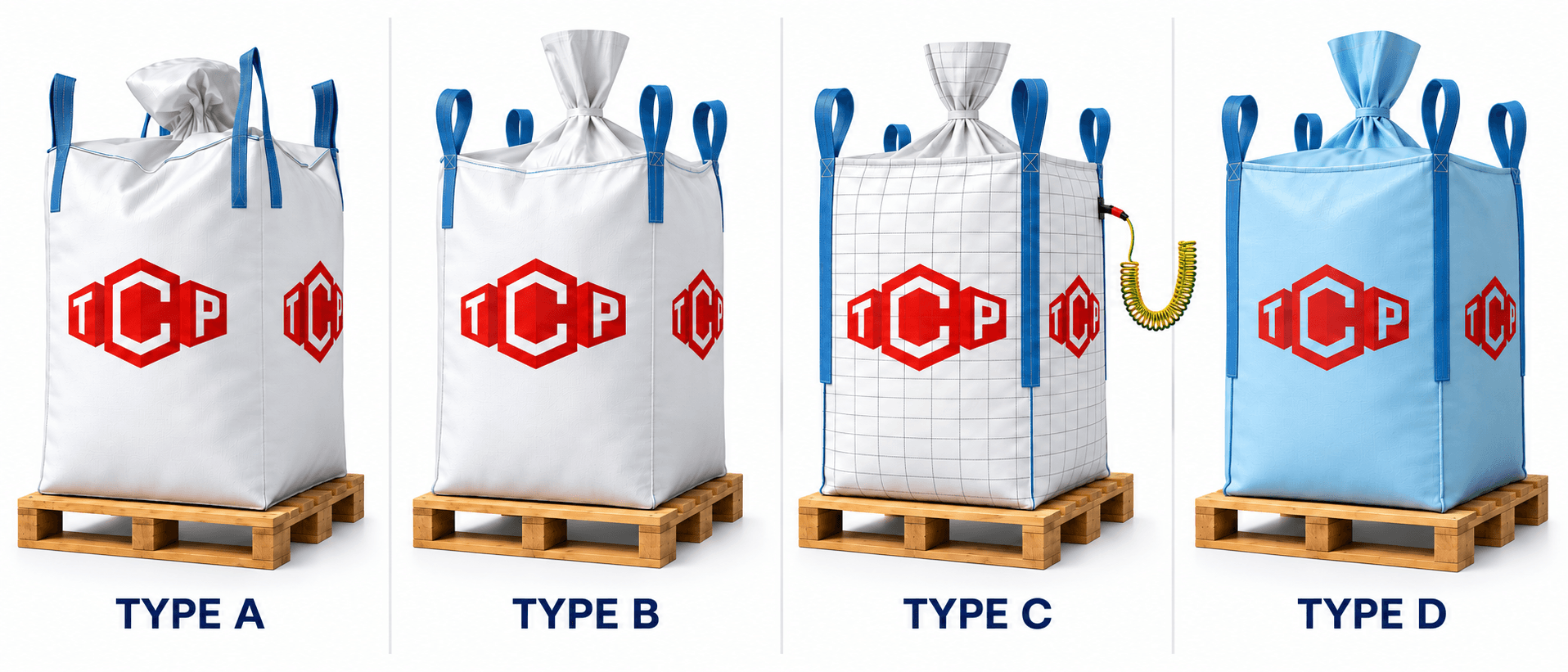
- Type A: plain fabric with no static protection, for non-flammable product only.
- Type B: low breakdown voltage fabric that prevents the most energetic discharge, but does not dissipate charge and is not suitable near flammable vapors or gases.
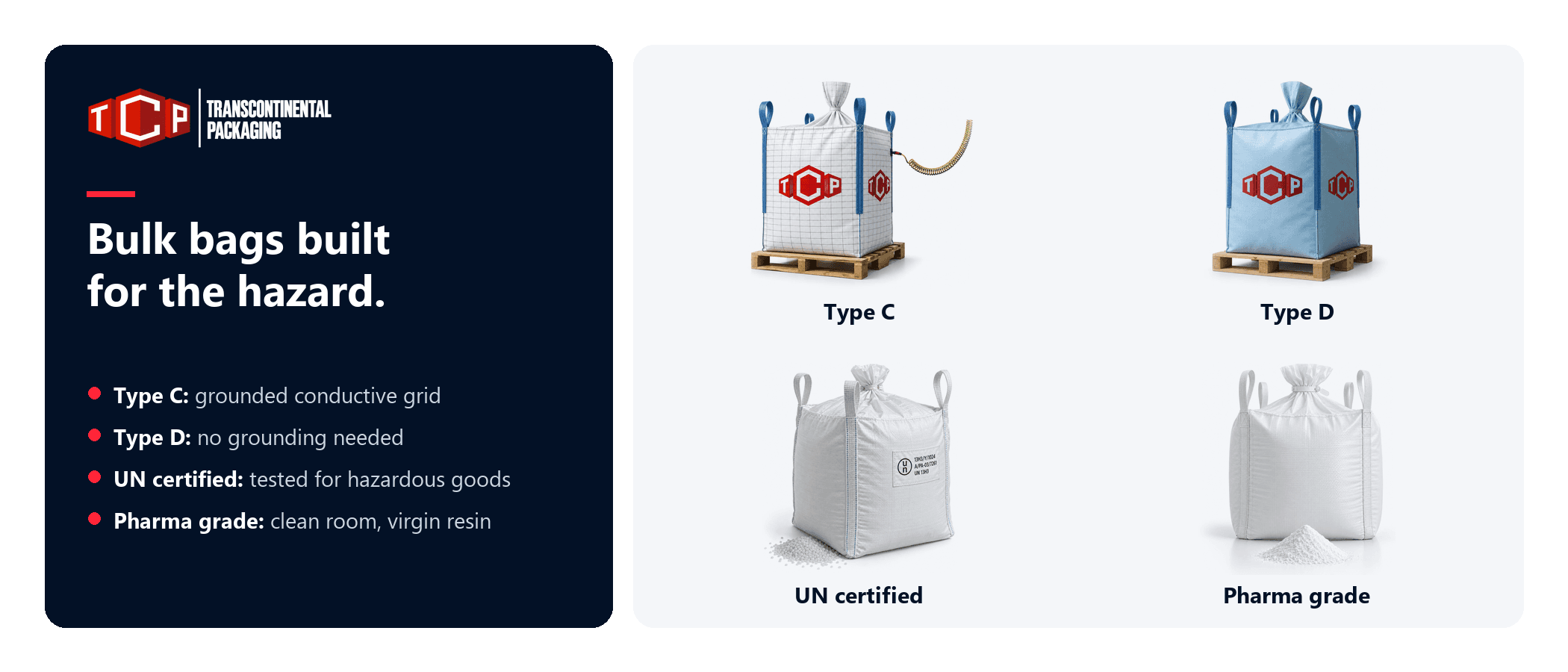
- Type C: conductive threads that must be grounded every fill and every discharge.
- Type D: static-dissipative fabric that needs no ground connection.
Type C vs Type D FIBC bags: which do you need?
Both types are safe to use with flammable powders and in spaces where flammable vapor or gas can collect. The difference is how they get there.
| Type C | Type D | |
|---|---|---|
| How it works | Conductive thread grid connected to a ground | Fabric bleeds charge safely into the air |
| Grounding | Required at every fill and discharge | Not required |
| Depends on | An operator connecting the ground every time | A clean fabric surface |
| Best fit | Fixed stations with an audited grounding routine | Mobile or many filling points, high staff turnover |
| Watch out for | Skip the ground and it is riskier than a plain bag | Grease, heavy dust or a water film can defeat it |
Type C bulk bags make sense when every station has a permanent ground point and someone checks it. Type D takes that human step out of the safety chain, which is why plants with many filling points often pay for it. Our Type C and Type D pages go into each in detail.
Hazardous material packaging: UN certified bulk bags
Static is about what happens in your plant. UN packaging is about what happens on the road, at sea and at the border. Solid hazardous goods moving under DOT, IMDG or ADR rules need dangerous goods packaging that has been tested and marked for that exact use.
Before a UN certified bulk bag design is approved, samples are dropped, tipped over, set upright and stacked under load, often by an outside test lab. The printed UN mark on every bag then tells inspectors which goods it may carry, how much it may hold and when it was made. These bags are rated to a 6:1 safety factor, a step up from the 5:1 of standard bags.
- Certification belongs to a specific design made at a specific plant. Change the fabric, construction or loops and it no longer applies.
- UN bulk bags are certified for solids, typically in packing groups II and III, never for liquids.
- The marking is the certification. A bag that looks the same but carries no marking has not been tested.
- The static type is chosen alongside, usually C or D for flammable hazardous goods.
We hold UN certification on approved designs; see our UN certified bags for what is covered, and tell us the class and packing group of your product when you ask for a quote.
Pharmaceutical packaging supplies: pharma grade bulk bags and liners
Drug ingredients are inspected for contamination and traced from supplier to batch, and a general-purpose bag cannot prove where it has been. Pharma grade goes beyond food grade on that point:
- 100% virgin polypropylene, with no recycled content.
- Production in a clean room on a dedicated run, made in ISO 9001 and ISO 14001 certified plants.
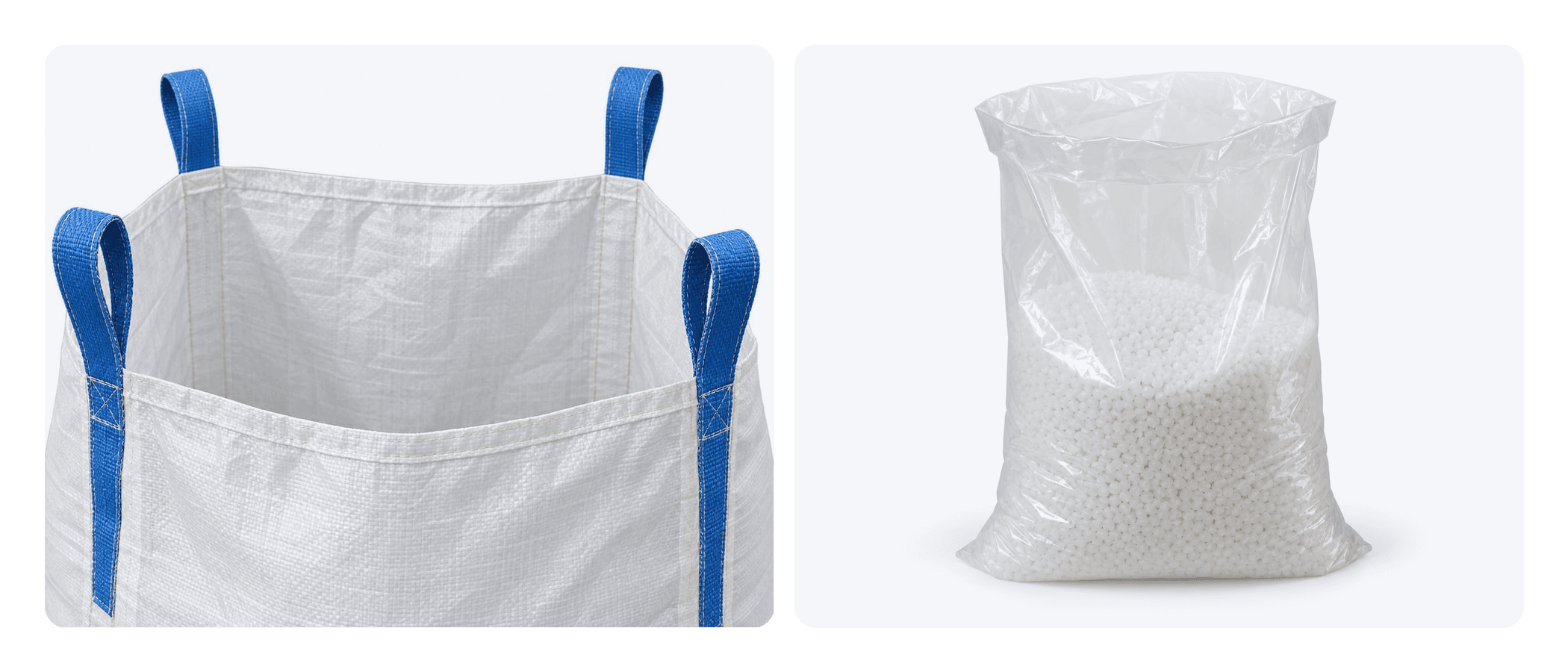
- FDA grade liners, glued-in or tabbed, and sift-proof seams for fine powders.
- Documentation matched to the standards your product is audited under, agreed per program.
Pharma grade is about the way the bag is produced and documented, not its shape, so the static type is still chosen for the material. See our pharmaceutical grade bulk bags and FIBC liners.
Choosing industrial packaging suppliers for chemicals
Chemical packaging companies vary a lot in how much they will help with the specification. Good industrial packaging suppliers will ask about your product before quoting, not after. When you compare chemical packaging services, ask:
- Which static type do you recommend for our product, and why?
- Is the UN certification held on this exact design, and can we see the marking?
- Will the liner affect the bag's static type?
- What documentation comes with each pharmaceutical or hazardous order?
- Where is stock held, and how fast can a reorder reach our plant?
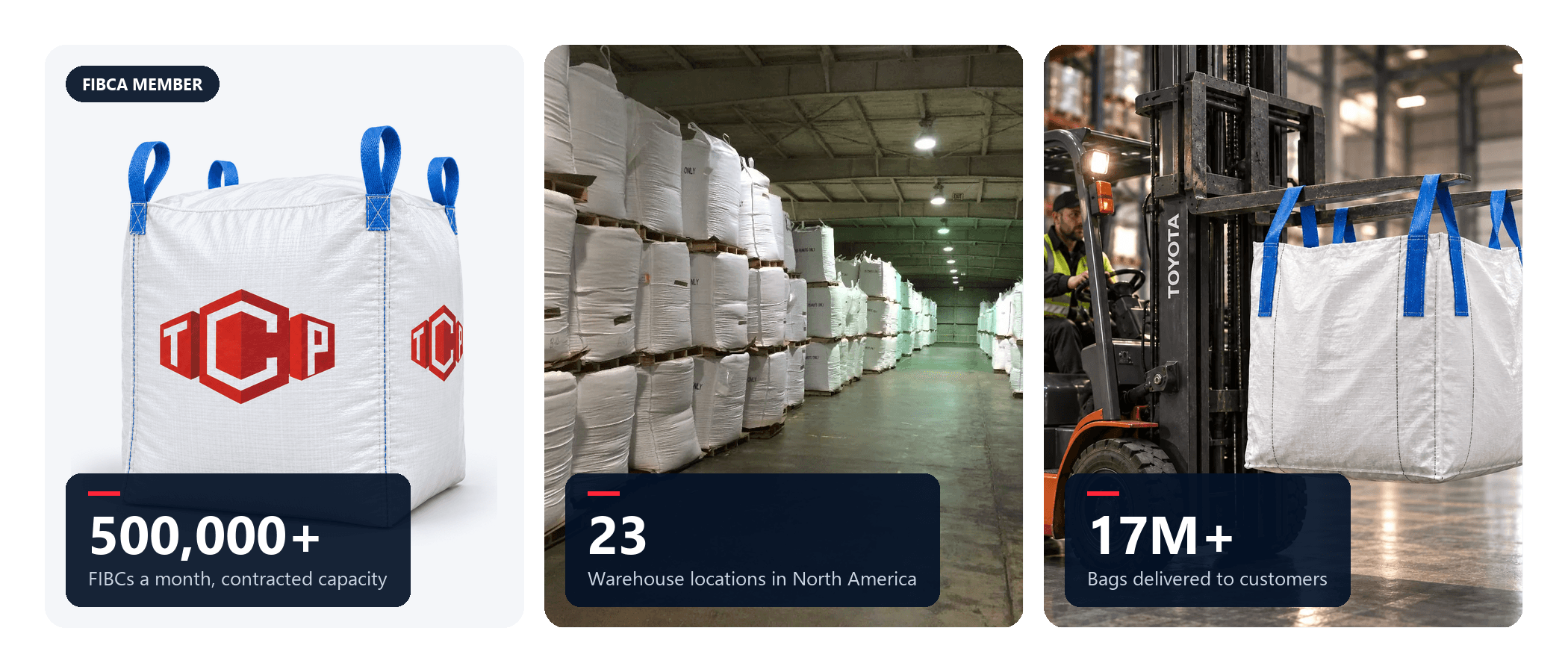
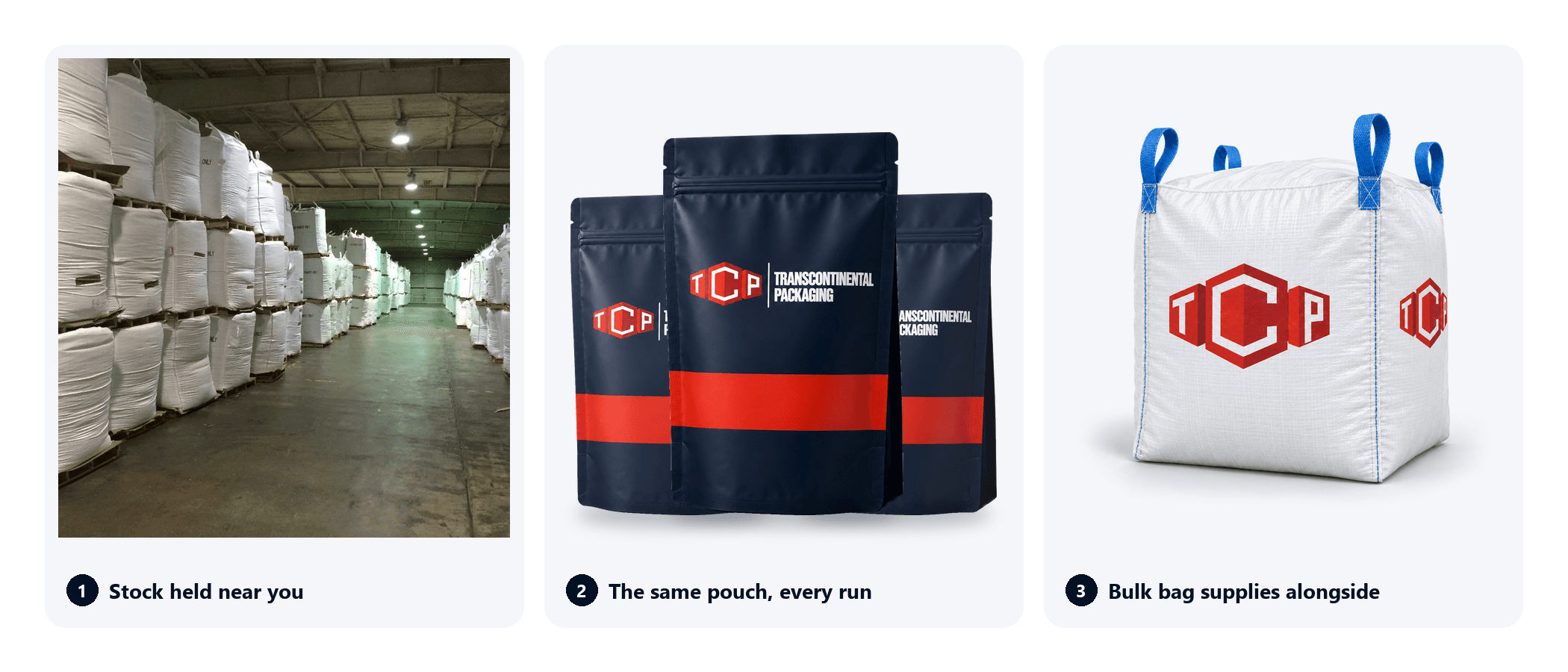
Transcontinental Packaging is a Houston-based supplier with stock in 23 warehouses across North America and partner plants that make every build above. Before you order, we will help your team decide which static type fits each product and what grounding, if any, it needs on the floor.
Getting a bulk chemical packaging quote
Send the product name and safety data, whether it is flammable, its UN class and packing group if it has one, how much goes in each bag and how your line fills and empties it. Request a quote or contact our team.
Related pages: Type A and Type B bags, what an FIBC is, and our chemical, pharmaceutical and oil and gas industry pages.
Explore our packaging product range or visit the Transcontinental Packaging homepage to learn about our company and the industries we serve.