
Published on
Bulk Bag Liner Types: Loose, Glued-In, Tabbed and Baffle Liners Explained
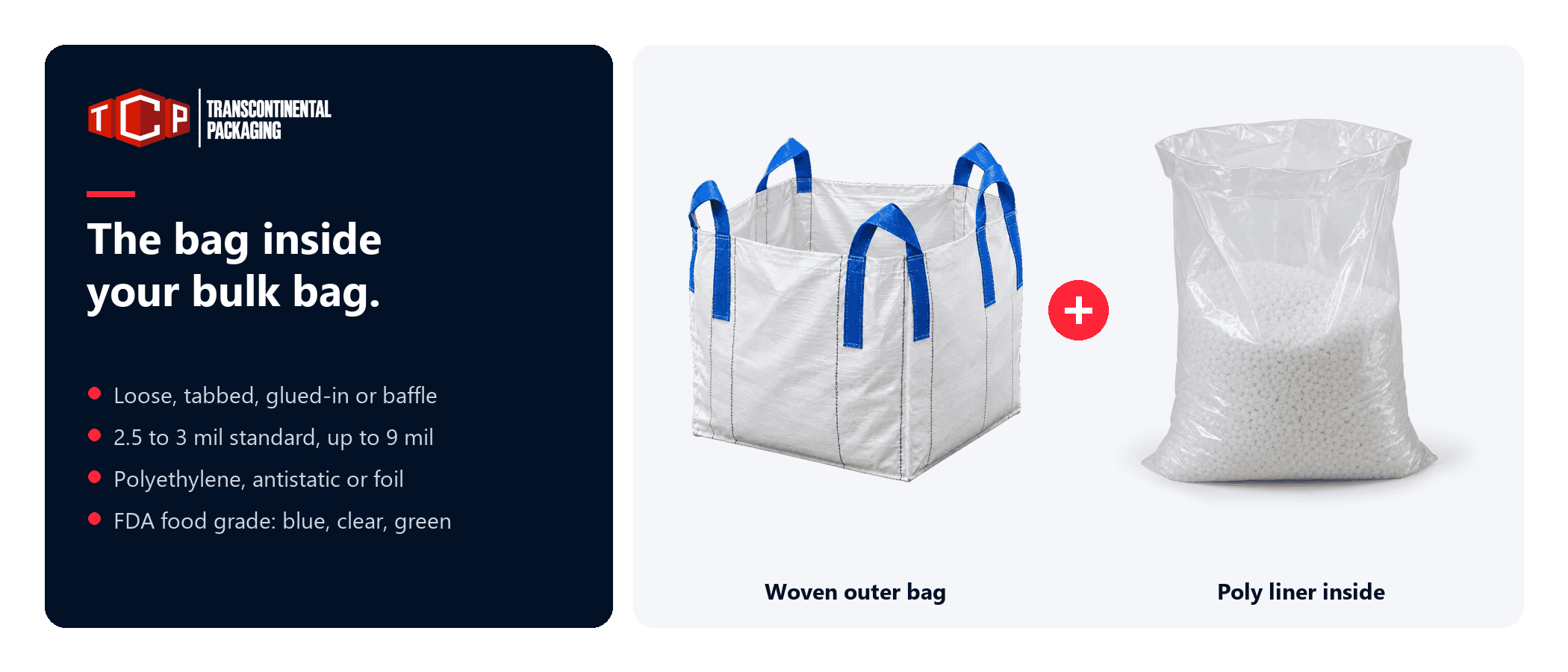
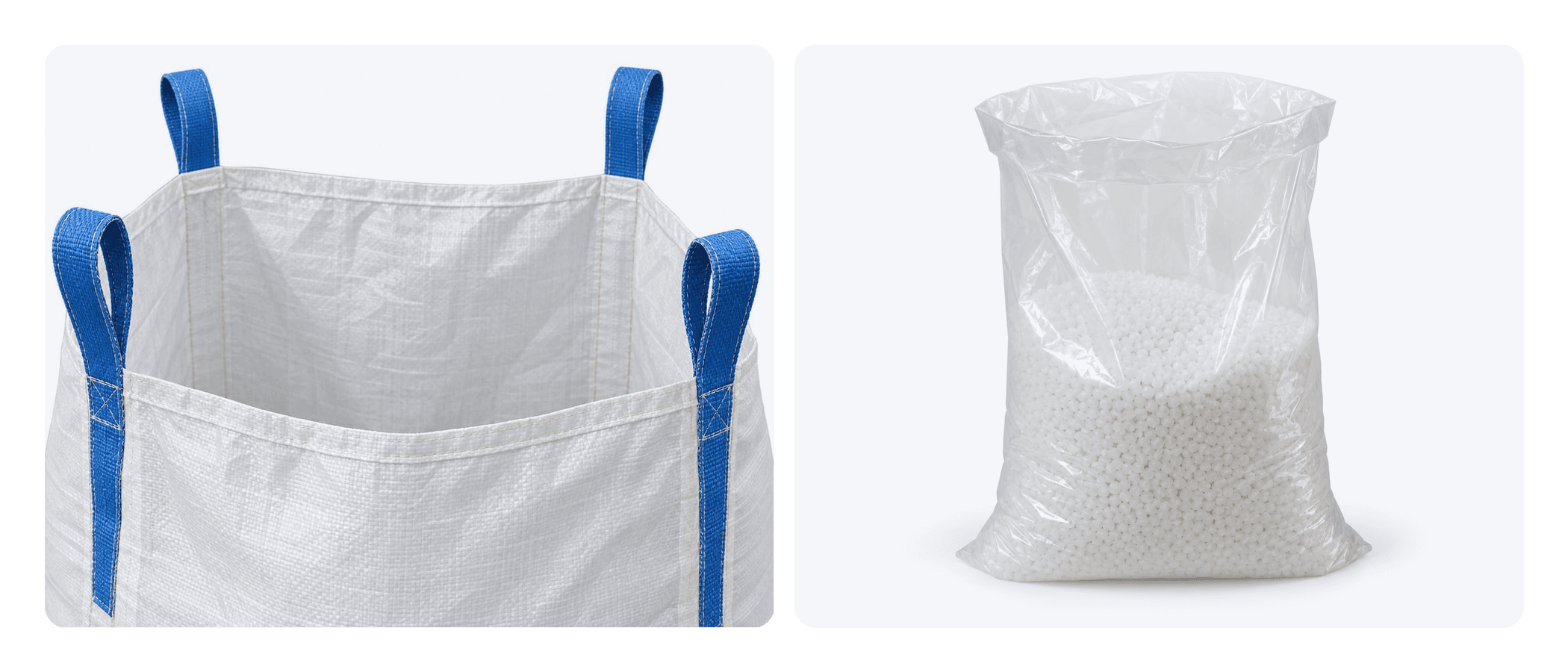
Open a bulk bag of sugar or flour and you will usually find a second bag inside it: a thin plastic liner that keeps the product dry and clean while the woven bag around it takes the weight. Most buyers never think about that inner bag until one twists during filling, tears on discharge or lets moisture in.
This guide is about the liner itself: how it is fitted, how thick it is and what it is made of. If you are still deciding whether your product needs a liner at all, start with our post on matching the liner to the product.
What is a bulk bag liner?
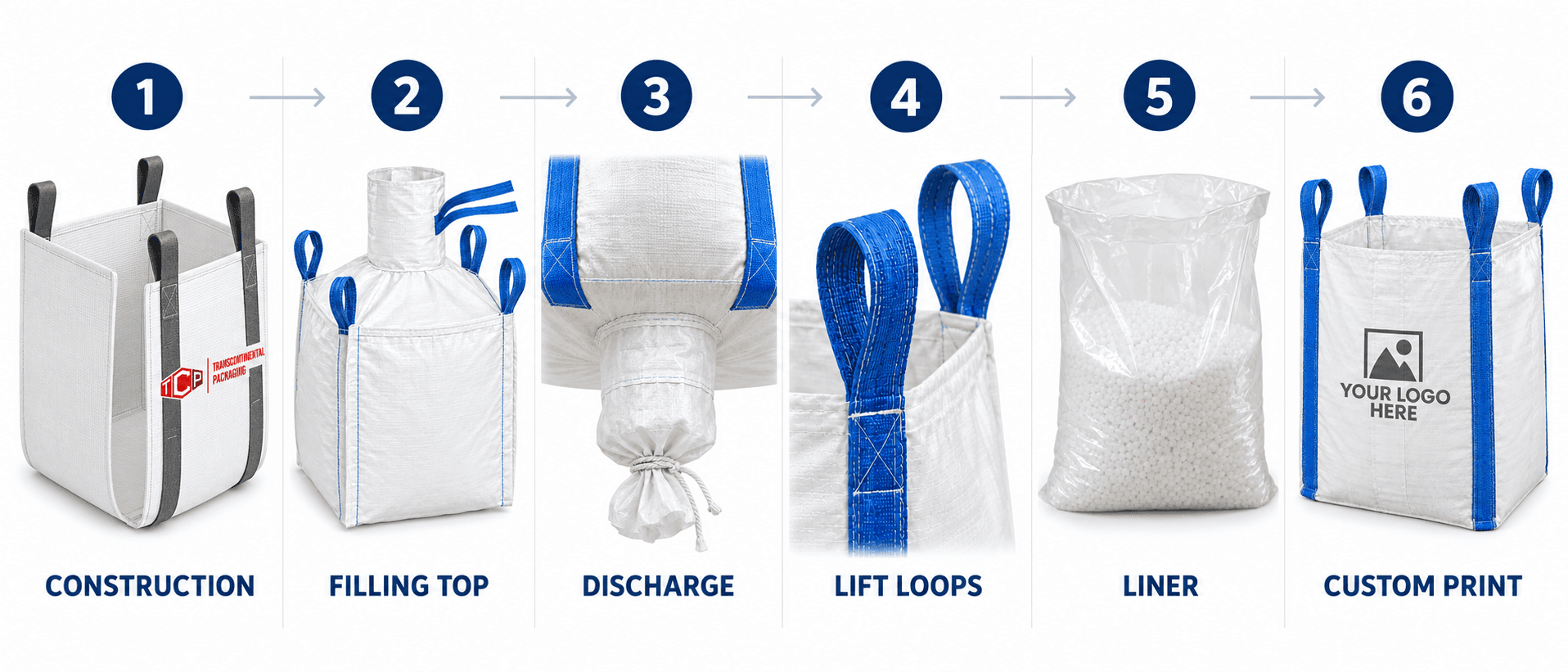
A bulk bag liner, also called an FIBC liner or bulk liner bag, is a film bag that sits inside the woven bulk bag. The woven fabric is strong but not airtight, so the liner adds what the fabric cannot: a barrier against moisture and dirt, a clean surface for food, and a way to stop fine powders sifting through the weave.
FIBC liner types: how the liner is fitted
The biggest choice on our FIBC liners is how the liner is held inside the bag, because that decides whether it stays put while you fill and empty it.
| Fitting | How it works | Best for |
|---|---|---|
| Loose liner | Dropped into the bag and held only at the spouts | Lower volumes, simple products, the lowest cost |
| Tabbed liner | Tied to the bag's inside corners with tabs | A middle ground: steadier than loose, cheaper than glued |
| Glued-in liner | Bonded to the inside of the bag | Busy filling lines, where the liner must not move |
| Baffle liner | Shaped to follow the baffles of a square bag | Baffle bags, where a plain liner would bunch at the corners |
Because it is bonded to the fabric, a glued-in liner cannot twist or pull out while the bag fills or empties, so fast lines tend to choose it. A loose liner saves money where the pace is gentler, and a tabbed one splits the difference.
Baffle liner: the right liner for baffle bags
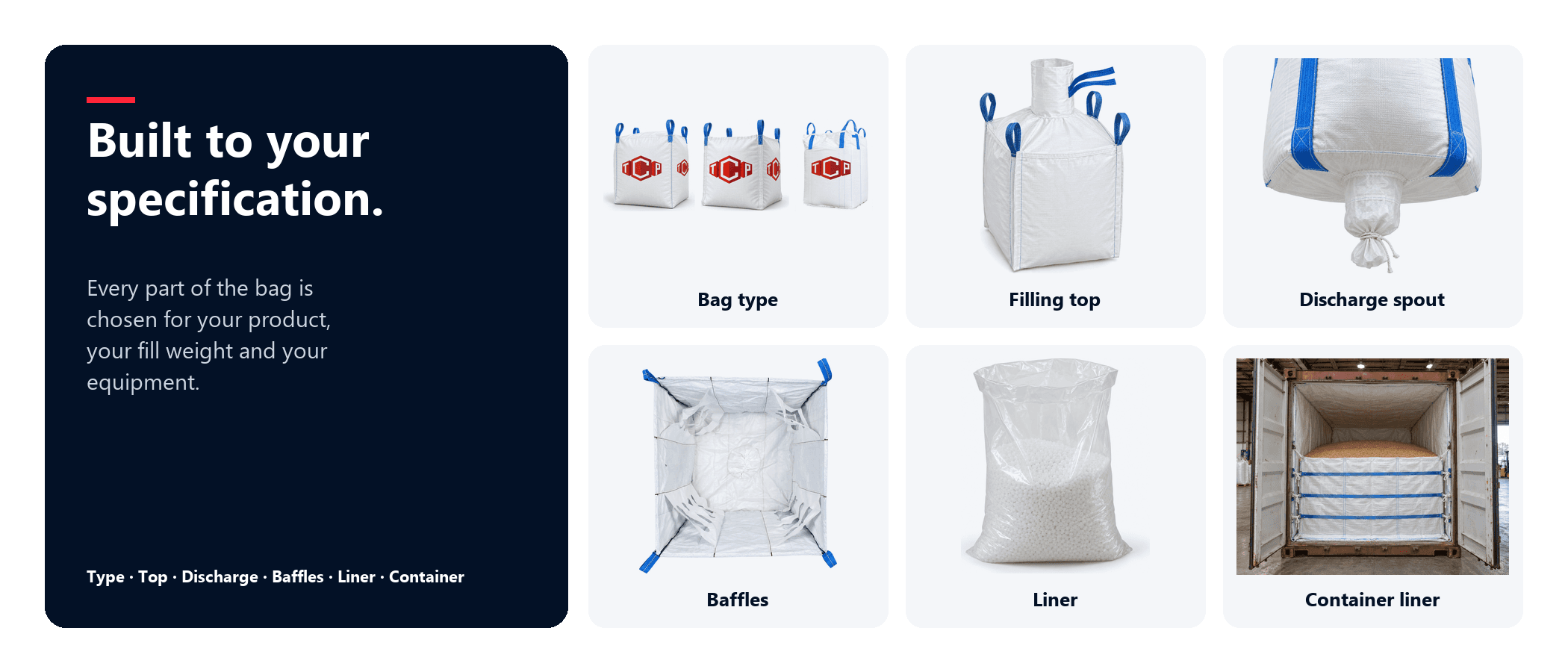
A baffle bag keeps its square shape with fabric panels sewn across the corners. A round, loose liner does not follow that shape: it bunches into the corners, fills unevenly and can trap product on discharge. A baffle liner, sometimes called a form-fit liner, is cut to the same square shape as the bag, so the two fill together. If you use baffle bags and your product needs a liner, mention it on your enquiry and we will confirm the right build.
Poly liner bags: film and thickness
Most plastic liner bags for FIBCs are polyethylene, which is why buyers often call them poly liner bags. Thickness is measured in mil, a thousandth of an inch.
- Standard duty: 2.5 to 3 mil suits most dry products that just need protecting from moisture and dirt.
- Heavy duty: up to 9 mil for sharp, heavy or abrasive product that could puncture a thinner film.
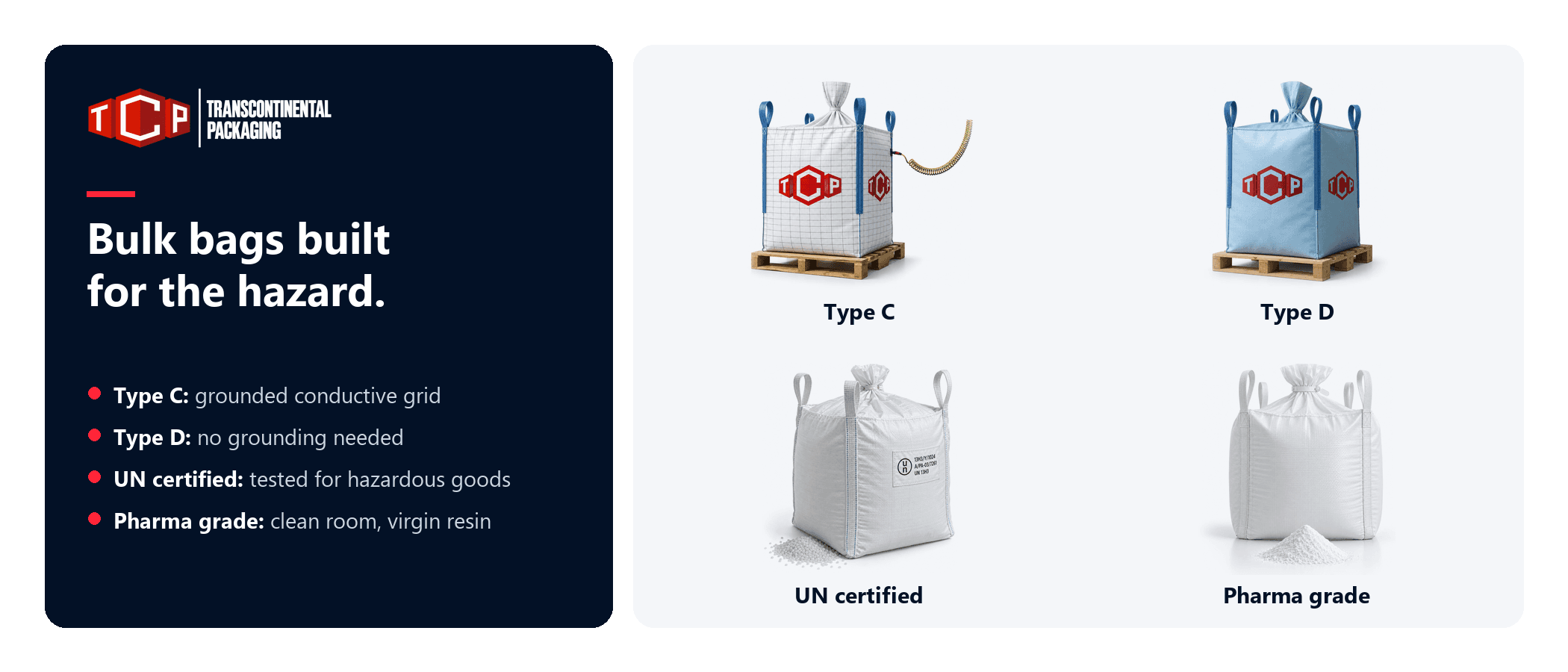
- Antistatic: for Type B, C and D bags, where an ordinary polyethylene liner could undo the bag's static protection.
- Foil: a full barrier against moisture and oxygen, or for product that goes in hot.
Bulk liner bags for food
Food grade liners come in FDA food grade film in blue, clear or green. Blue is the popular choice in food plants because a scrap of blue film is easy to spot in a white product, which is why many auditors prefer it. Clear lets you see the product without opening the bag. Pair a food grade liner with a food grade bulk bag so the whole package meets the same standard.
FIBC liners and static protection
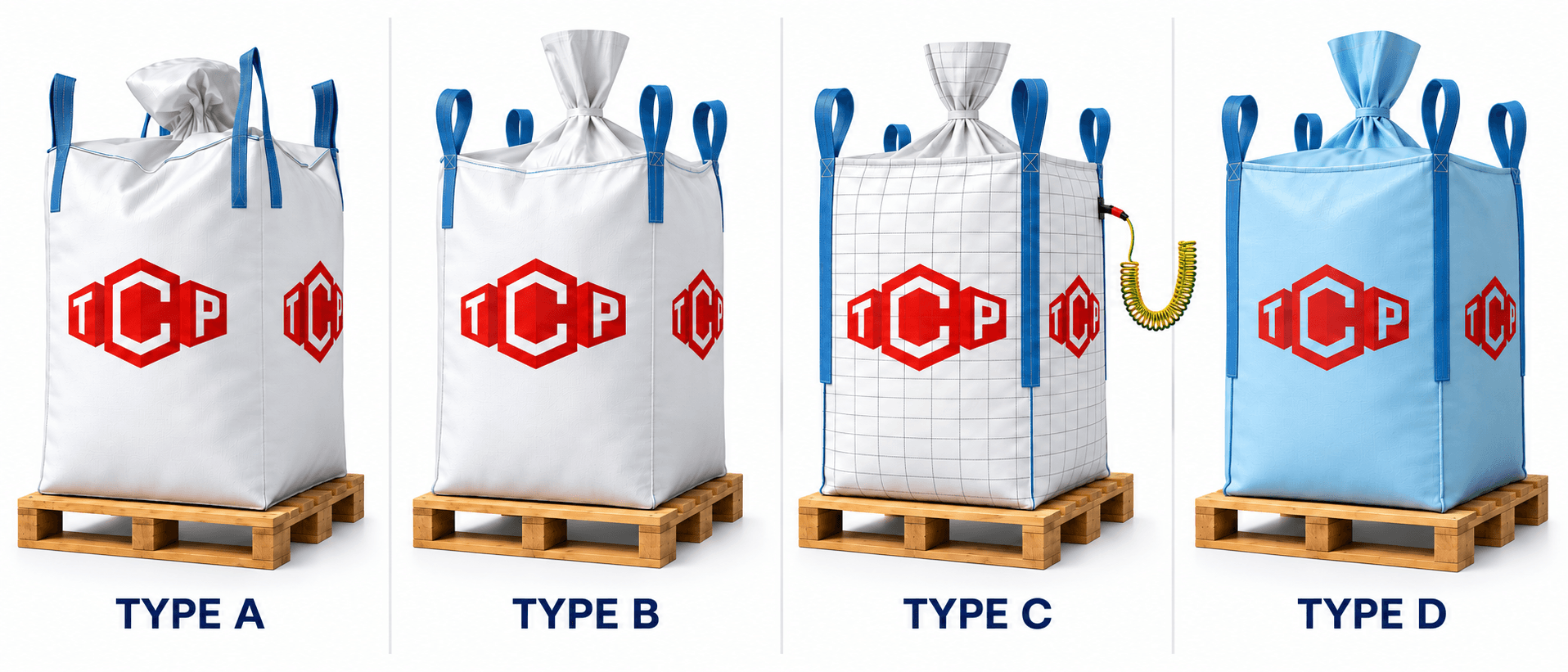
This is the mistake that matters most. Type B, C and D bags are built to control static, but an ordinary polyethylene liner inside them can act as an insulating layer and undo that work. If you use a Type C or Type D bag, specify the liner and the bag together, and use an antistatic liner where needed.
Ordering bulk bag liners
- Your product, and whether it is food, a fine powder, hot, or sensitive to moisture.
- The bulk bag the liner goes into: size, construction and static type.
- How you fill and empty it, and how fast the line runs.
- Your preferred fitting, if you have one: loose, tabbed, glued-in or baffle.
Send those details to Transcontinental Packaging and we will match the liner to the bag. Request a quote, see the full range on our FIBC liners page, or browse our bulk bags.
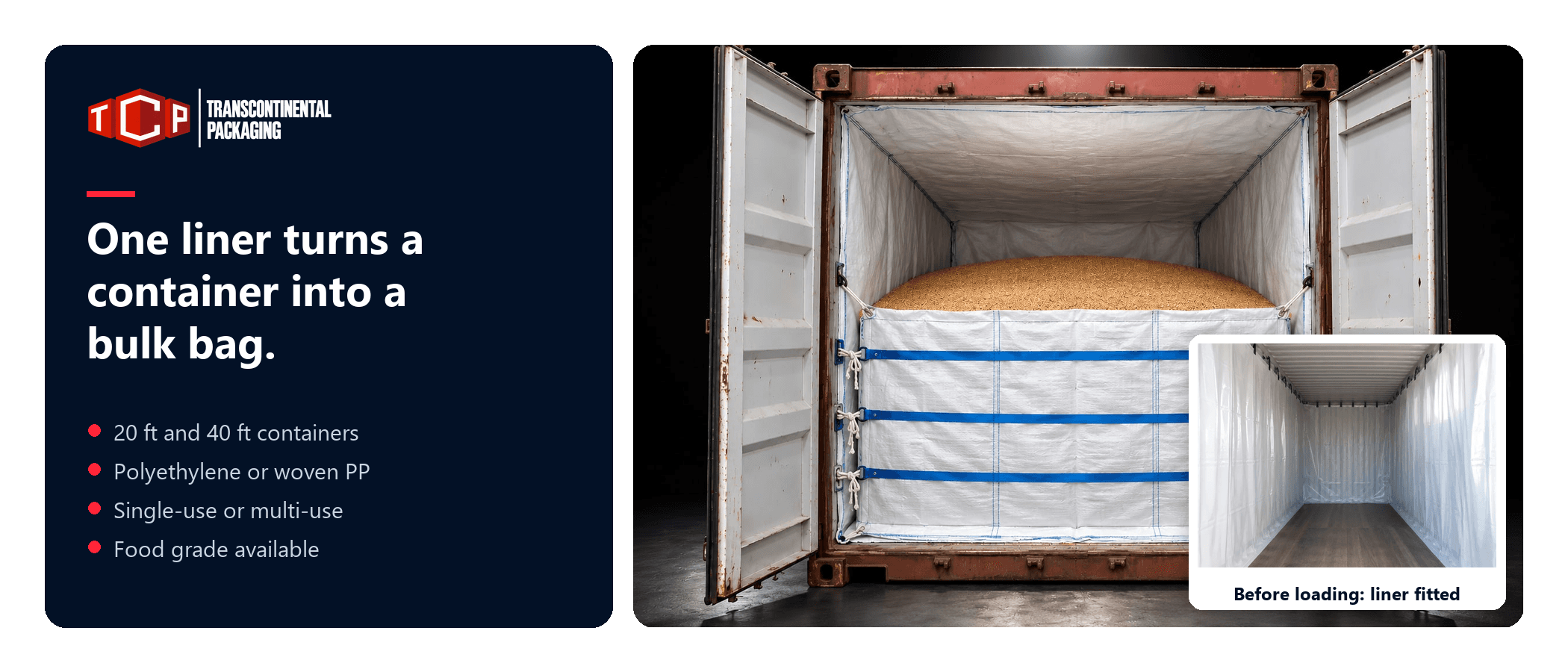
Related pages: container liners for whole shipping containers, plus our sugar, ingredients and chemical industry pages. Back to the Transcontinental Packaging home page.
Explore our packaging product range or visit the Transcontinental Packaging homepage to learn about our company and the industries we serve.