

Specialty
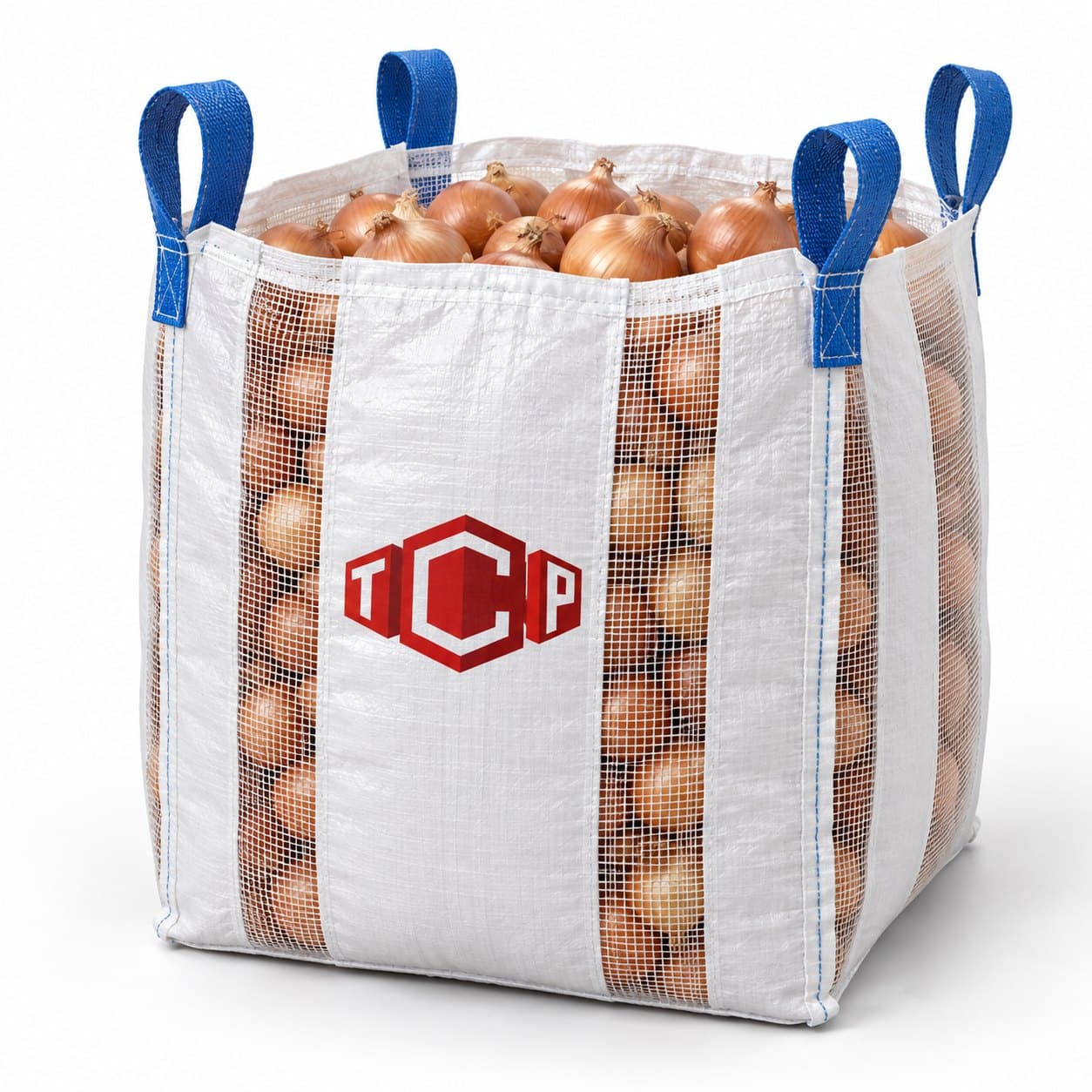
Ventilated
Airflow for produce
Mesh panels or an open weave letting air move through the load, for produce that has to breathe.
Product description
A ventilated bag uses mesh panels or an open weave so air moves through the load rather than around it. Produce that respires, or that has to stay dry, spoils in a sealed bag.
Colour options are worth considering here: farms and packers routinely use bag colour to identify a lot, a field or a grade at a glance, and custom print carries the traceability information.
Uses
- Onions, potatoes and root vegetables
- Firewood and kindling
- Shellfish and live crawfish
- Any produce that respires or must not sweat in transit
Industries we supply this for: Food Service, Ingredients, Animal Nutrition, Peanut
Configurable options
Everything below is specified per order. Nothing here is a fixed catalogue number.
| Ventilation | Mesh panels or full open weave |
|---|---|
| Construction | U-panel, four-panel, circular |
| Top | Open, duffle |
| Bottom | Flat, spout |
| Loops | Corner (four-point), cross corner |
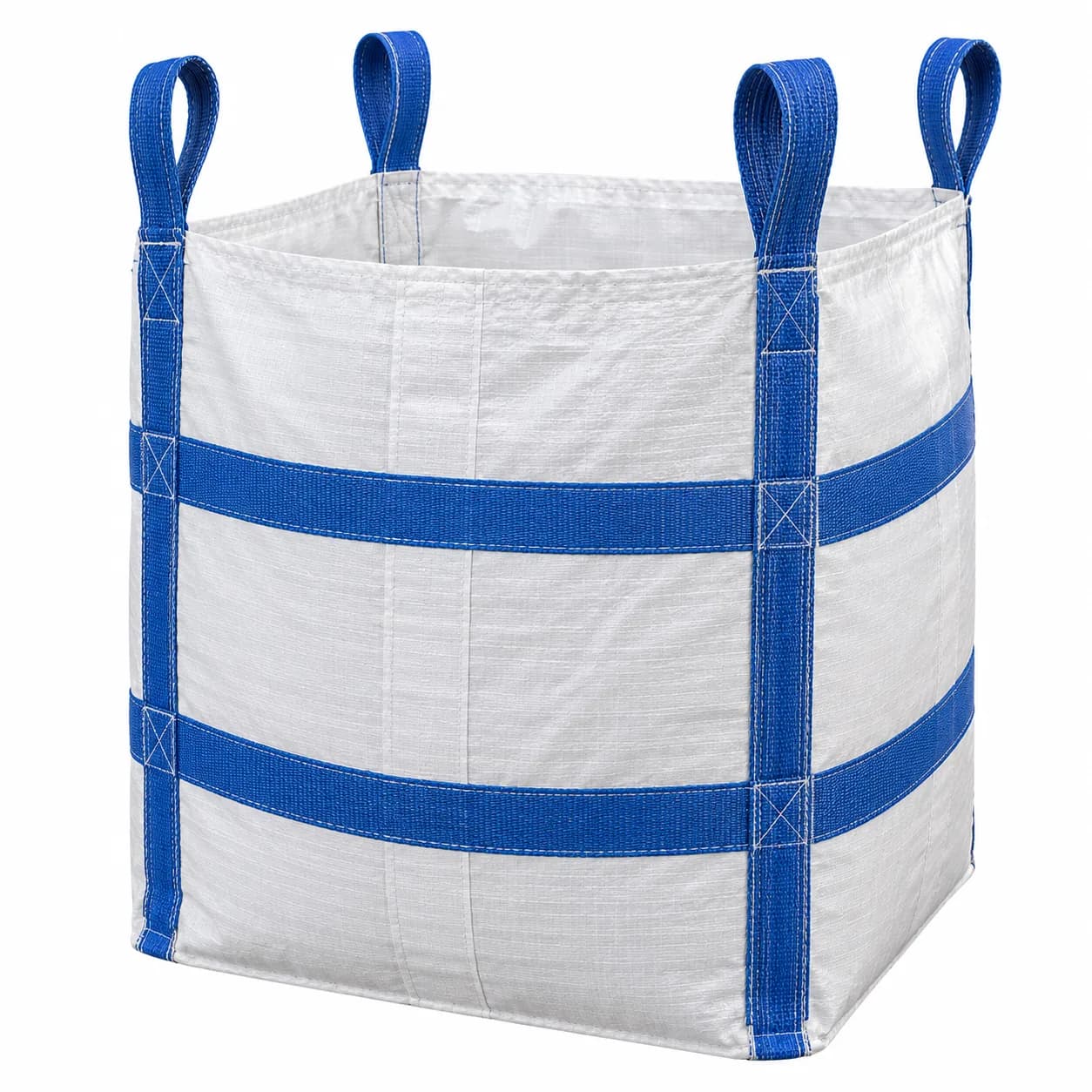
| Colour | Multiple colours for lot identification |
| Add-ons | Custom print for traceability |
Customizable options
Every option below is available on this product. They change how the bag fills, lifts and empties.
Lift loops
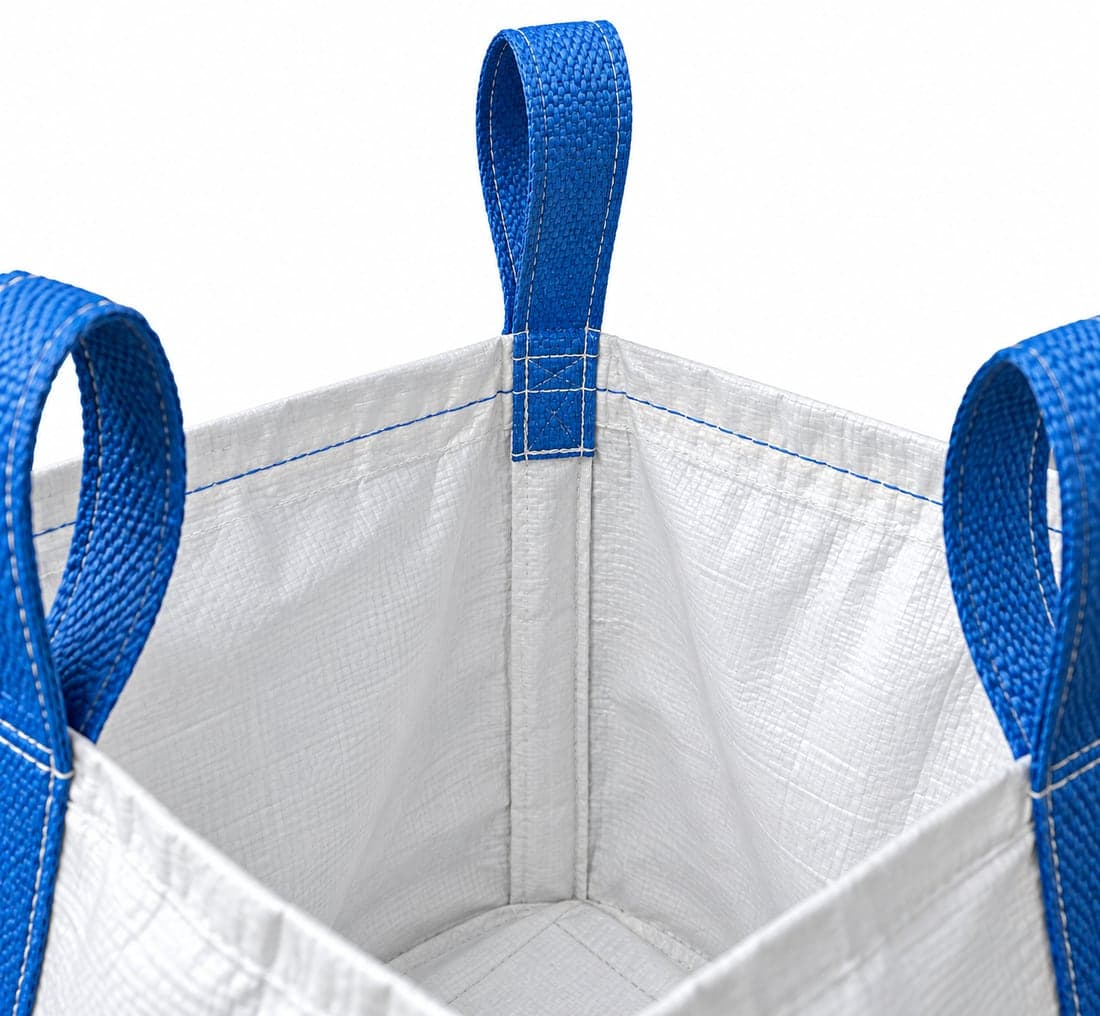
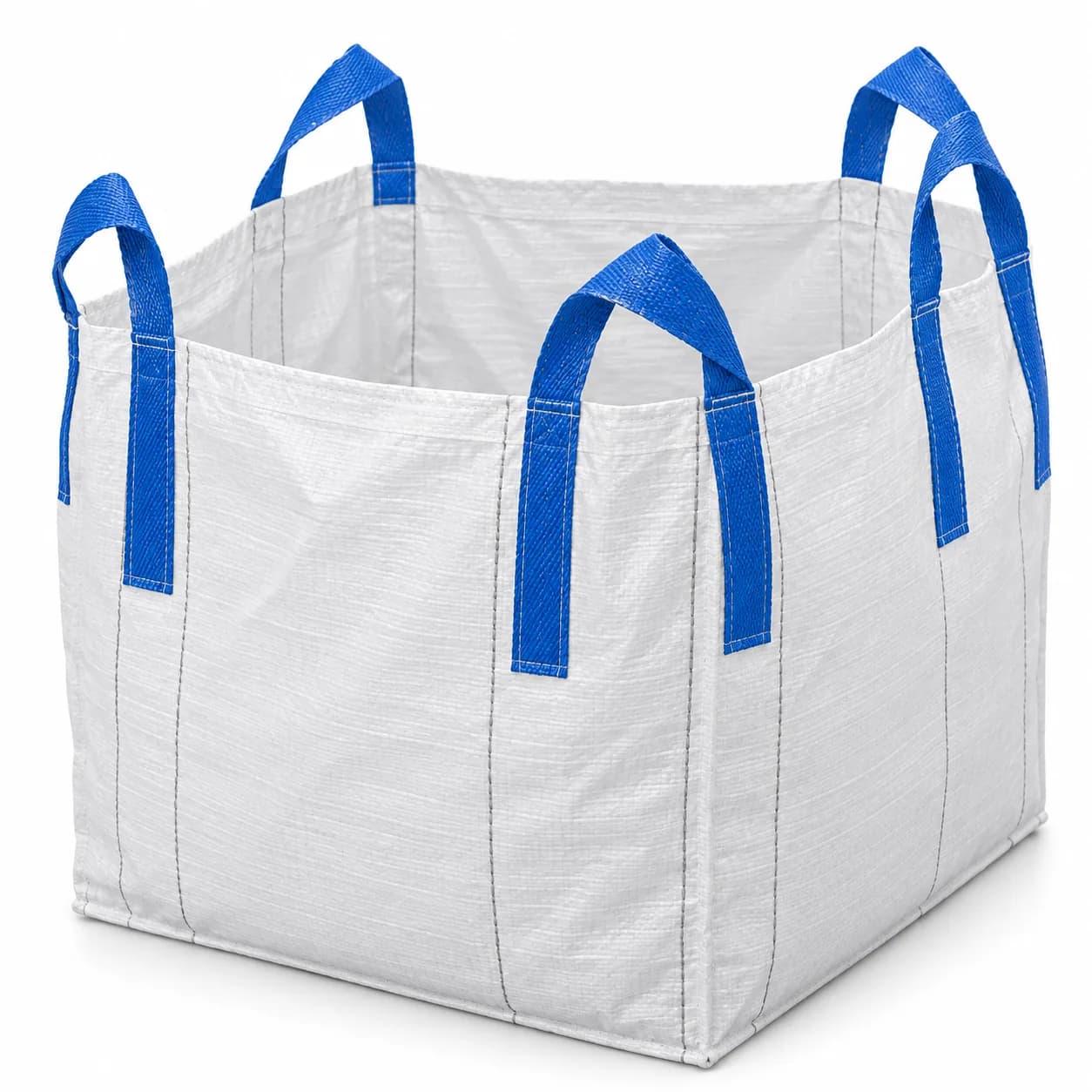
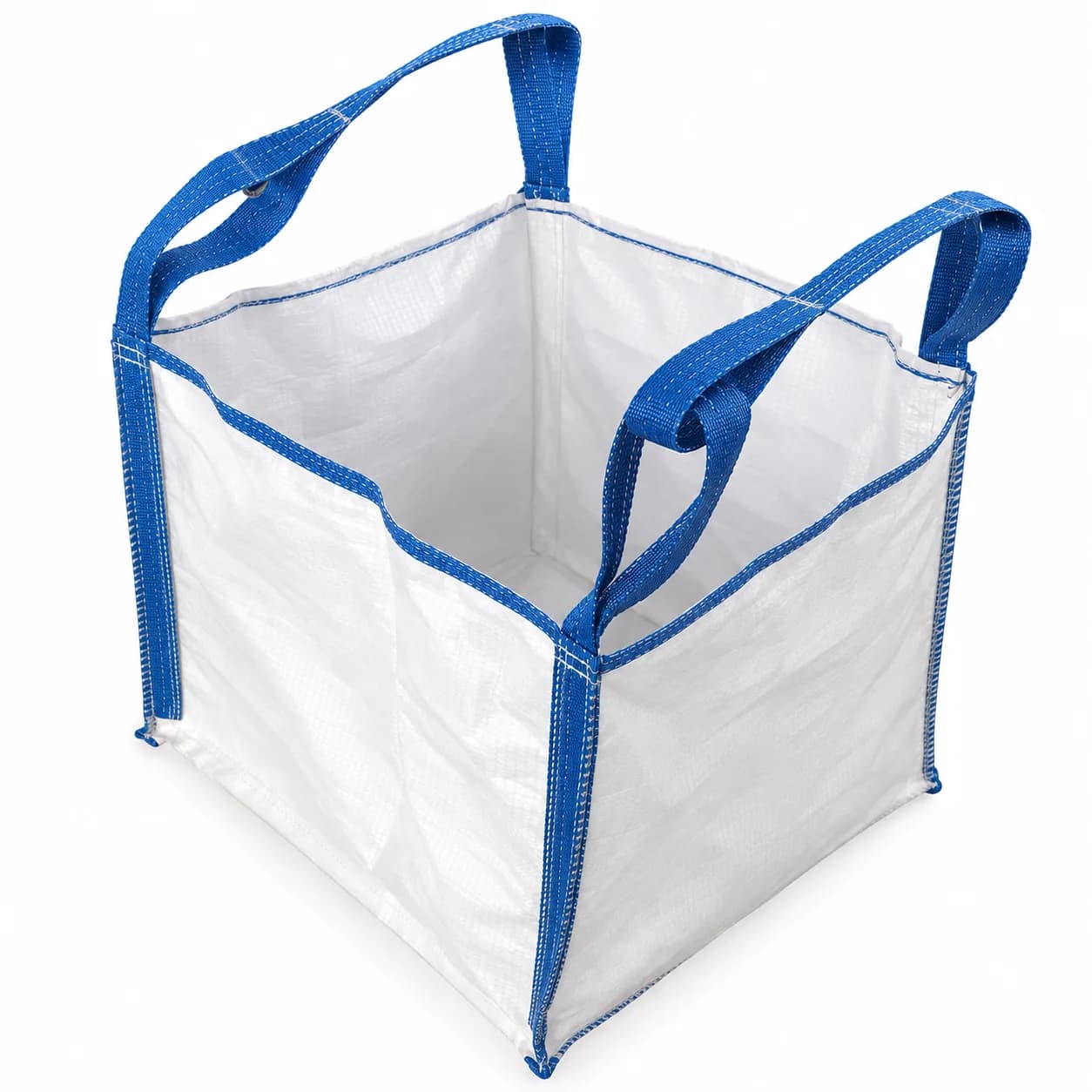
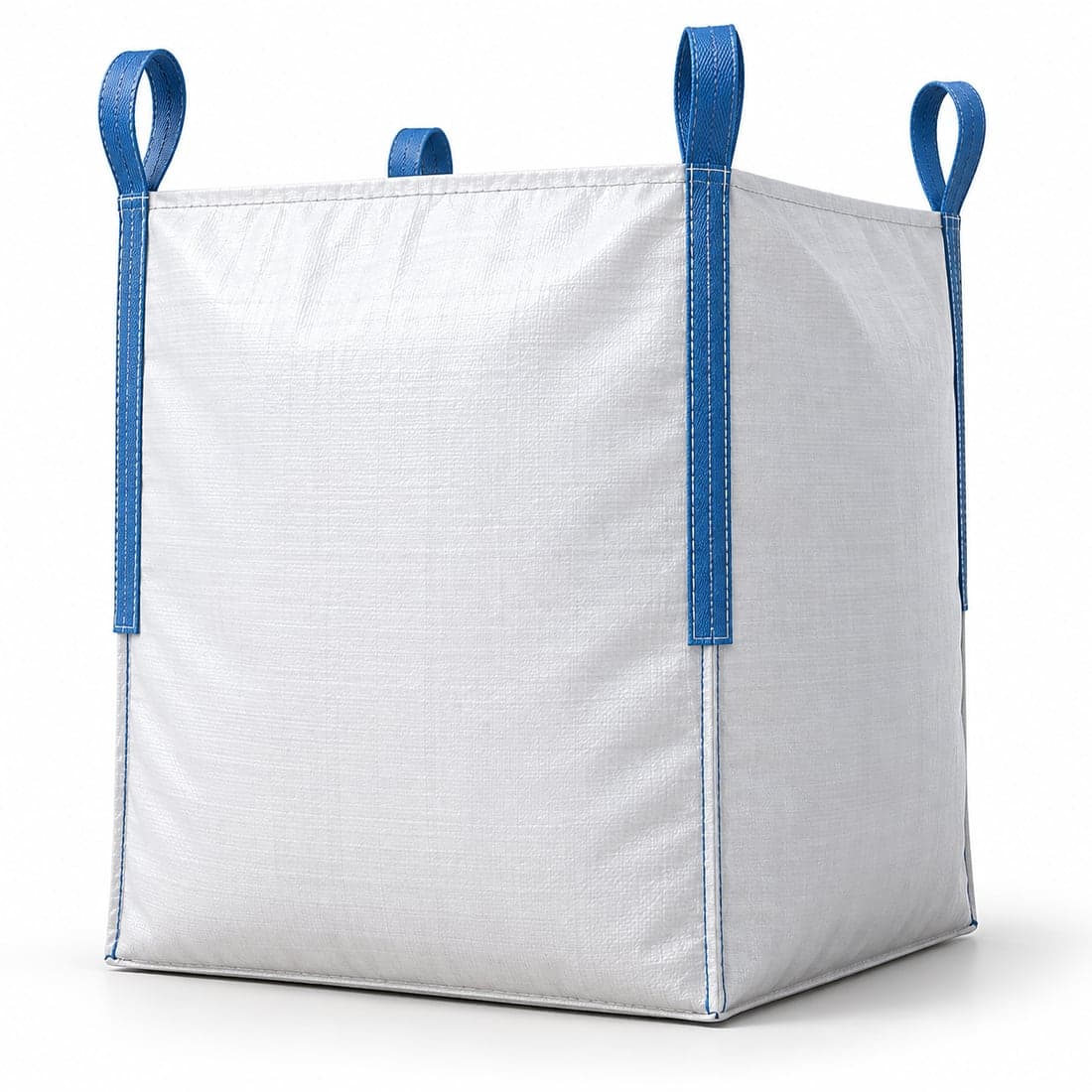
Corner loops
One loop sewn into each corner seam. The standard build, and the most affordable way to lift a bag.
Cross corner
Sewn into eight points across opposite corners, so the loops stand upright and the forklift operator is not fishing for four floppy straps.
Tunnel loops
A sleeve of body fabric spanning each side, corner to corner. The forks go straight through: the easiest pick where headroom is tight.
Stevedore straps
Double-layer straps across the corner loops, so the bag can be taken on one or two points instead of all four.
Double loops
Two lifting points instead of four, where that suits the load and the lift better.
Top
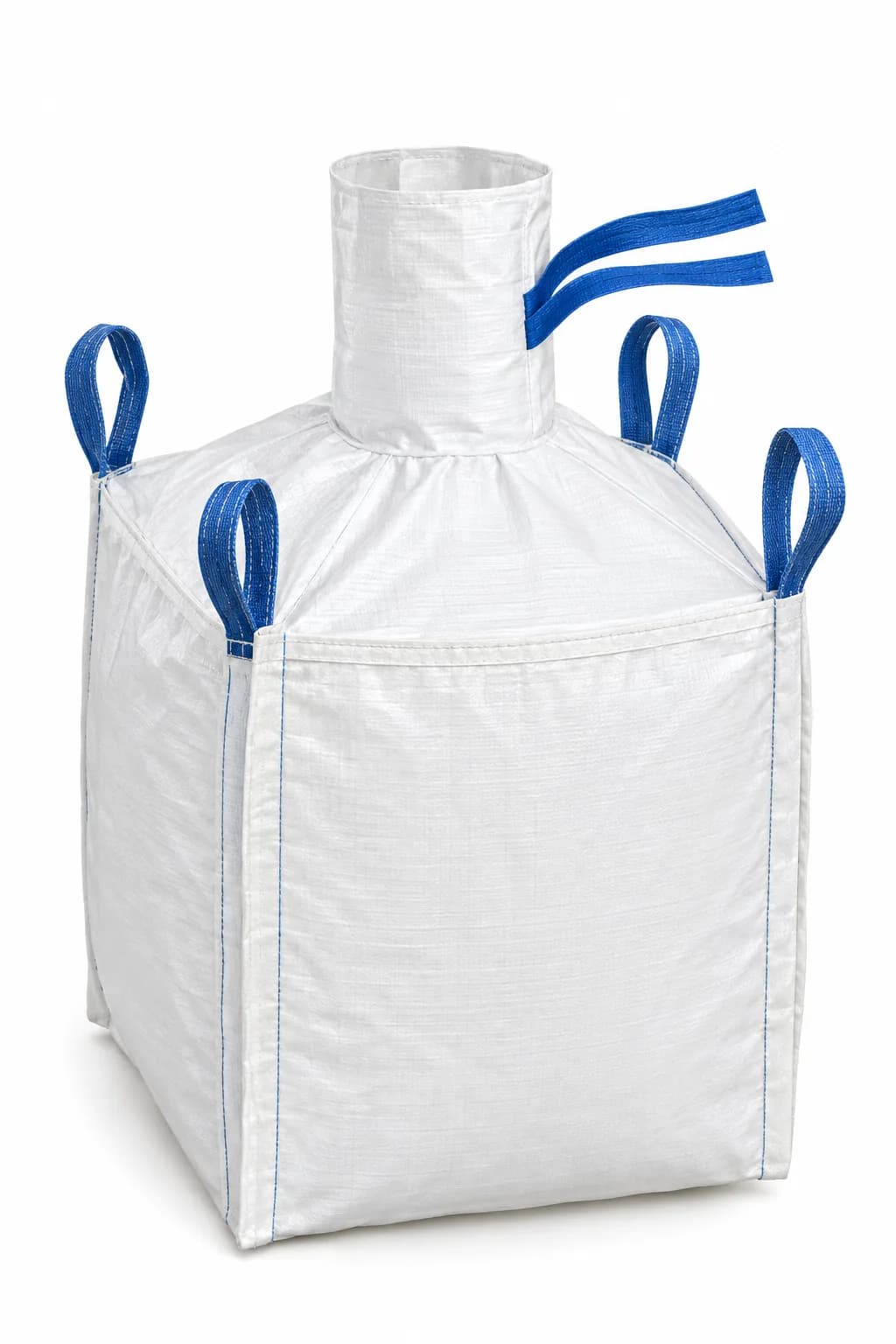
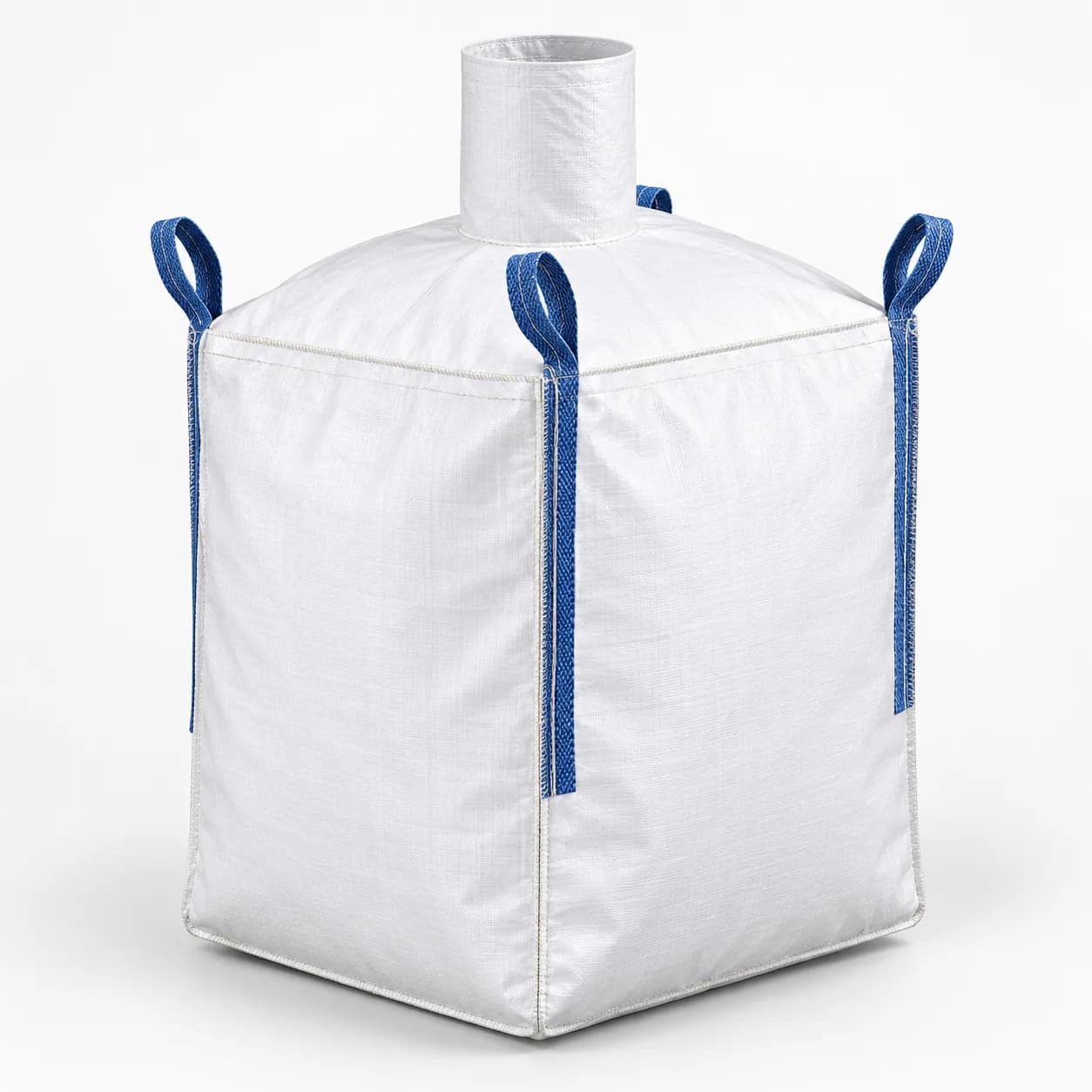
Spout top
A cylindrical spout sewn into the top panel. 14 in diameter by 18 in long as standard, sized to your filling head.
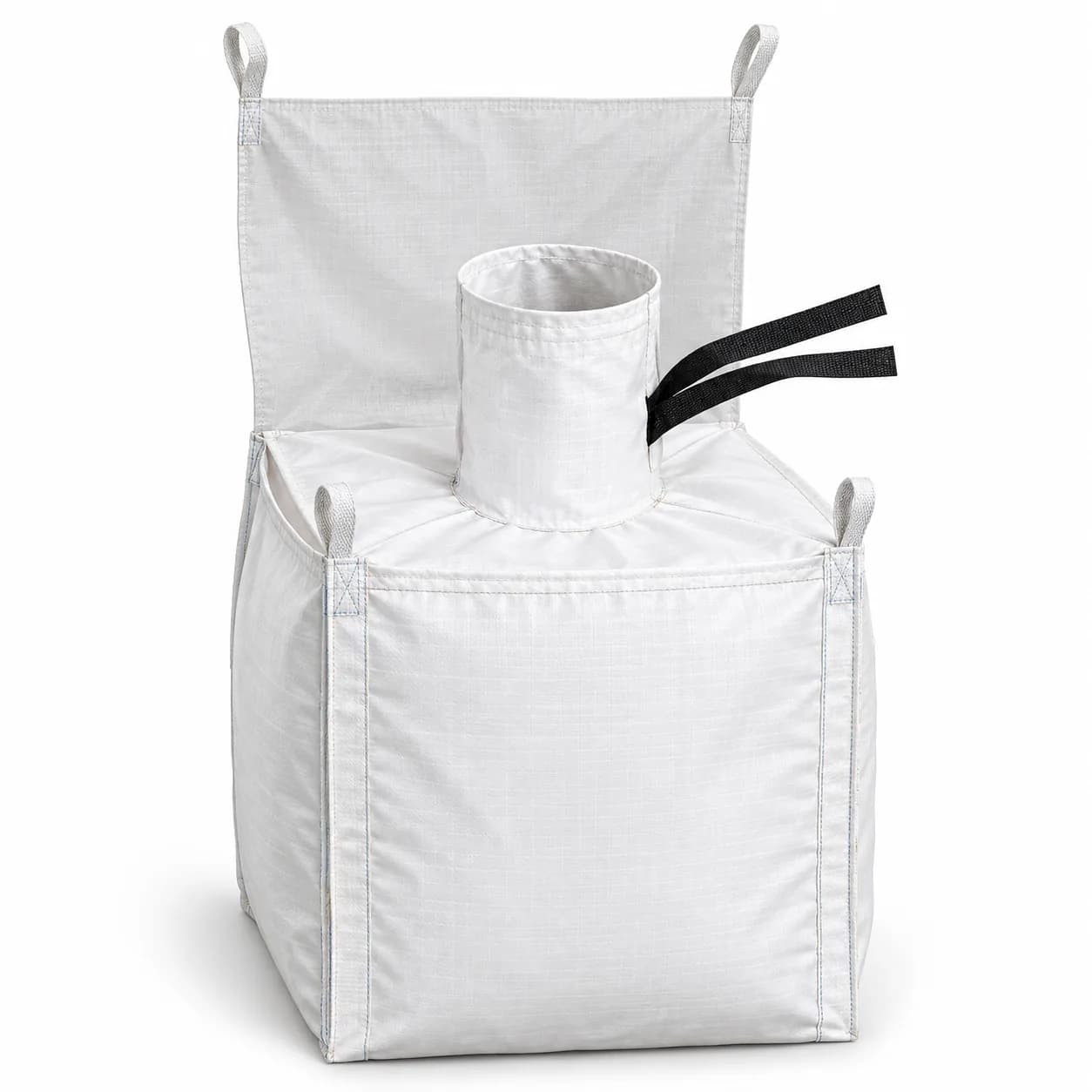
Spout top with flap
A spout top with a flap panel over it, tied down so the spout stays covered in transit.
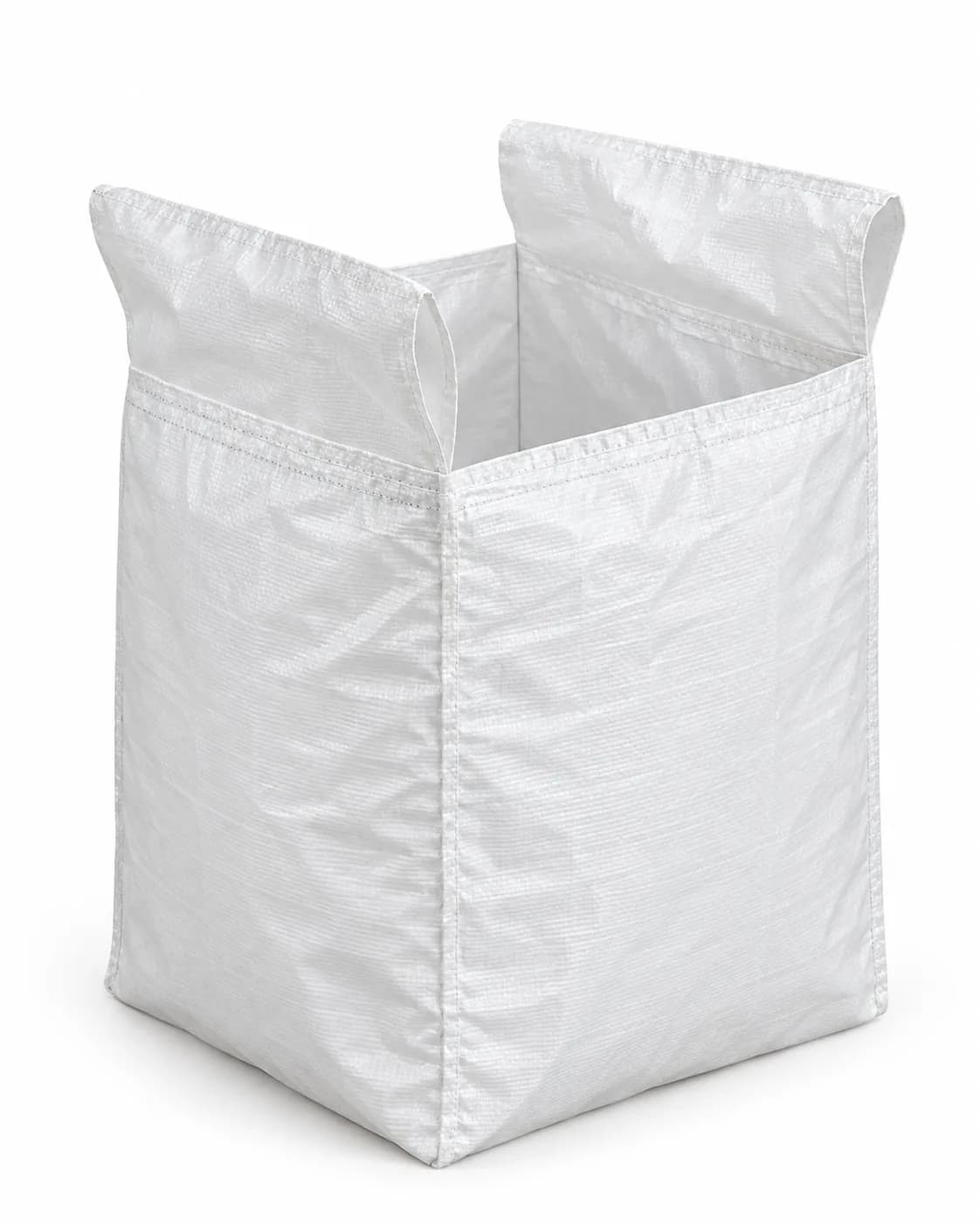
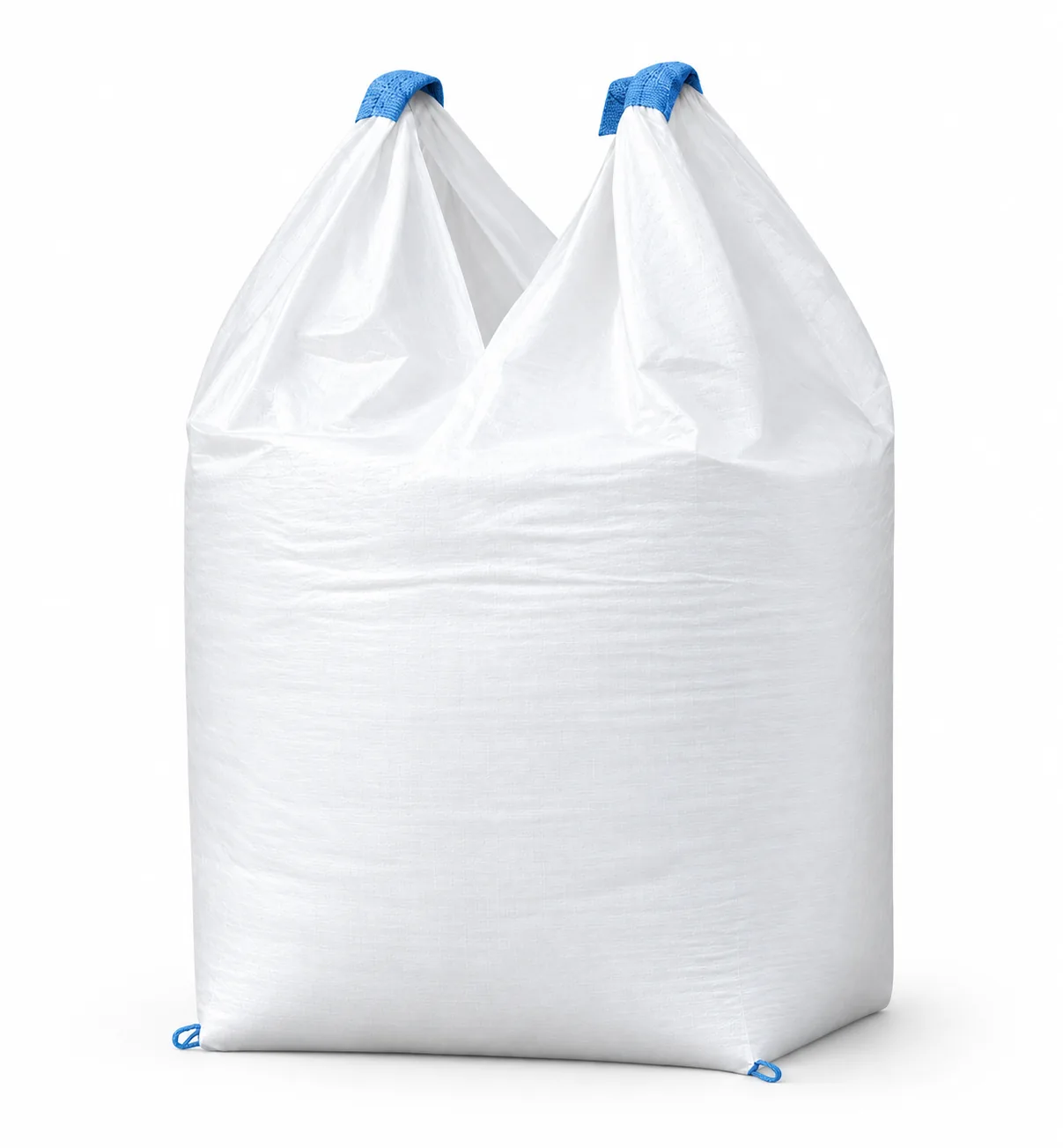
Duffle top
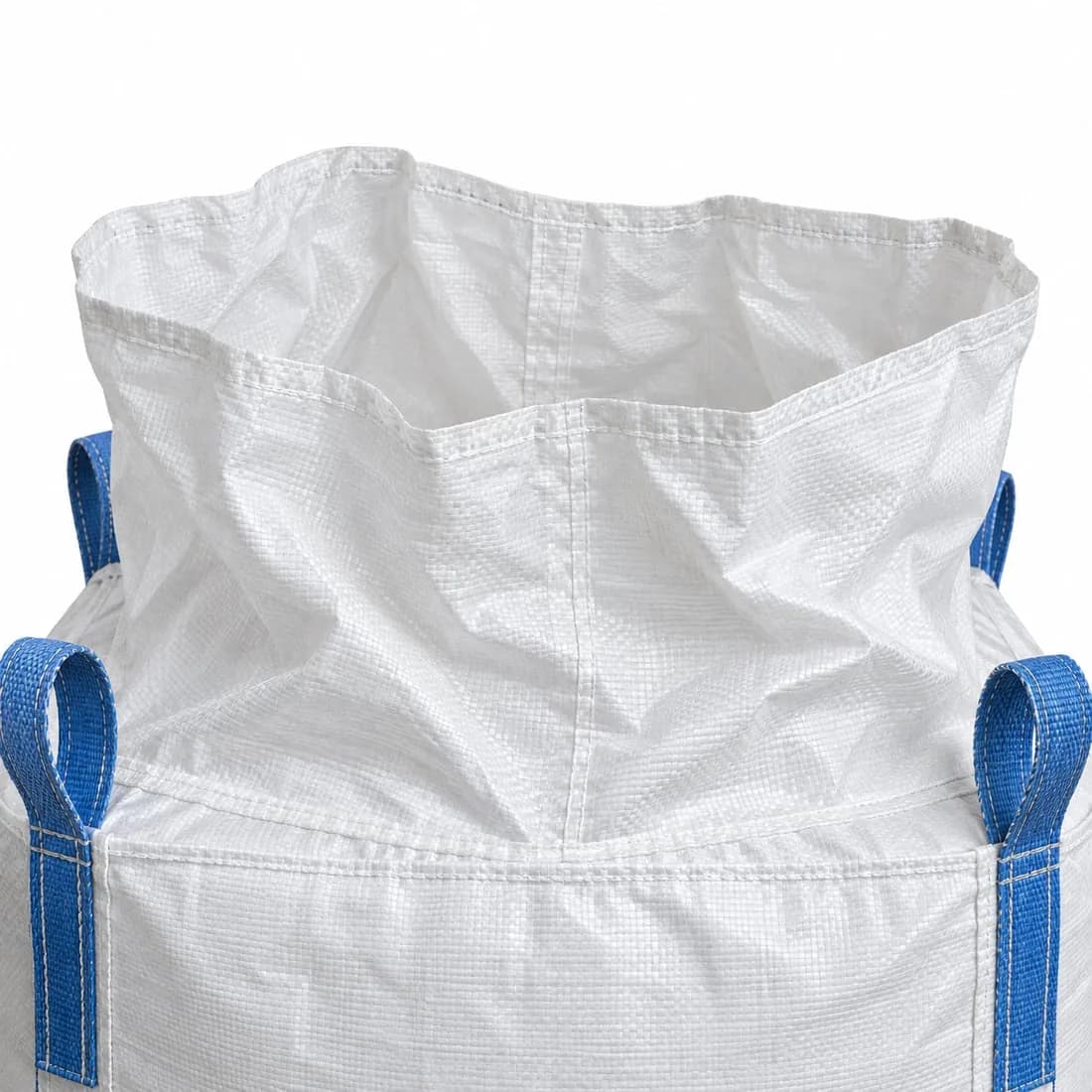
A skirt the full width and depth of the bag, so the top opens completely and ties closed.
Flap top
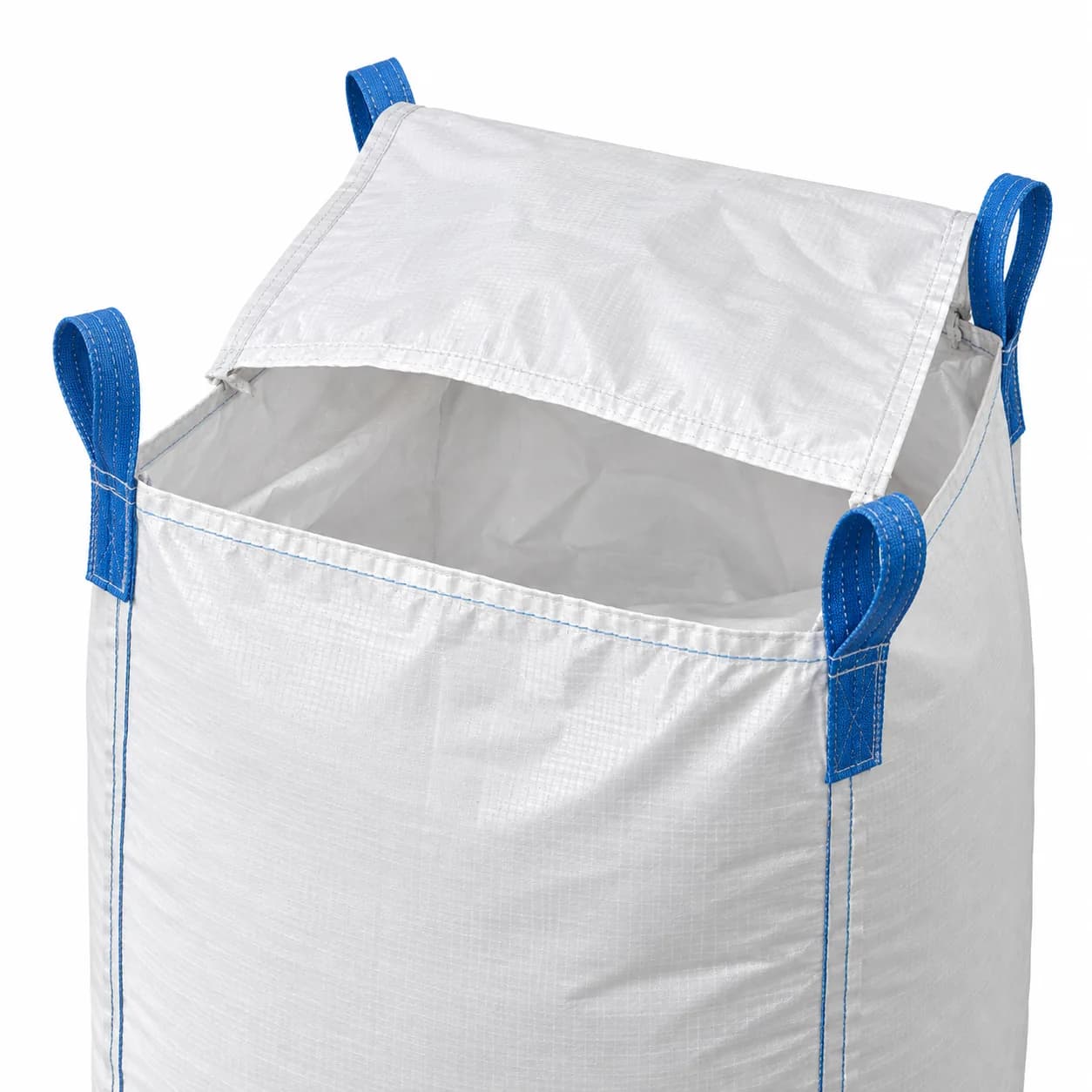
A closed panel with a flap sewn along one seam, tied down over the mouth.
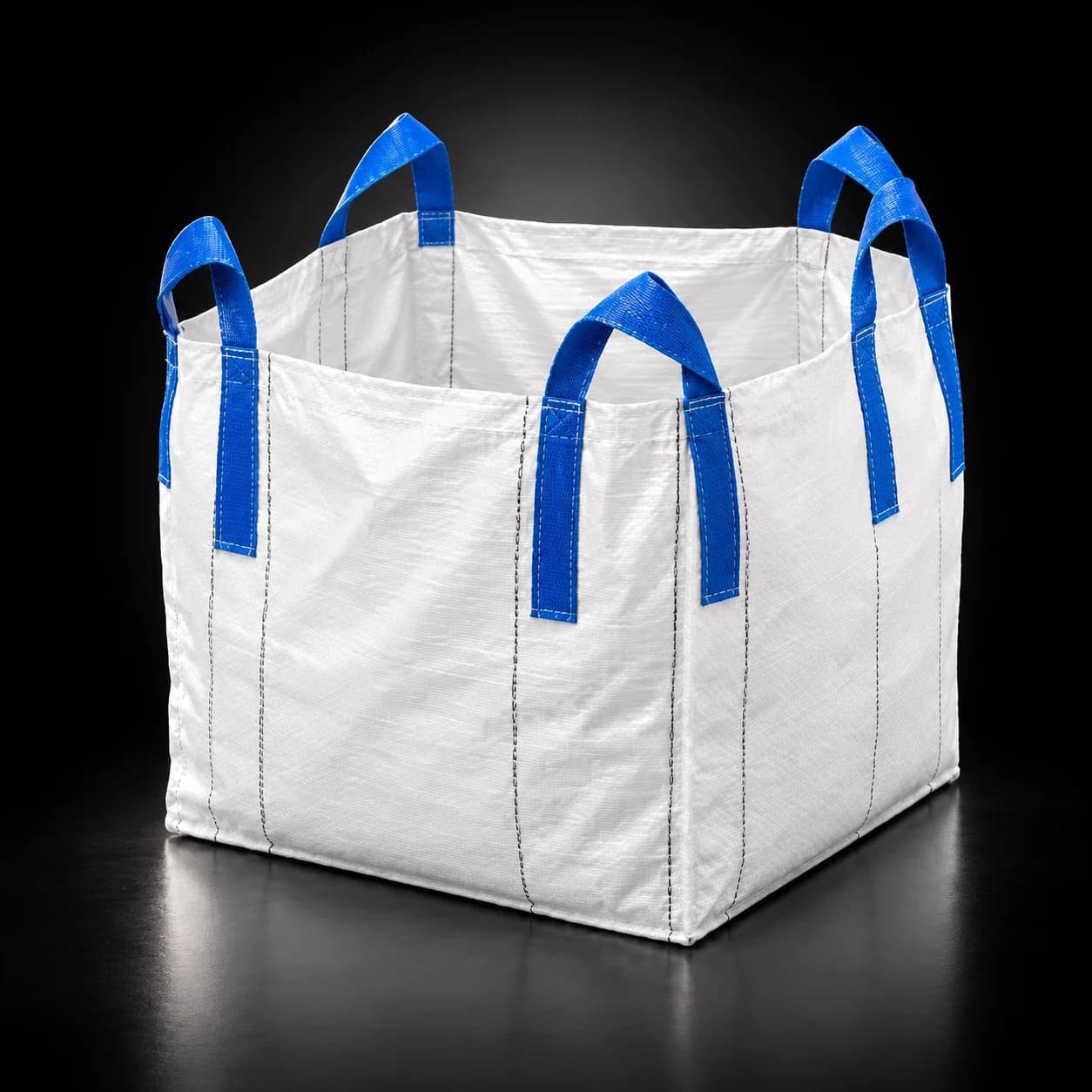
Open top
No panel at all. Fastest to fill where dust and weather are not a concern.
Conical spout top
A top panel that tapers up into the spout. Double spout tops are available too, specified to your filling equipment.
Bottom
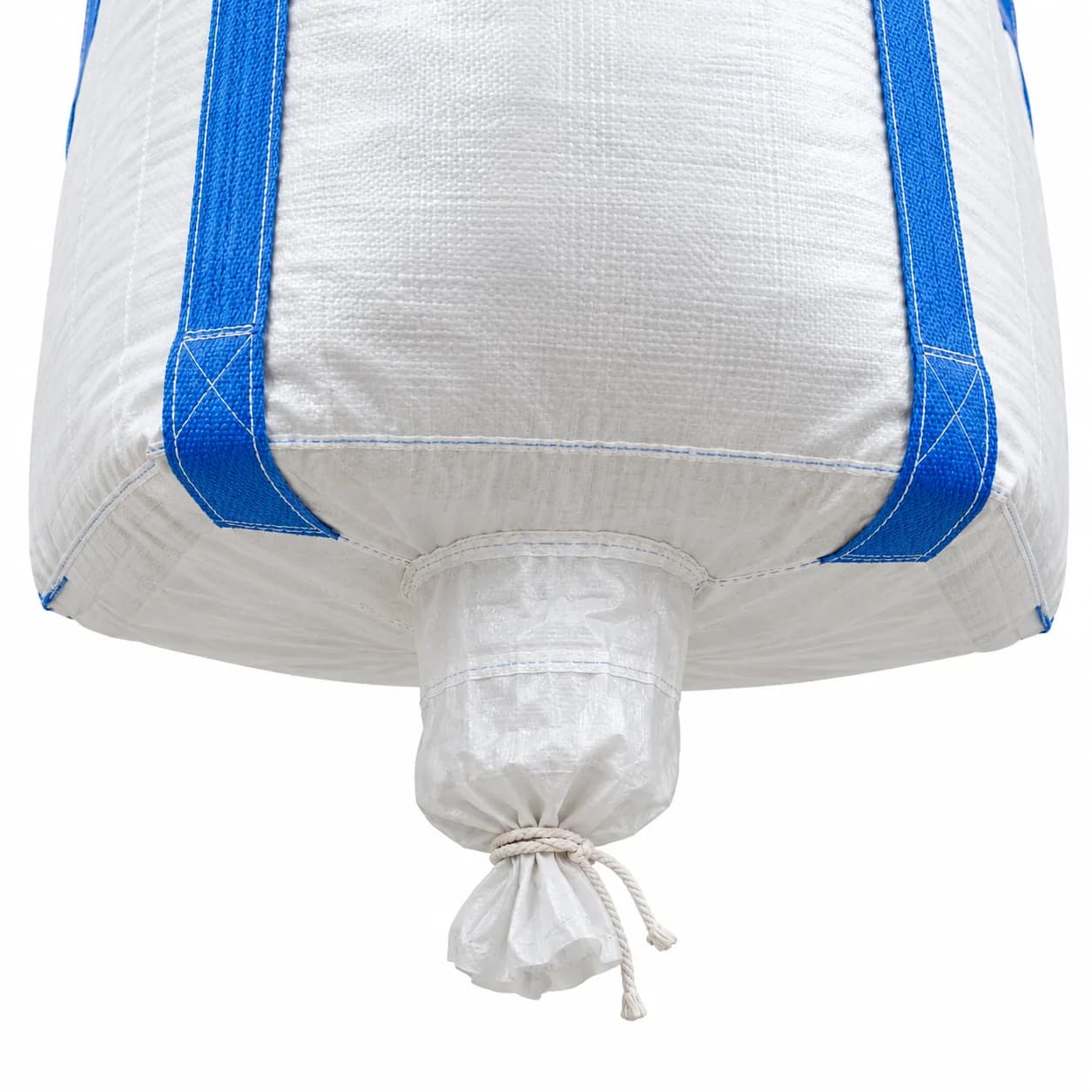
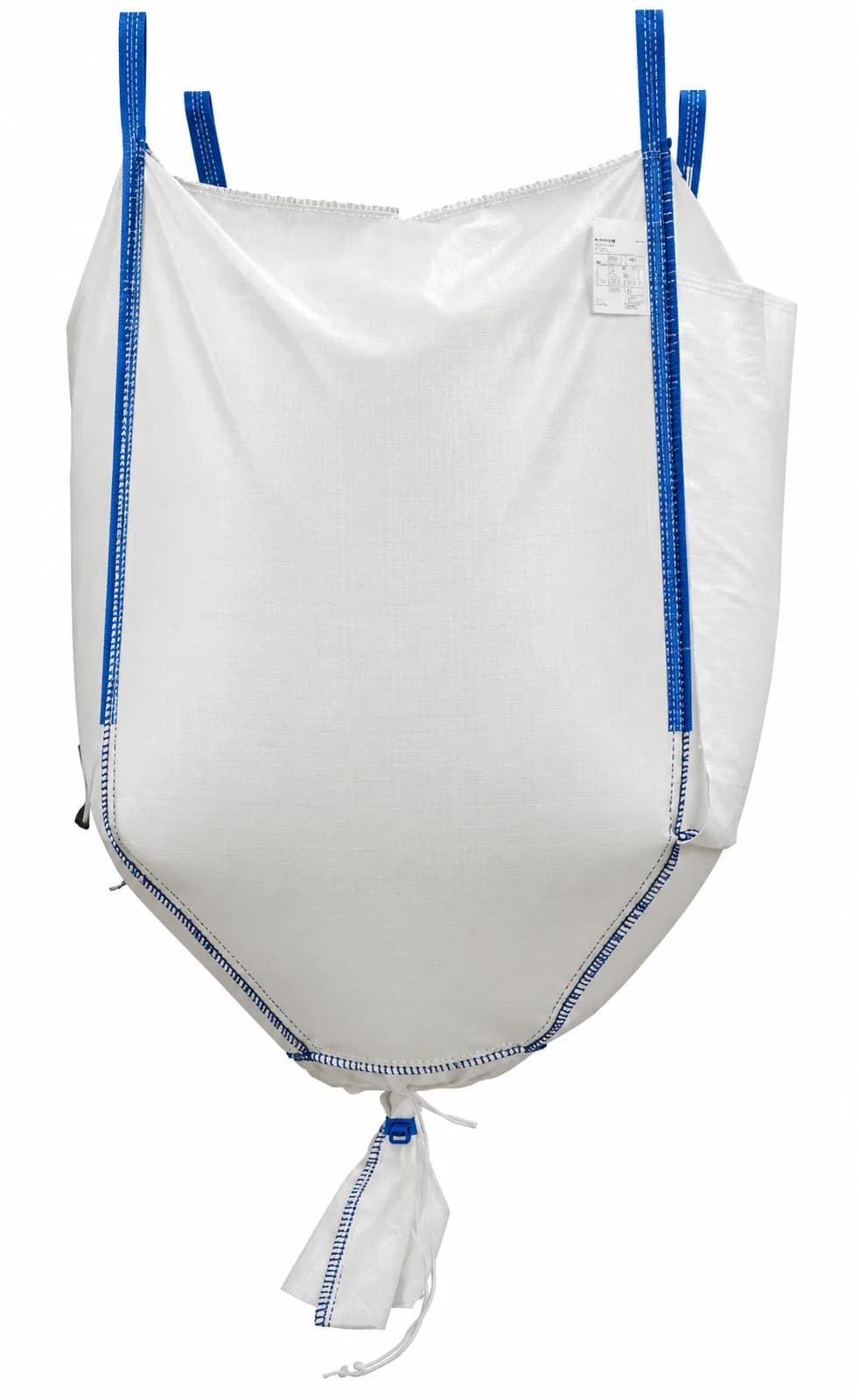
Discharge spout
The standard 14 by 18 in spout, tied off. A wider spout is worth specifying for material that bridges.
Flat bottom
Closed base for product that is emptied by tipping or cutting.
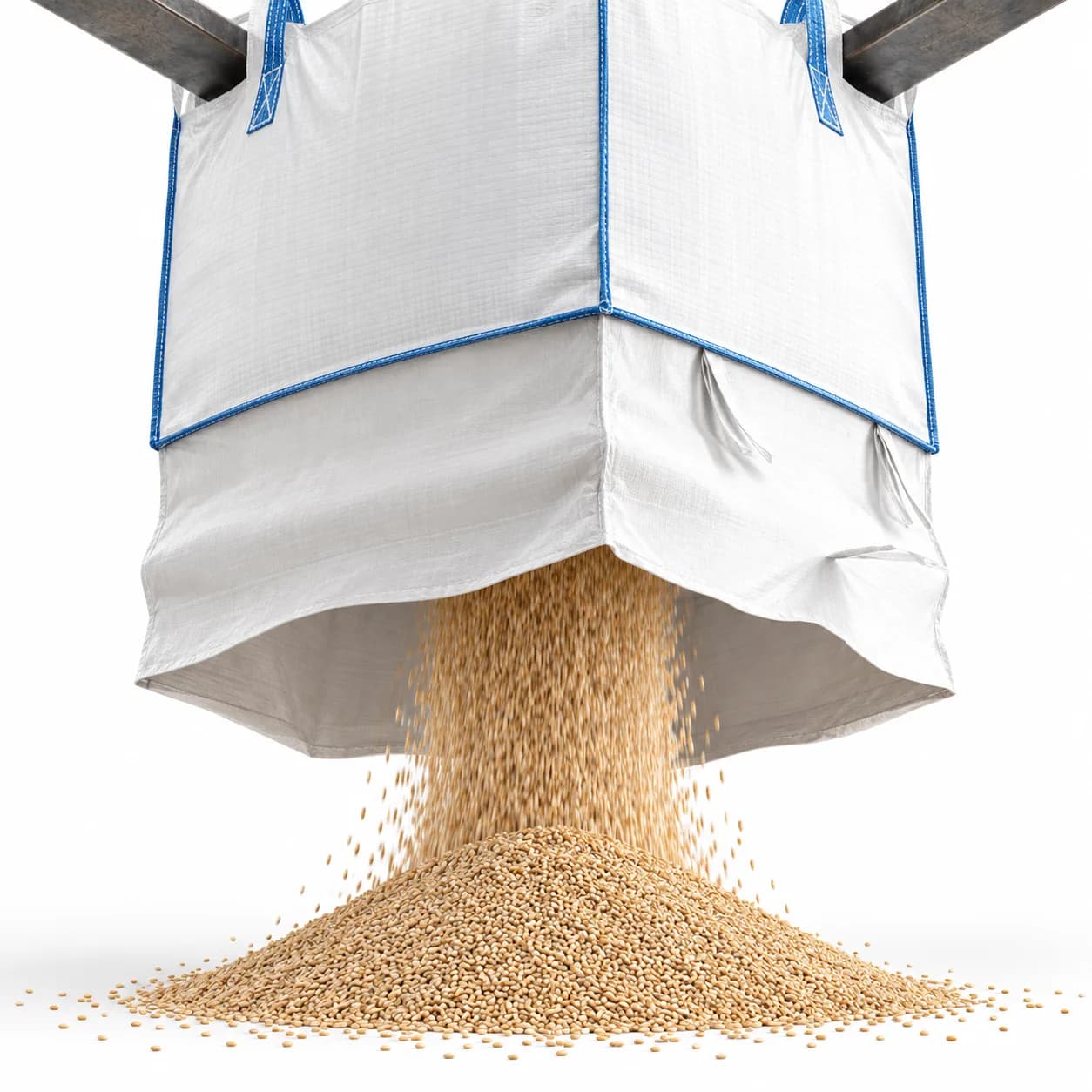
Full bottom discharge
The whole base opens, for material that will not flow through a spout.
Spout protection
A flap, or a petal or iris closure, over the discharge, for when the spout must stay clean in transit.
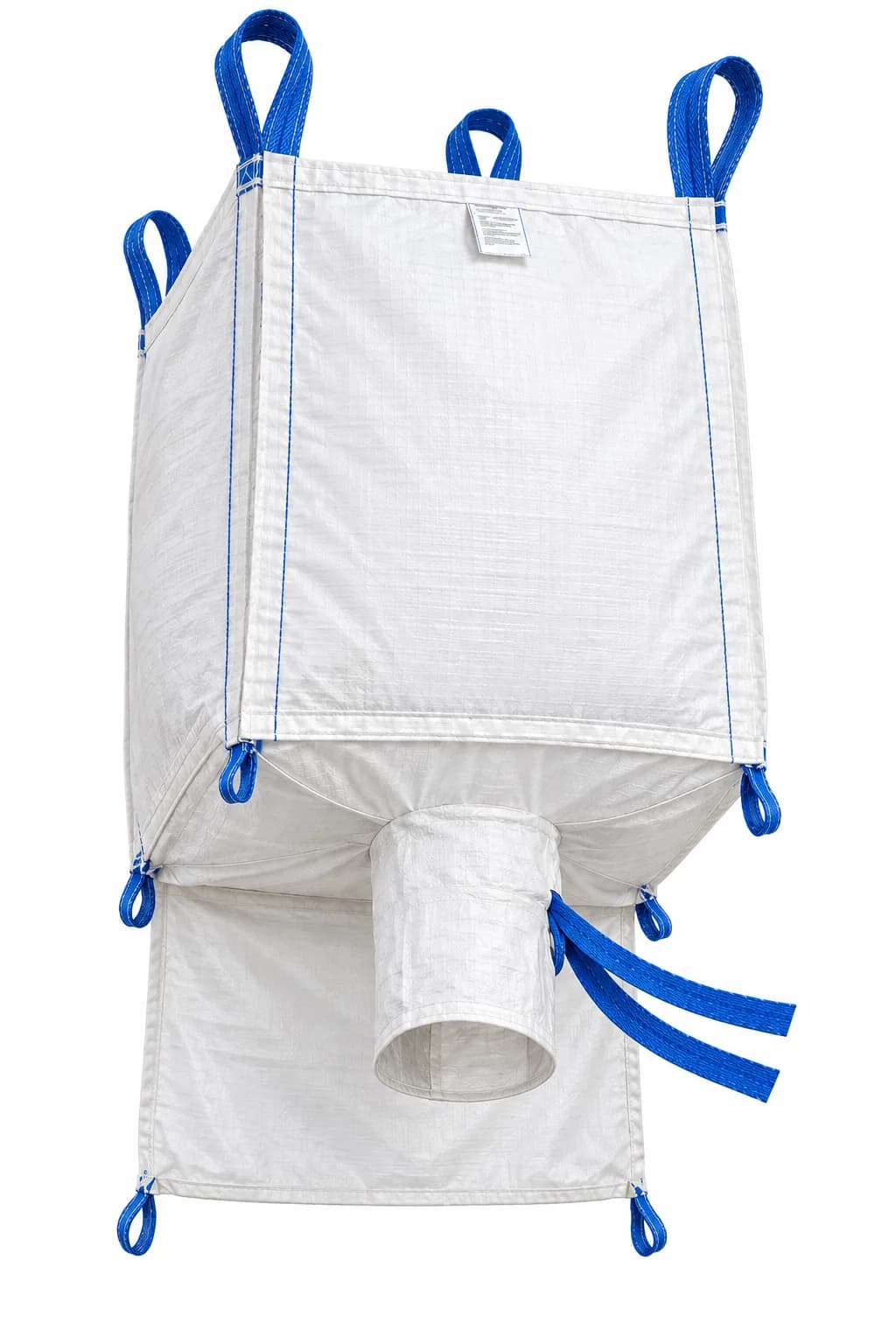
Conical discharge spout
The base narrows into the spout, which helps product that is slow to flow empty completely. Specified to your equipment.
Add-ons
Baffles
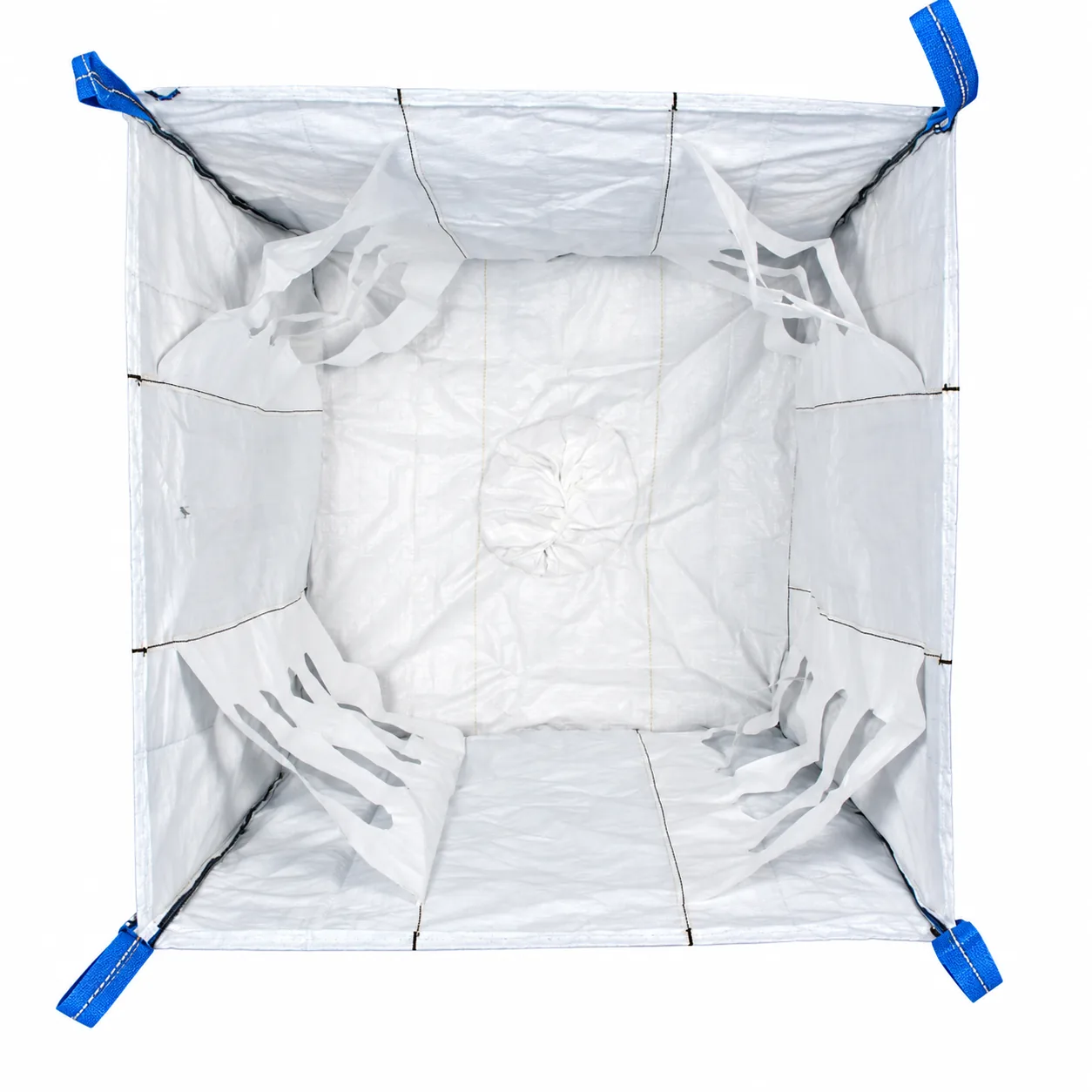
Corner panels that hold a cube instead of a bulge: roughly 25 to 30% more volume in the same footprint, and it stacks safely.
Sift-proof seams
Filler cord sewn into the seam, for product fine enough to work through the stitching.
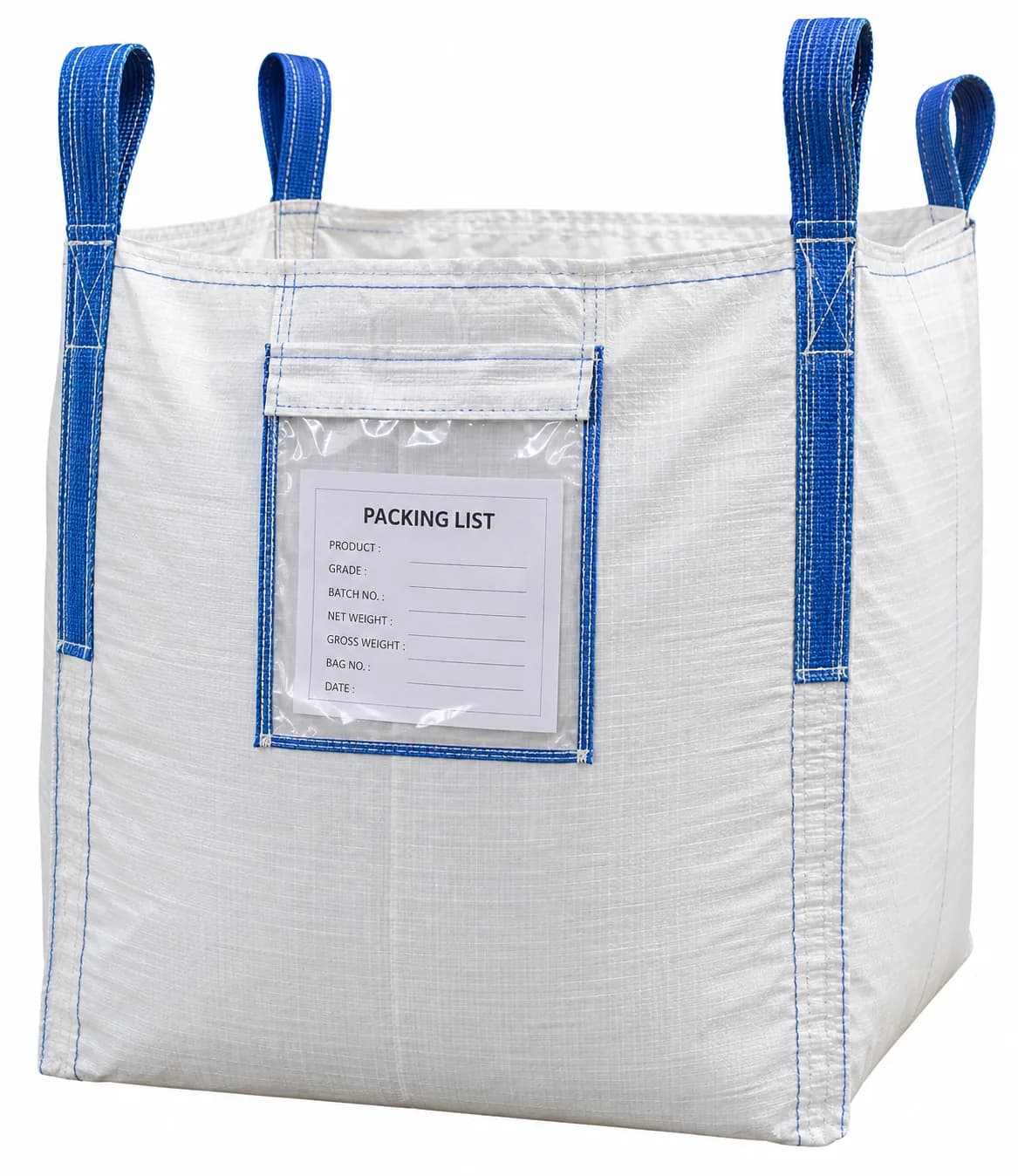
Document pouch
A sealed pouch for the paperwork which needs to travel with the bag.
Safety bands
A reinforcing band around the top, for added strength at the lift.
Custom print
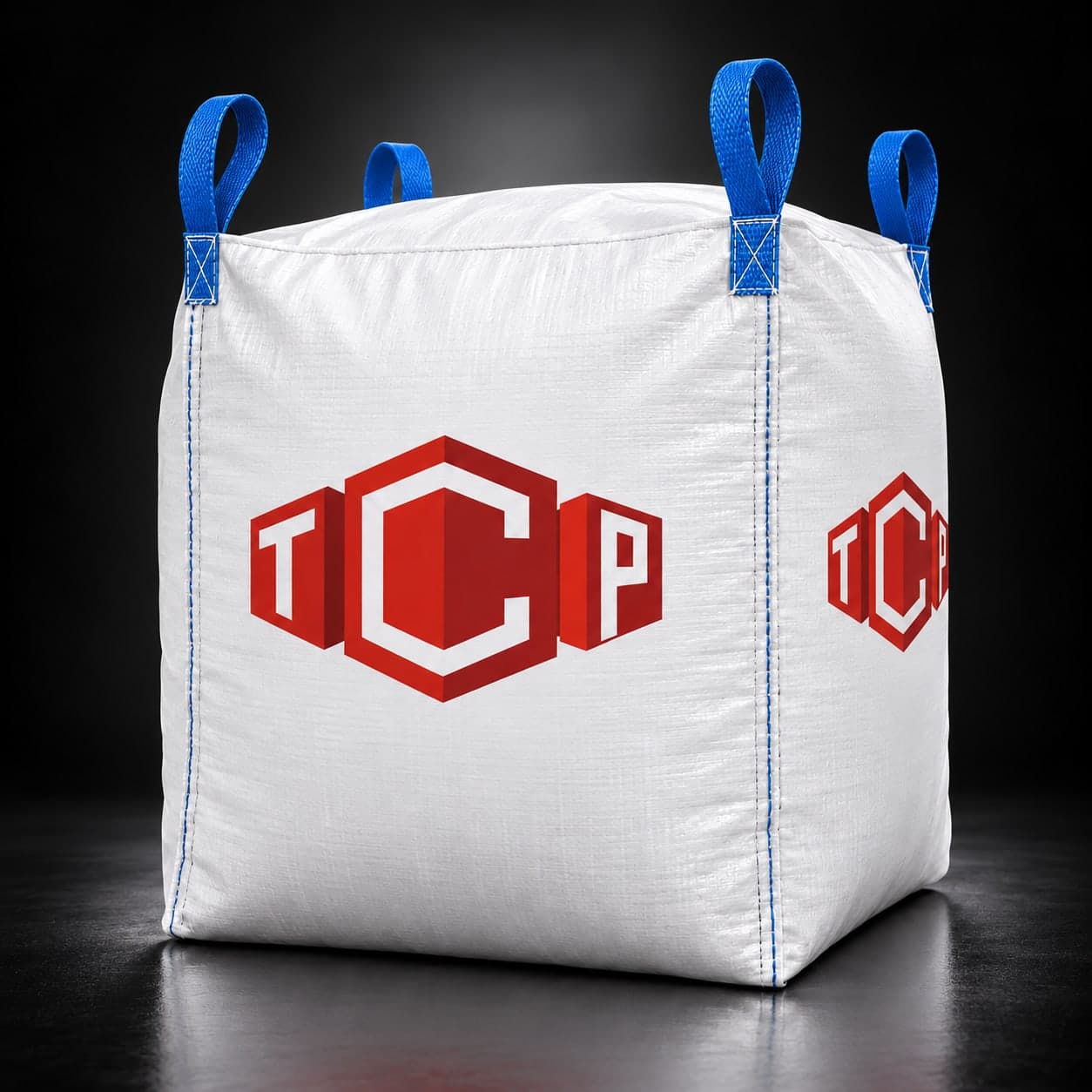
Up to four sides, for branding and traceability on the line.
Liner
No liner
Fabric alone, where the product needs no barrier. The cleanest liner is the one you never have to specify.
Loose liner
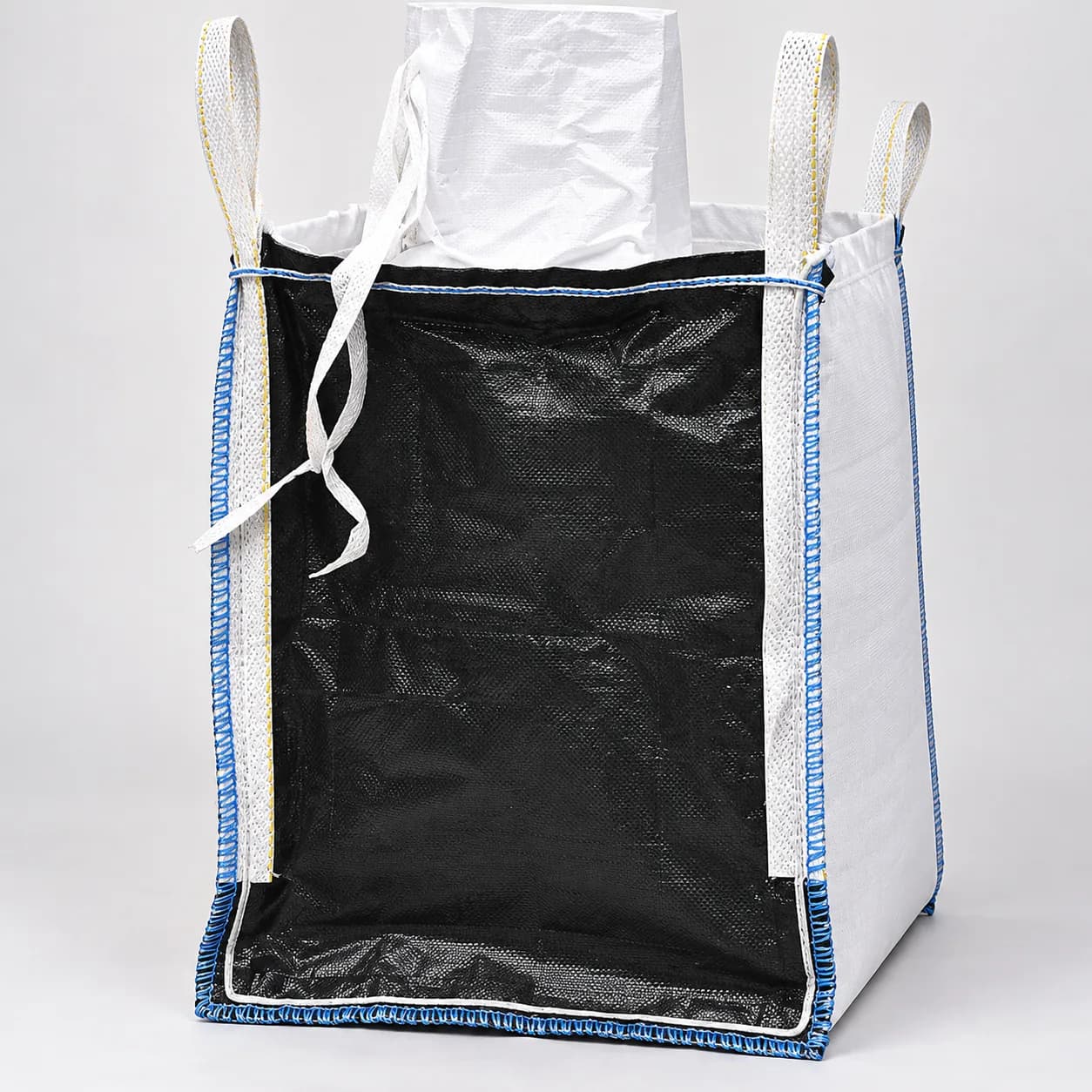
Dropped in, not attached. Affordable insurance against fine powder finding the seams.
Glued-in liner
Bonded to the bag so it stays in place through filling and discharge, which is what a food or pharmaceutical audit expects to see.
Antistatic liner
Specify this inside a Type C or Type D bag, so the liner carries the same static classification as the fabric.
Foil liner
Designed for product that is filled hot, the foil laminate holds temperatures that would deform a polyethylene liner.
Fabric
Uncoated
Breathable, and the default build.
Coated
A thin polypropylene coat over the weave, for fine powder and moisture resistance.
Frequently Asked Questions
How much ventilation do I need?
It depends on the produce and the transit time. Mesh panels in the side walls suit most root vegetables; a full open weave moves considerably more air. Tell us the crop and the journey.
Can I have my lot code printed?
Yes. Custom print is standard on these, and colour coding by field or grade is common alongside it.
Related products
Food Grade
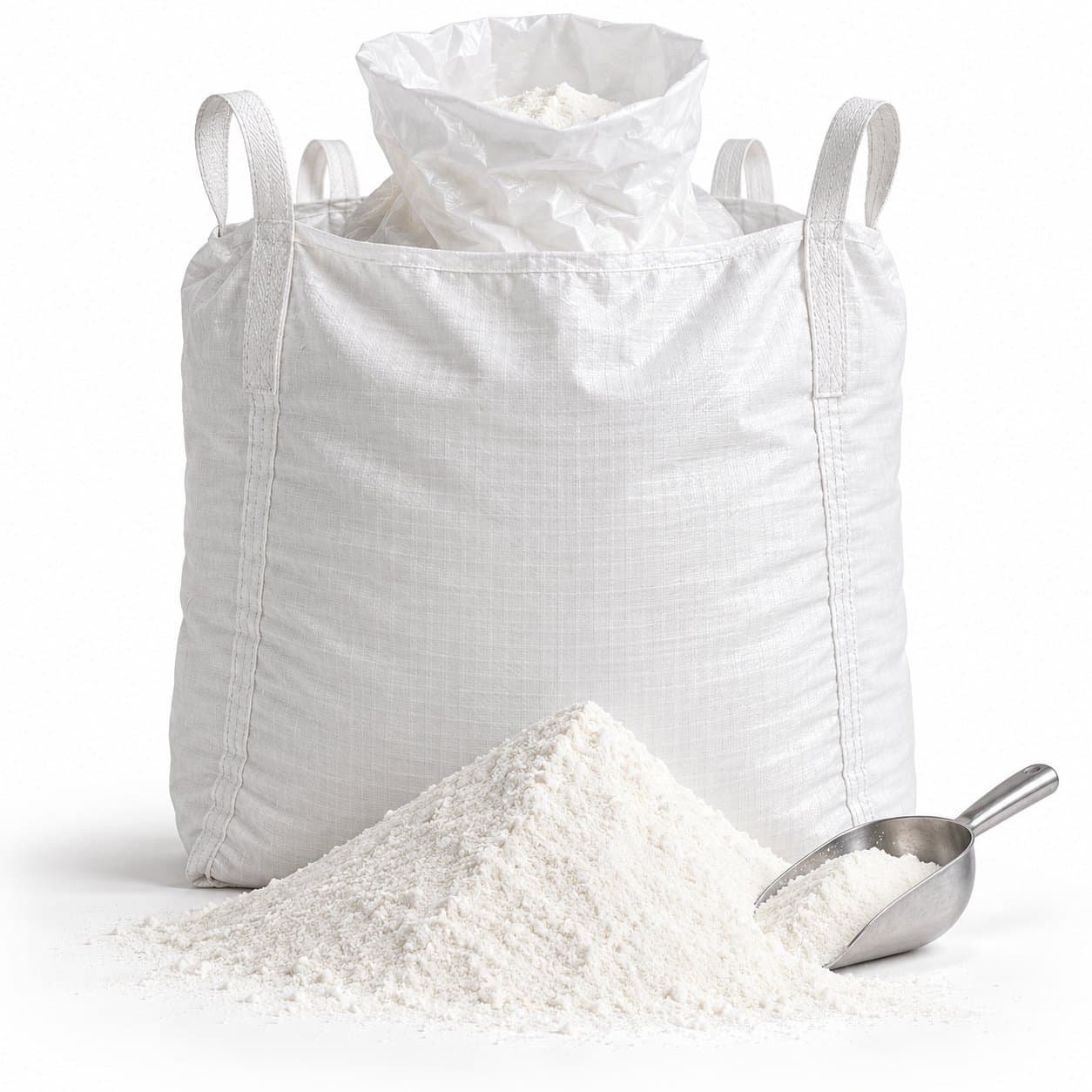
100% virgin polypropylene resin, produced in certified clean room conditions.
U-Panel
One continuous panel forms two sides and the base, so the load is carried by fabric rather than by stitching.
Valve & Woven Sacks
Small-format woven polypropylene sacks filled through a valve, with partner capacity of 4.5 million a month.
Send us the load, not a part number.
Material, fill weight, how you fill and how you discharge. That is enough for us to come back with a specification.