
Published on
Bulk Bags Manufacturer or FIBC Bags Supplier: Who Should You Buy From?
Search for bulk bags and the results mix two kinds of company: the plants that weave and sew the bags, and the FIBC bags suppliers that specify, stock and deliver them. Plenty of firms sit somewhere in between. Knowing which one you are talking to tells you what to ask, and who picks up the phone when a delivery goes wrong.
We are a supplier with long-term manufacturing partners behind us, so this is a view from the middle of the chain.
Bulk bags (FIBC): who actually makes them
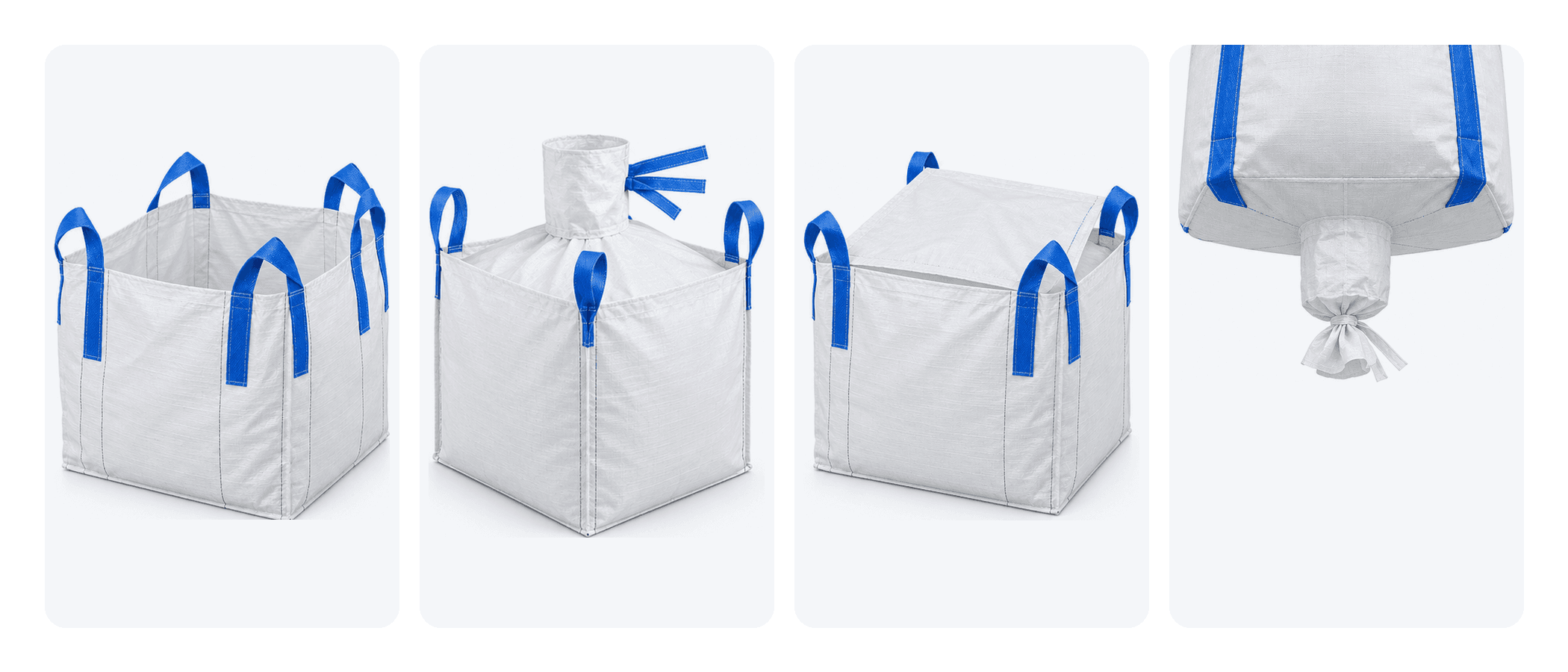
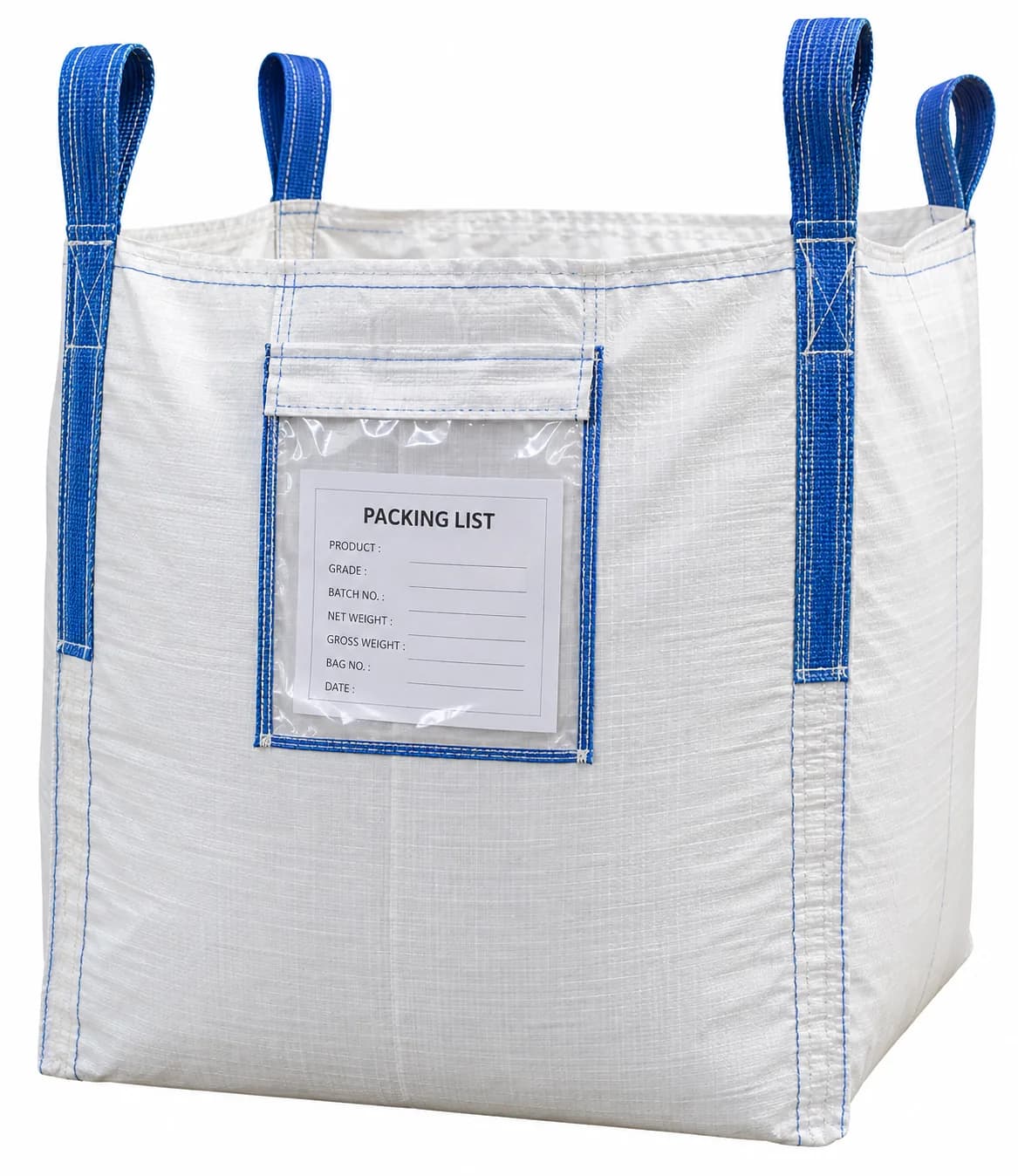
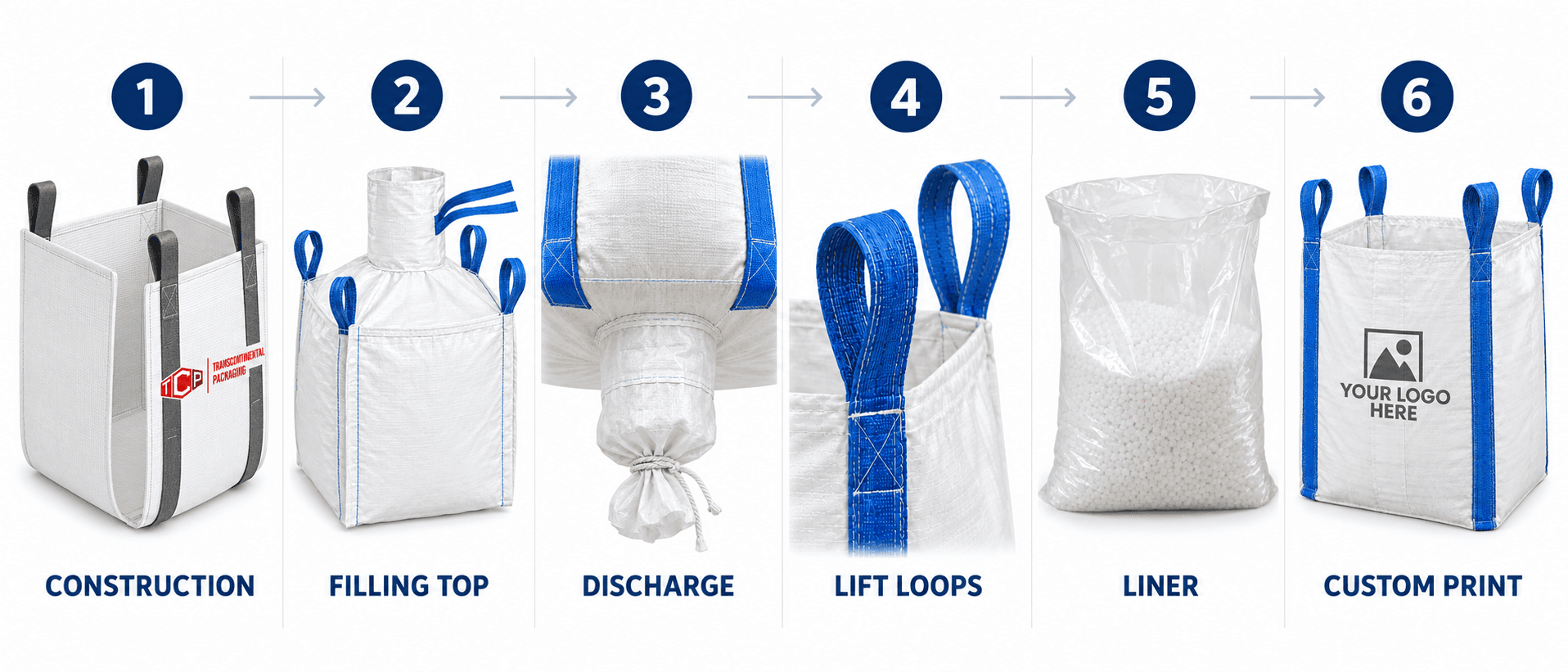
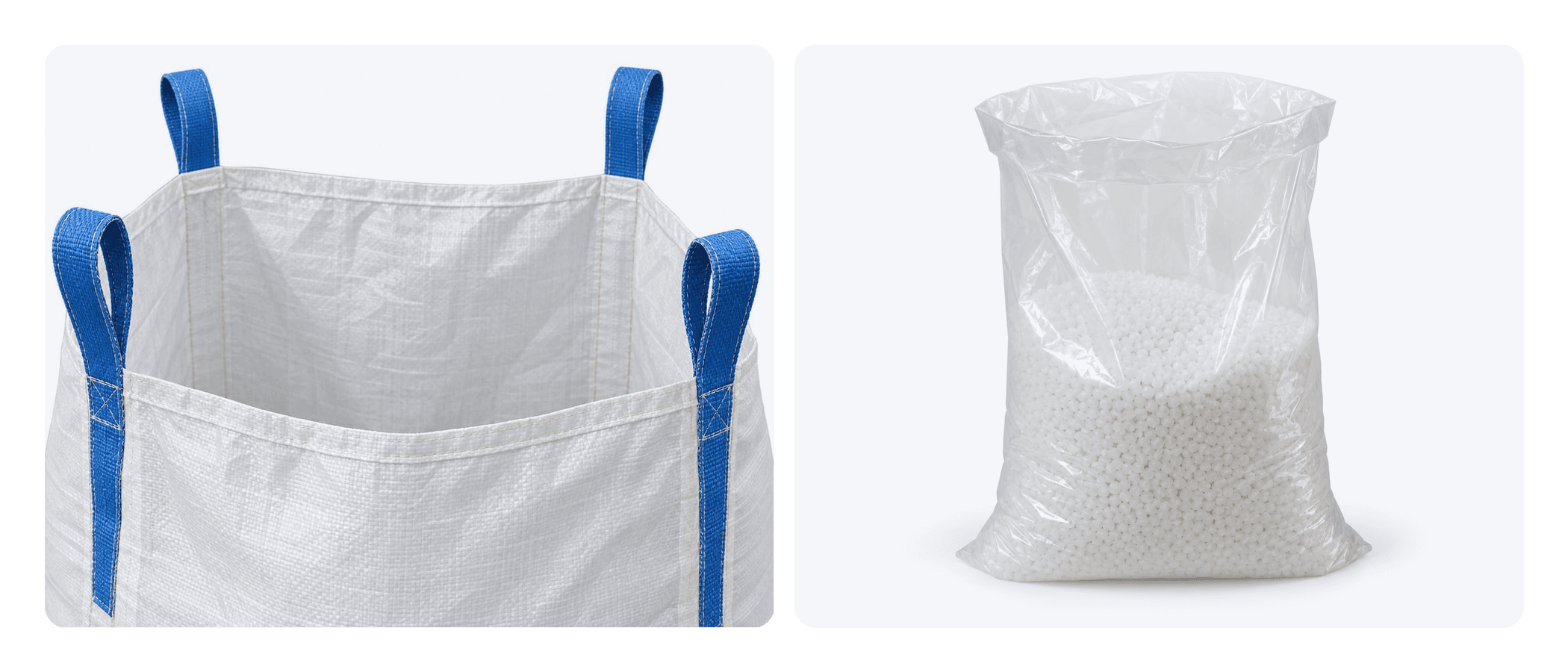
A bulk bag starts as polypropylene resin. A plant extrudes it into flat tape, weaves the tape into fabric, cuts and sews the panels, then fits the loops, spouts and any liner before the finished bags are inspected and baled. Most bags sold in the United States come from overseas plants built for that kind of volume.
A bulk bags manufacturer runs that process. A supplier writes the specification, places it with a plant that can make it, checks what comes back and gets it to your dock. The difference shows up in a handful of practical places.
| Direct from a manufacturer | Through an FIBC bags supplier | |
|---|---|---|
| Typical order | Full production runs, often by the container | Container loads, plus smaller orders from stock |
| Where the stock waits | At the plant until it ships | In warehouses closer to you |
| Who checks the bags | The plant's own quality team | The plant, plus the supplier's specification and inspection |
| If a plant runs into trouble | You wait for that plant | A supplier with several plants can move the order |
| Language, customs and freight | Often yours to arrange | Usually handled for you |
When buying direct makes sense
If you fill thousands of bags a month to one unchanging specification, already import goods and have room to hold a large inventory, working with a plant directly can pay off. Someone on your side will still need to write the specification, approve samples, arrange inspection before shipment and handle customs and ocean freight.
What industrial bulk bags suppliers add
Most buyers would rather not run an import program of their own. That is the gap industrial bulk bags suppliers fill. A good one will:
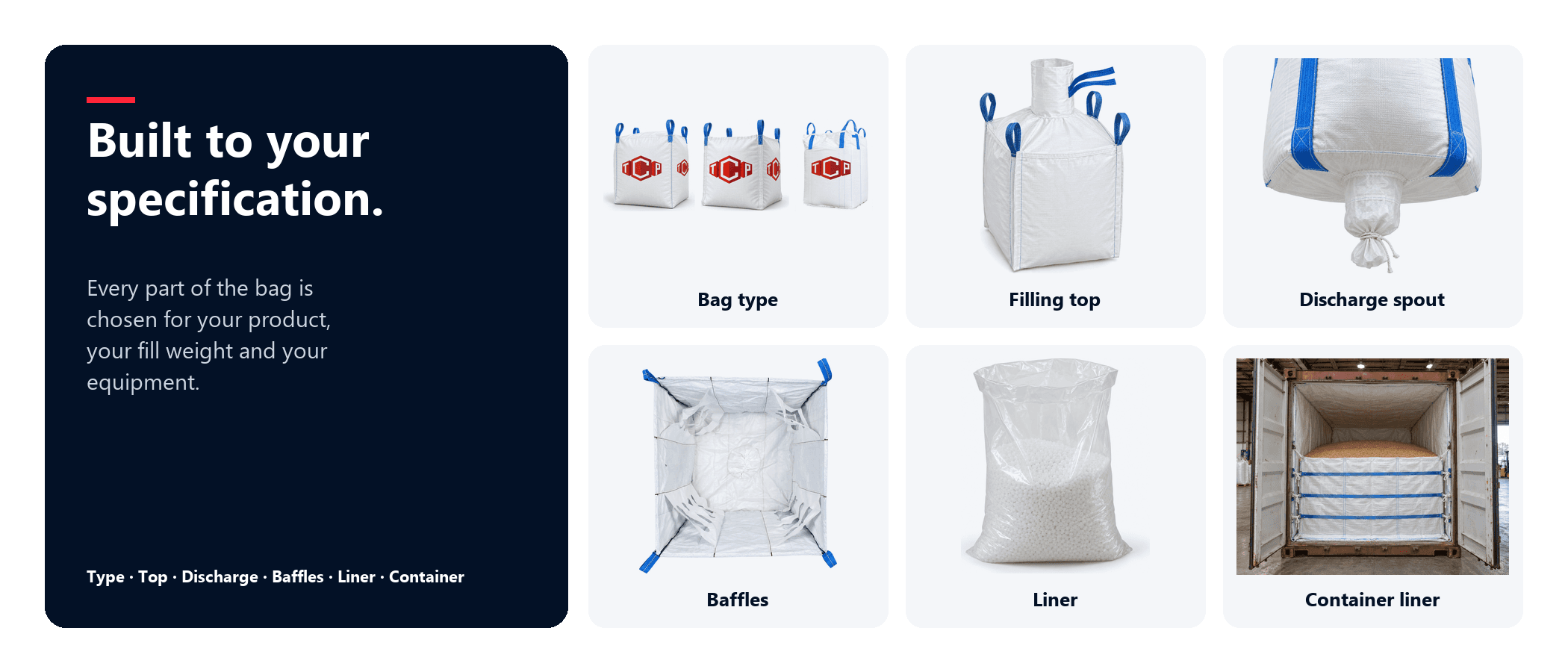
- Turn your material, fill weight and equipment into a written specification.
- Place the order with a plant that can make that build, and keep a second plant in reserve.
- Hold stock in regional warehouses, so a reorder does not wait for an ocean crossing.
- Deal with the language, customs and freight between you and the plant.
- Stand behind the bag if something is wrong when it arrives.
How we work
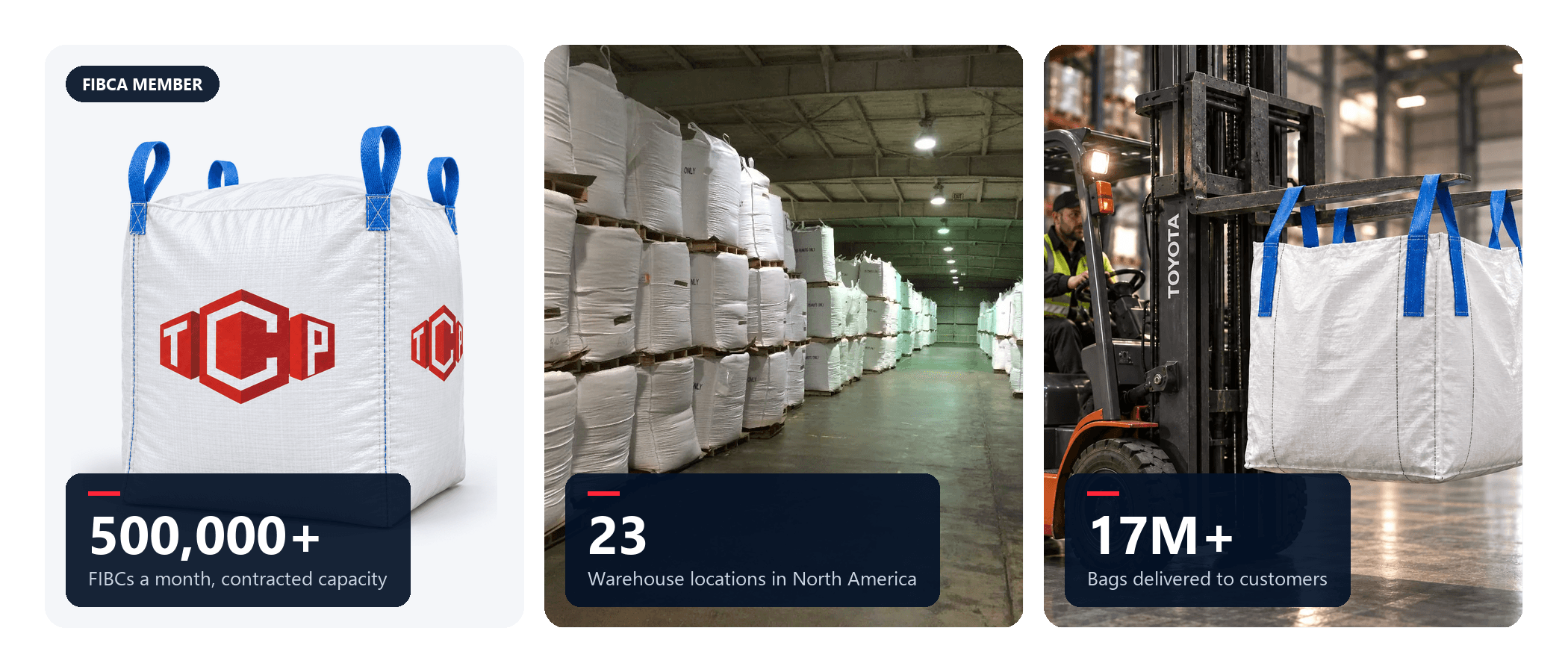
Transcontinental Packaging is a Houston-based supplier. We have long-term partnerships with high-capacity plants in India, China, Mexico and Turkey, and each of them can support production of more than 500,000 FIBCs a month. Those plants are BRC and HACCP certified and go through independent inspections.
On this side of the ocean we have 23 warehouse locations across North America, so stock programs ship from a dock near you while custom runs come straight from the plant. We are also a member of FIBCA, the bulk bag industry's own association. There is more about us on our About page, and the full range is on our products page.
Questions worth asking any supplier or manufacturer
- Who makes the bag, and in which country?
- Which certifications does that plant hold, and will you share them?
- What safe working load and safety factor is the bag rated for? Ours are built to 5:1, and UN bags to 6:1.
- Is there stock near us, and how long does a custom run take?
- Who do we call if a delivery arrives damaged or out of spec?
A straight answer to the first and last questions tells you a lot. If a company will not say where its bags are made, or goes vague on what happens when a load arrives wrong, keep looking.
Next step
If you are lining up FIBC bags suppliers to compare, our guide to your first quote request covers what to send so the prices line up. Build a Bag helps you set out the specification, or get in touch with the material, fill weight and rough quantity.
Explore our packaging product range or visit the Transcontinental Packaging homepage to learn about our company and the industries we serve.