
Published on
What Is a Container Liner? A Guide to Bulk Liner Bags for 20ft & 40ft Containers
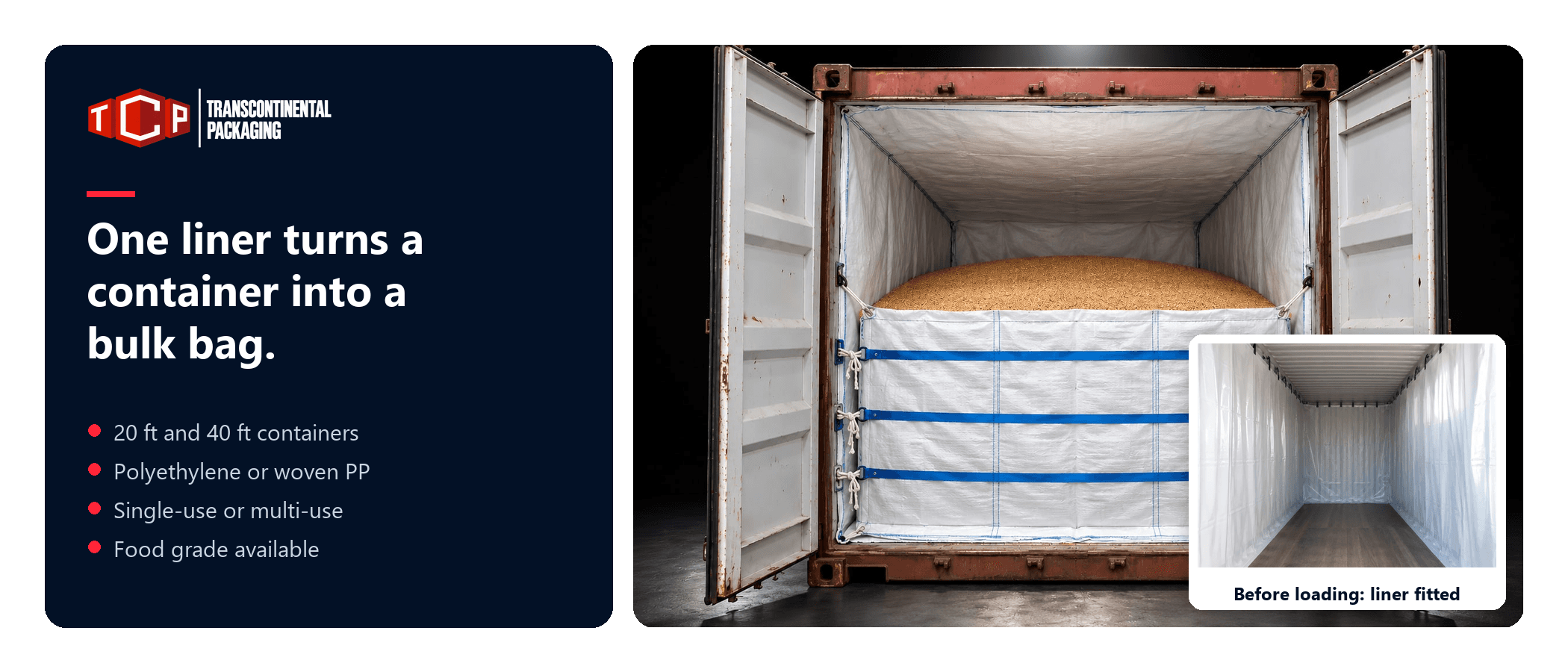
A container liner is a large bag that fits inside a standard 20ft or 40ft shipping container. It turns the container into one giant bulk bag, so you can ship loose, dry product like grain, plastic pellets or minerals without packing it into thousands of small sacks.
Think of it as a trash bag inside a trash can. The liner holds the product, keeps it clean and dry, and keeps the container free of residue. When the shipment arrives, the product is emptied out and the container is ready for its next load.
For US businesses shipping dry bulk cargo, container liners cut packaging costs, speed up loading and reduce product loss. This guide covers how bulk liner bags work, the options to choose, sizes for 20ft and 40ft containers, and what to ask a supplier.
How bulk liner bags work
Bulk liner bags go into the empty container before loading. Straps fix the liner to the container's lashing points, and a bulkhead at the door end keeps the load from pressing against the doors.
- Install: the liner is unfolded inside the container and fixed in place.
- Fill: product is blown or conveyed in through a filling spout, at the top or the rear of the door end.
- Discharge: at the destination, the container is tipped and the product runs out through a discharge spout. Near the doors, an inflatable discharge angle lifts the liner floor so the last of the load slides out cleanly.
Bulk container liner options
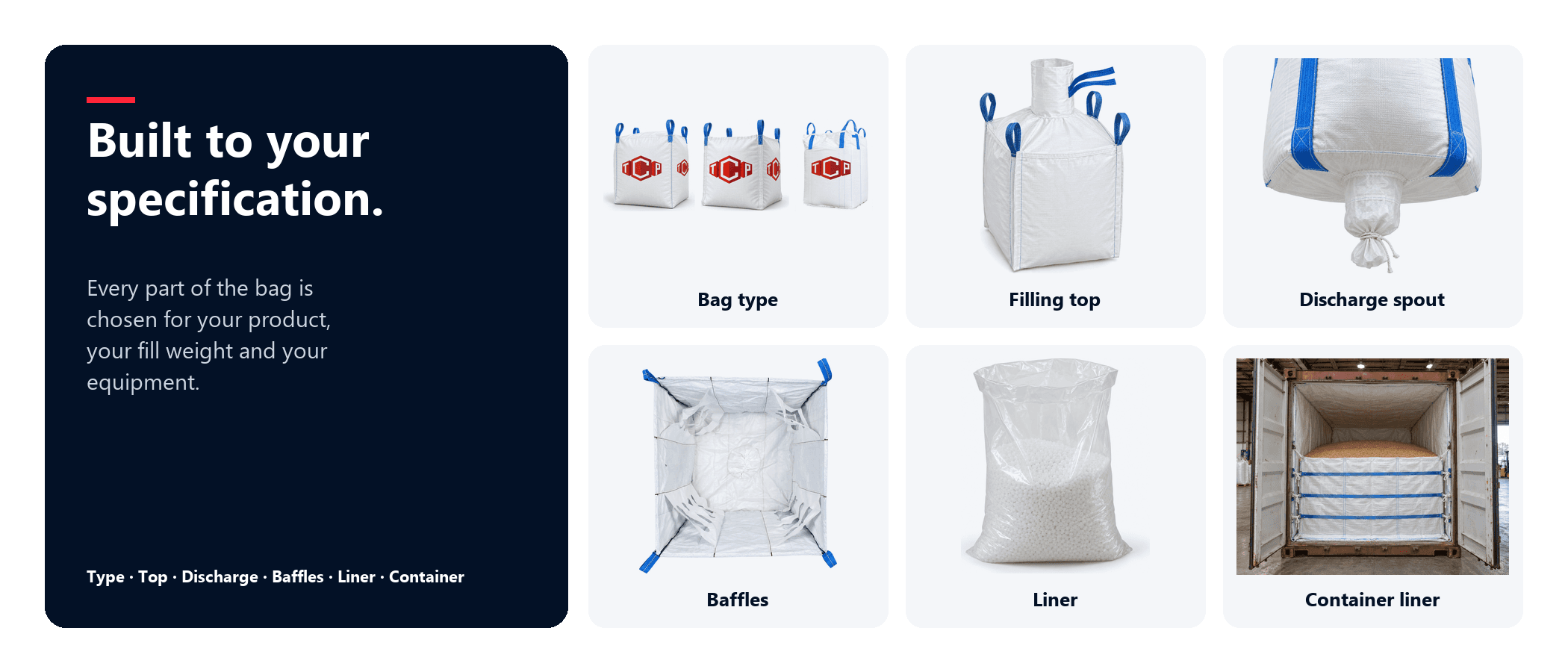
Bulk container liners are built around your product and your unloading equipment. These are the main choices, all listed on our container liners page:
| Choice | Options | What decides it |
|---|---|---|
| Material | Polyethylene film or woven polypropylene | Film is lighter; woven fabric is tougher |
| Duty | Single-use or multi-use | Single-use keeps each load clean; multi-use suits repeat shipments of one product |
| Filling | Top or rear filling spout | How your blower or conveyor reaches the container |
| Door end | Bulkhead | Holds free-flowing product like grain and pellets off the doors |
| Discharge | Discharge spout with an inflatable discharge angle | Tipping chassis unloading at the receiving site |
| Grade | Standard or food grade | Sugar, flour, coffee and other food ingredients need food grade |
If your product is a fine powder that needs extra shape control, ask about baffled designs when you request a quote.
Shipping container liners: 20ft vs 40ft
Shipping container liners are made to fit standard ISO containers. A 20ft liner suits heavy product, a 40ft liner suits lighter, bulkier product. The figures below are approximate industry ranges for the containers themselves; confirm exact specs with your supplier.
| Container | Approx. volume | Typical limit | Good for |
|---|---|---|---|
| 20ft standard | About 30 to 33 m³ (1,060 to 1,165 cu ft) | Weight: often 20 to 24 metric tons | Grain, minerals, heavy chemicals |
| 40ft standard | About 60 to 67 m³ (2,120 to 2,365 cu ft) | Usually volume, not weight | Plastic pellets, malt, light powders |
Road and port weight limits usually decide which size works. Heavy product often goes in a 20ft container even when a 40ft has more room. Shipping in high cube containers? Ask us whether a liner can be made to fit.
Who uses container liner bags
Any business shipping dry, free-flowing product in bulk can use container liner bags. The most common US users are:
- Agriculture and grain: corn, wheat, soybeans, rice, malt and animal feed leaving US ports.
- Chemicals: fertilizers, soda ash, PVC powder and other dry chemicals that must stay clean and dry.
- Minerals: sand, silica, bentonite and other heavy minerals.
- Plastics and resin: polyethylene and polypropylene pellets headed to molders and converters.
- Food ingredients: sugar, flour, coffee and cocoa beans, in food grade liners.
Picture a Texas grain exporter filling a 20ft container fitted with a bulkhead liner straight from a conveyor: no bagging, and no container to clean after delivery.
Benefits of a container liner
- Lower packaging cost: one liner replaces hundreds of small bags, or dozens of bulk bags, and the pallets with them.
- More product per container: loose product fills every corner, so each trip carries more.
- Faster loading and unloading: blow or pour the product in, tip the container to empty it.
- Less contamination: the product never touches the container floor or walls.
- Clean containers: no washing after delivery, which avoids cleaning fees.
How to choose a container liner supplier in the USA
A good container liner supplier answers these questions clearly before you order:
- Fit: do they make liners for your exact container size?
- Product match: can they recommend a liner for your product's weight, flow and particle size?
- Quality: do they work to ISO 9001, and offer food grade if you need it?
- Material: polyethylene film or woven polypropylene, and how heavy?
- Supply: can they handle wholesale volumes and deliver on time to your US loading site?
- Support: will they help match the filling and discharge setup to your equipment?
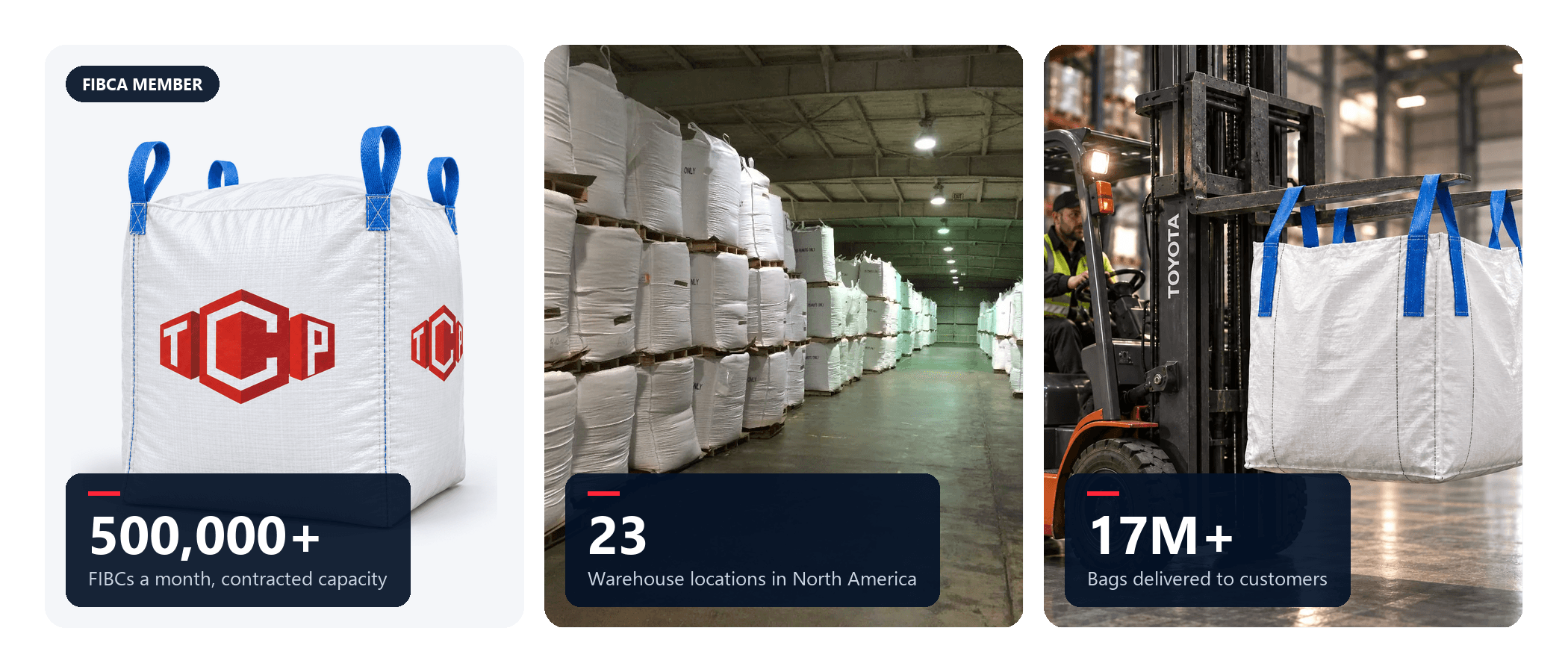
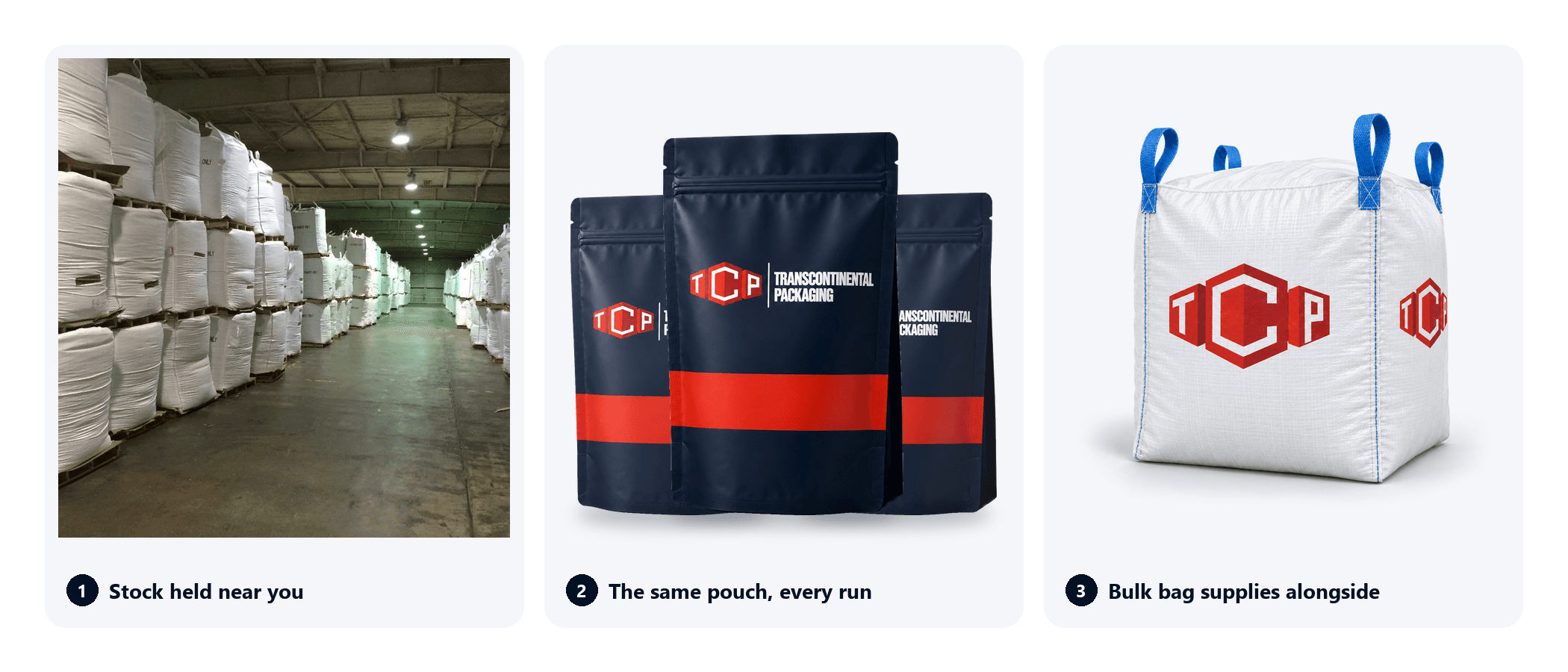
A US supplier with local warehousing can usually deliver faster and help sooner when a shipment runs into trouble. Transcontinental Packaging keeps stock at 23 warehouses around North America.
Container liner FAQs
What is a container liner used for?
Shipping dry bulk product such as grain, chemicals, minerals and plastic pellets inside a standard shipping container, without bagging it.
Are container liner bags reusable?
They come in single-use and multi-use duty. Single-use keeps each shipment clean; multi-use liners suit repeat shipments of the same product.
What is the difference between a container liner and an FIBC bulk bag?
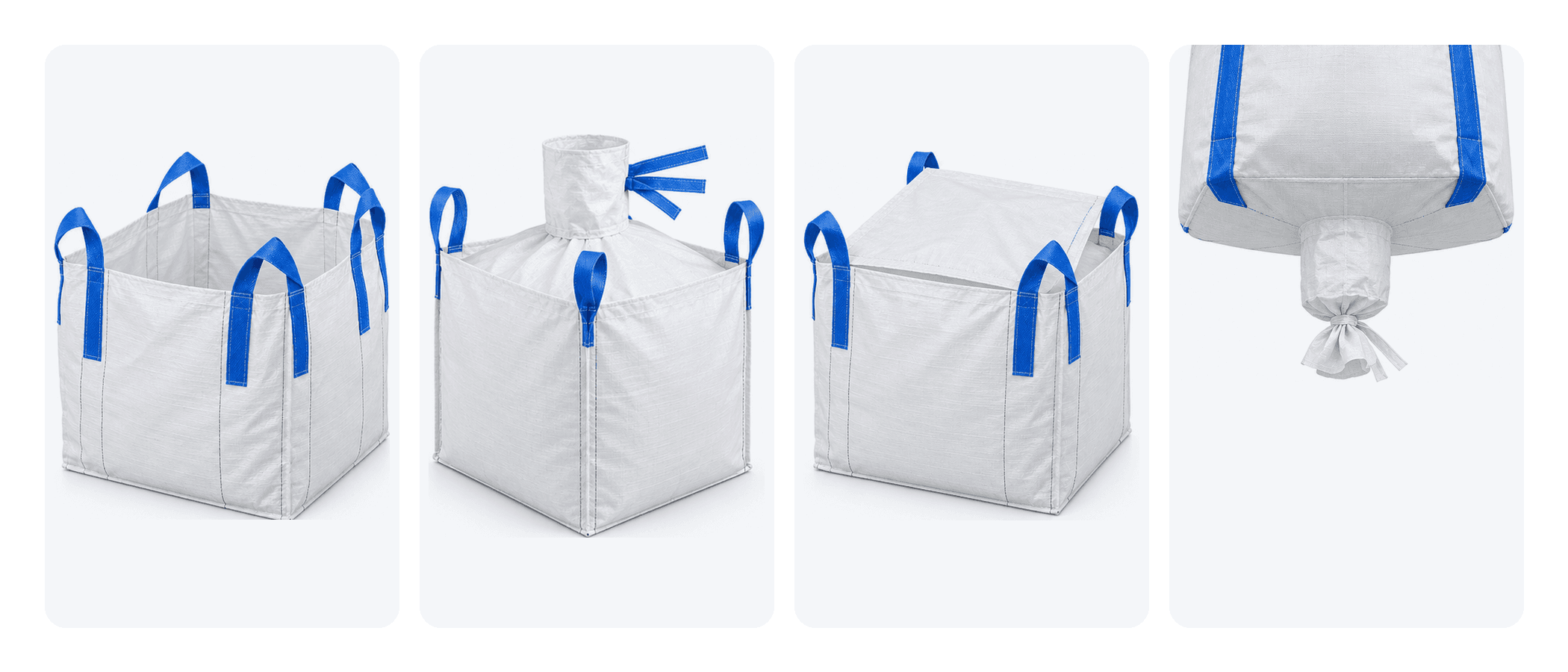
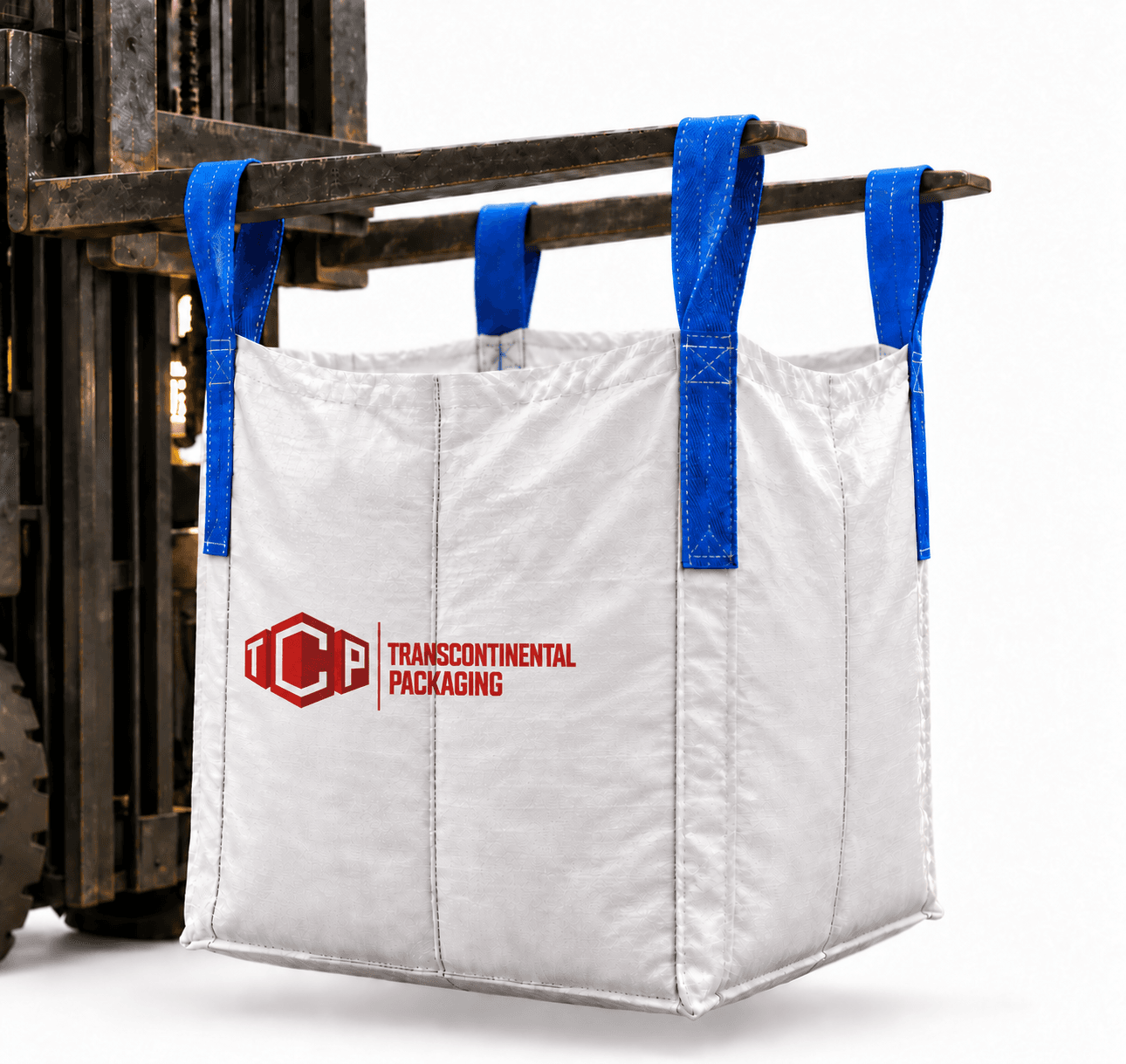
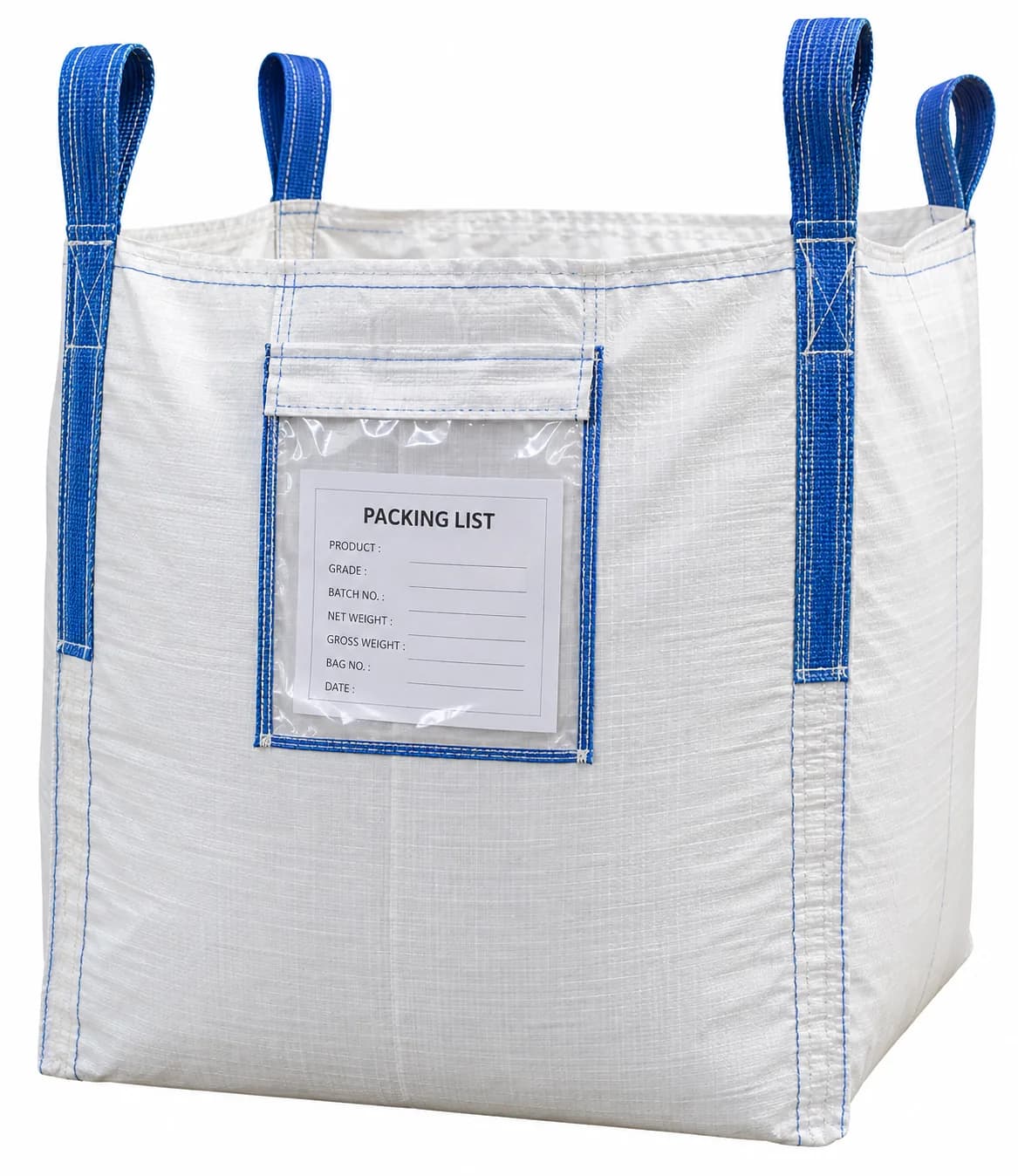
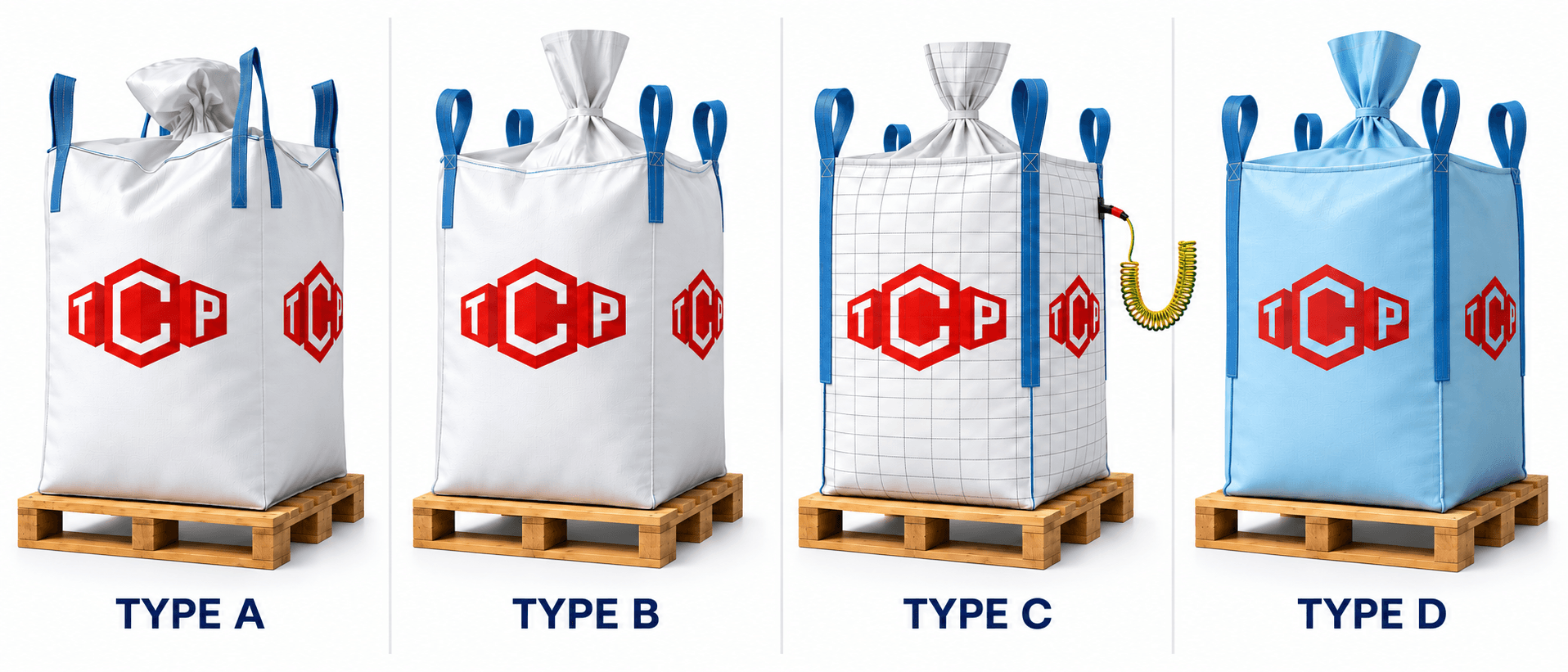
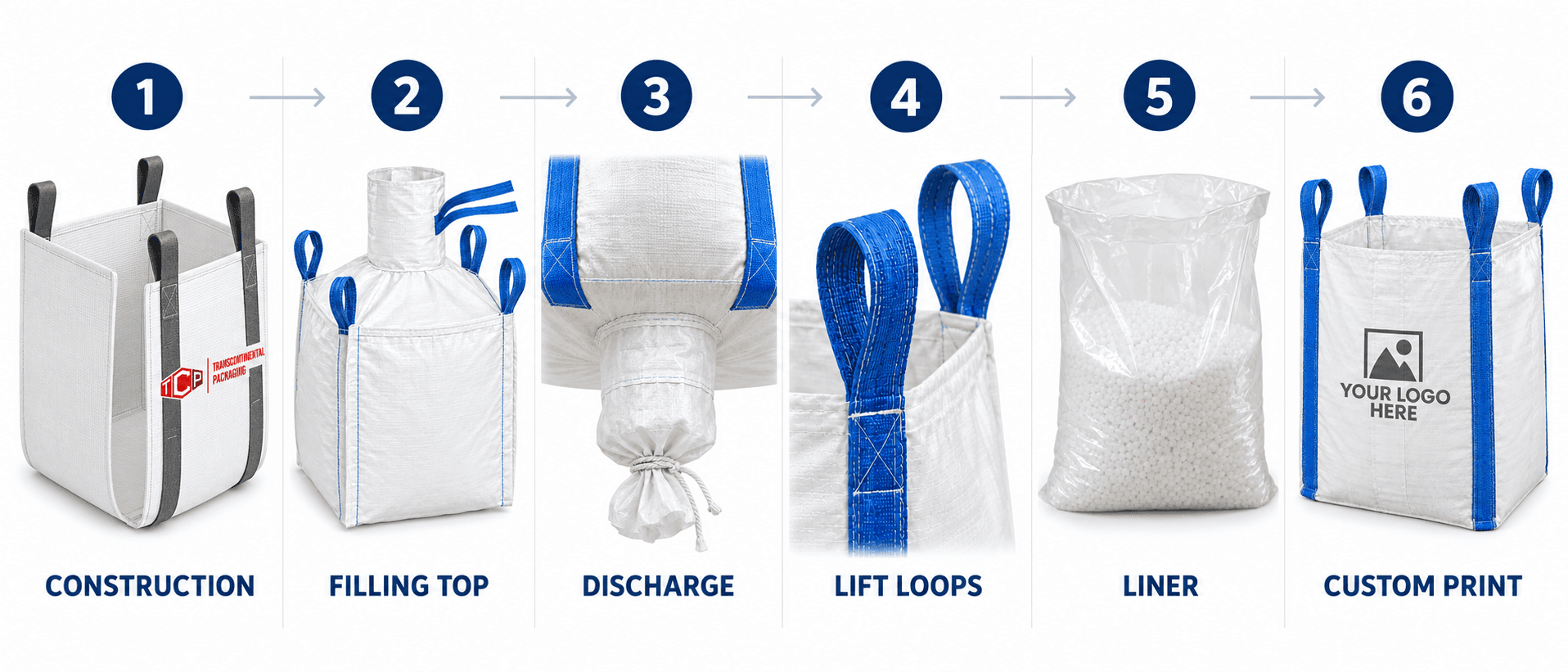
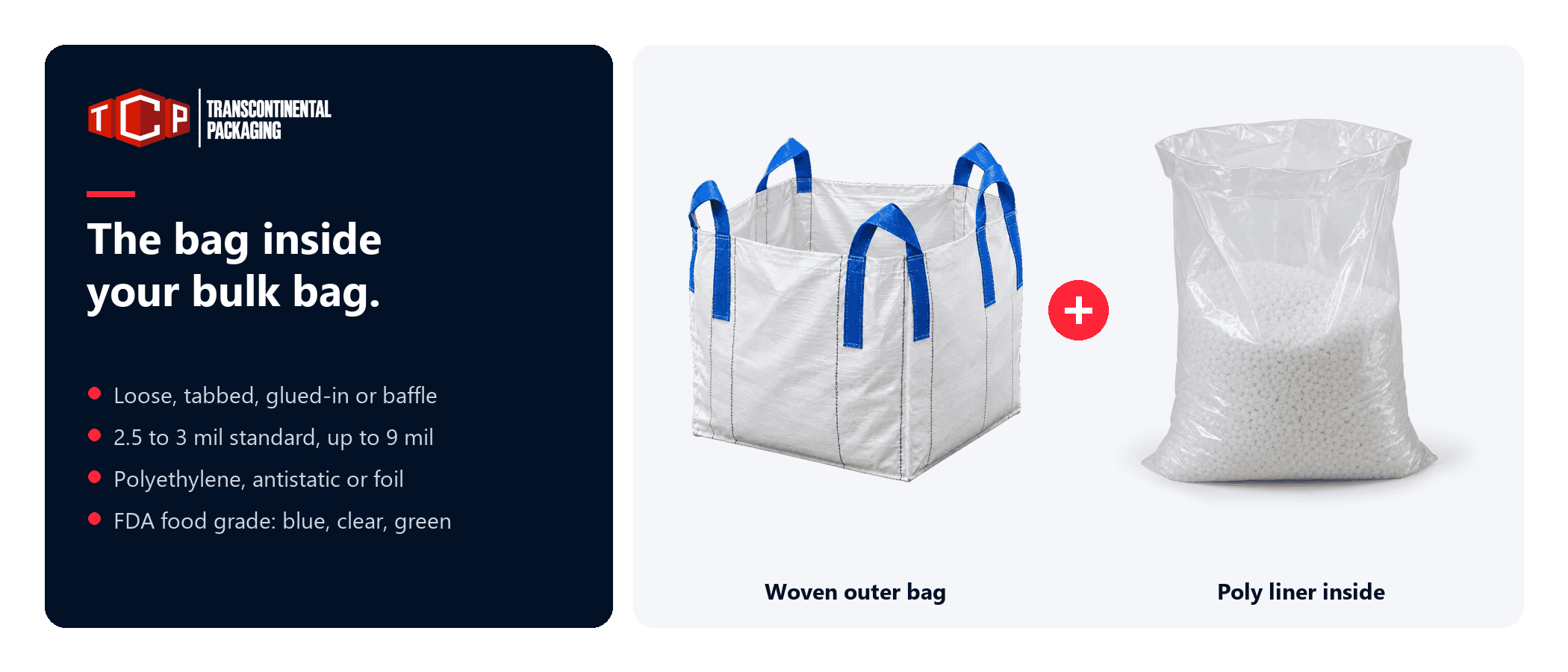
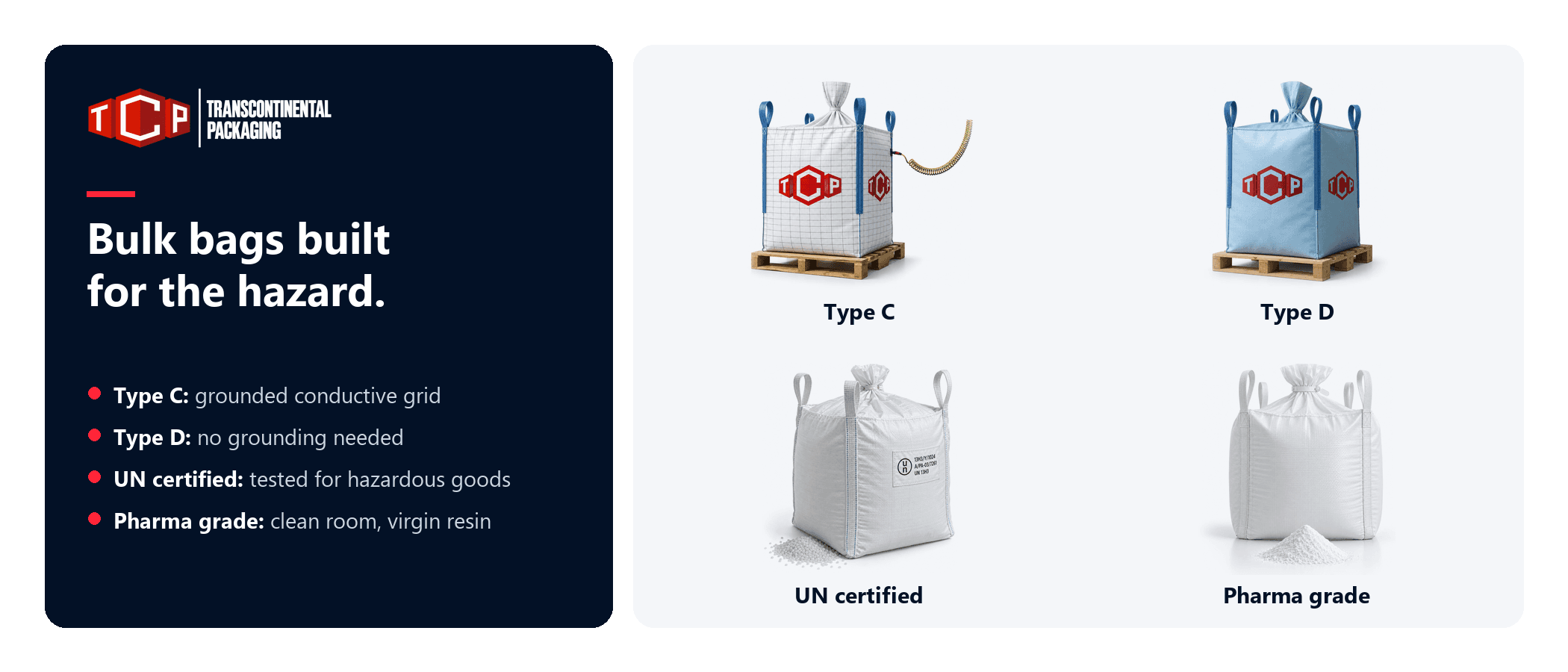
An FIBC bulk bag holds from about 50 to 3,000 lb and is moved by forklift. A container liner fills a whole 20ft or 40ft container in one go. Our post on bulk bags, sandbags and container liners compares the two in more detail.
How much does a container liner cost?
Price depends on size, material, options and order volume. Ask for a quote based on your product and container.
Get container liners from a Houston supplier
Transcontinental Packaging is a Houston-based supplier of bulk packaging, including container liners and FIBC bulk bags, for US shippers in agriculture, chemicals, minerals and food. Tell us your product, container size and monthly volume, and we will recommend the right liner.
Request a container liner quote, or talk it over with our team.
Related pages: FIBC liners, food grade bulk bags, plus our minerals, chemical and plastics industry pages.
Explore our packaging product range or visit the Transcontinental Packaging homepage to learn about our company and the industries we serve.