
Published on
Wholesale Feed, Seed, Grain and Coffee Bags: A Buyer's Guide for Agricultural Packers
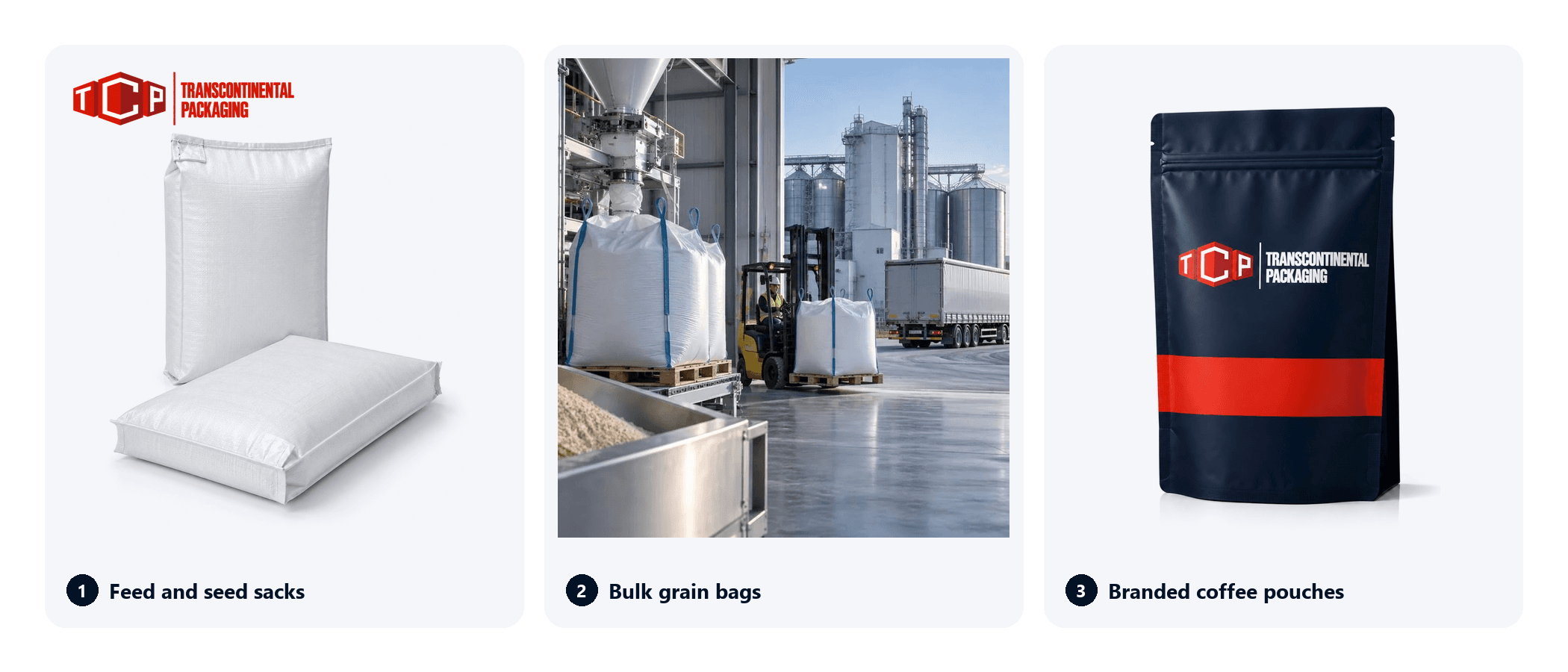
A feed mill, a seed company and a coffee roaster look like very different businesses, but they share a problem. Each one buys empty bags by the thousand, fills them with something that came off a farm, and needs every bag to arrive on time and look like the last batch.
This guide walks through the bags each of them buys, and what to put on the order so the right ones turn up.
Animal feed bags: woven sacks built for 25 kg loads
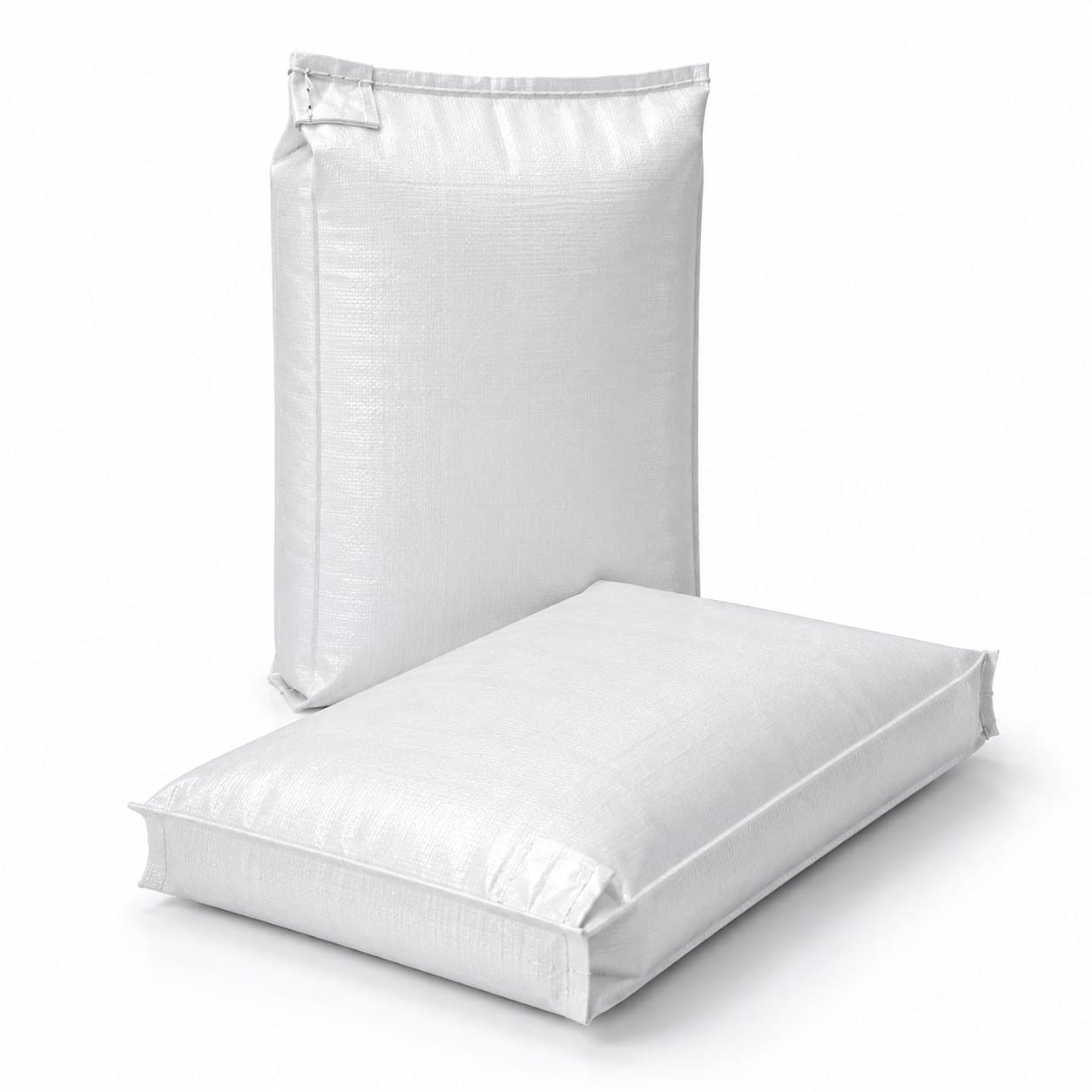
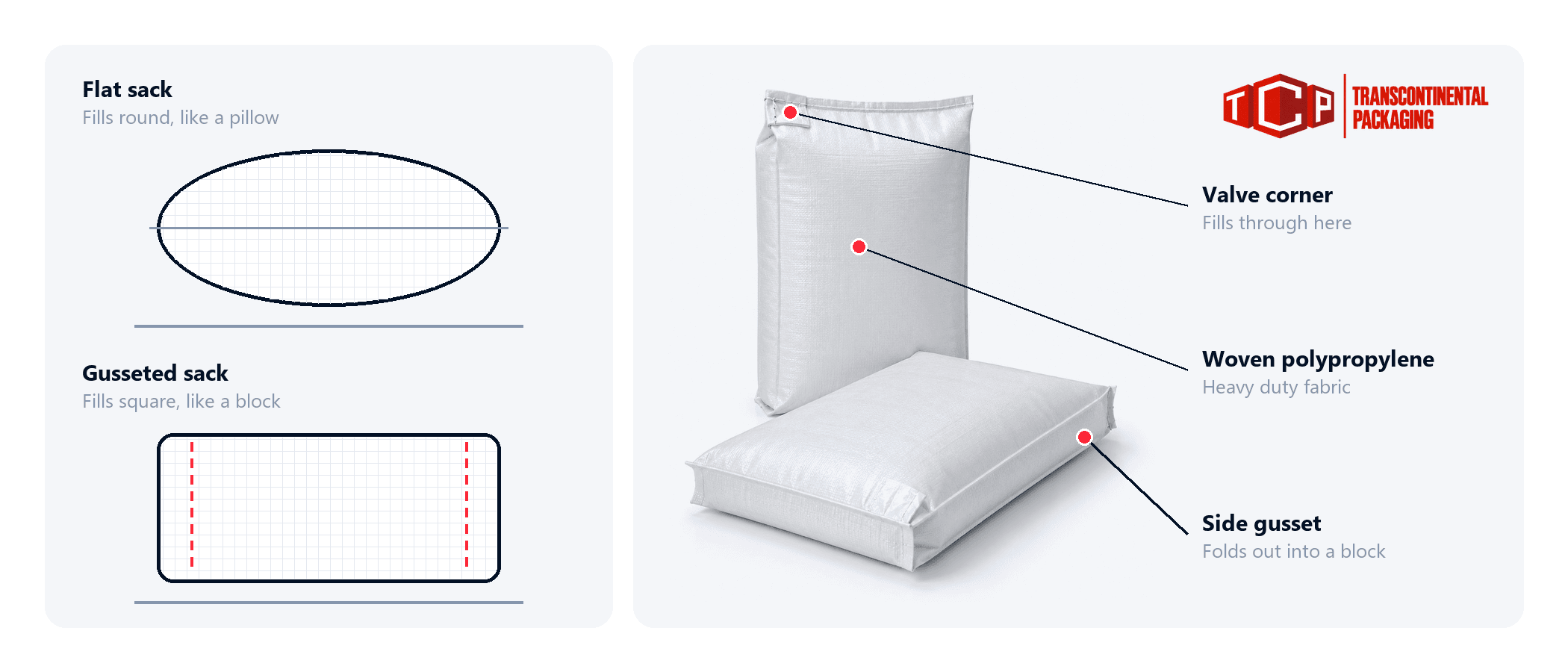
Most animal feed bags are woven polypropylene sacks. The woven fabric is light, hard to tear and takes a forklift tine or a rough stack without splitting, which is why it has largely replaced paper for feed.
- Valve or open-mouth: valve sacks suit fast automatic lines because the filling spout slots into a corner sleeve that shuts as the feed settles; open-mouth sacks take a wider range of products but need a sewing or sealing step.
- Coated or uncoated: coated fabric keeps out more moisture and stops fine particles sifting through, while uncoated fabric lets the product breathe.
- Micro-perforation: tiny holes that let trapped air out while the sack fills, so it settles flat instead of ballooning.
- Print: your brand, feed type and feeding instructions printed in several colours.
Wholesale feed bags and bulk feed bags for mills
When you buy wholesale feed bags, the bag itself rarely changes; what changes is how many you need each month. Mills that order bulk feed bags well tend to share their usage with the supplier and keep a stock program running, rather than placing a fresh order every time the shelf runs low.
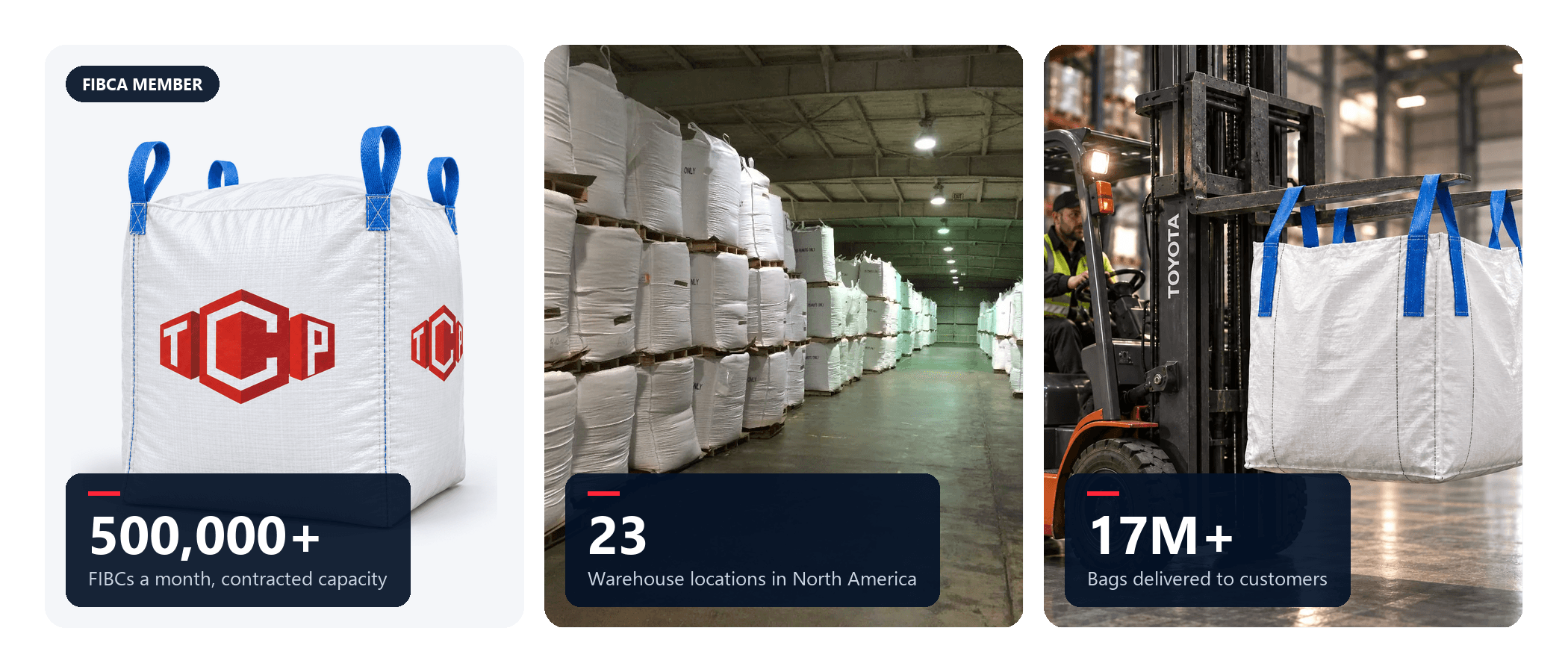
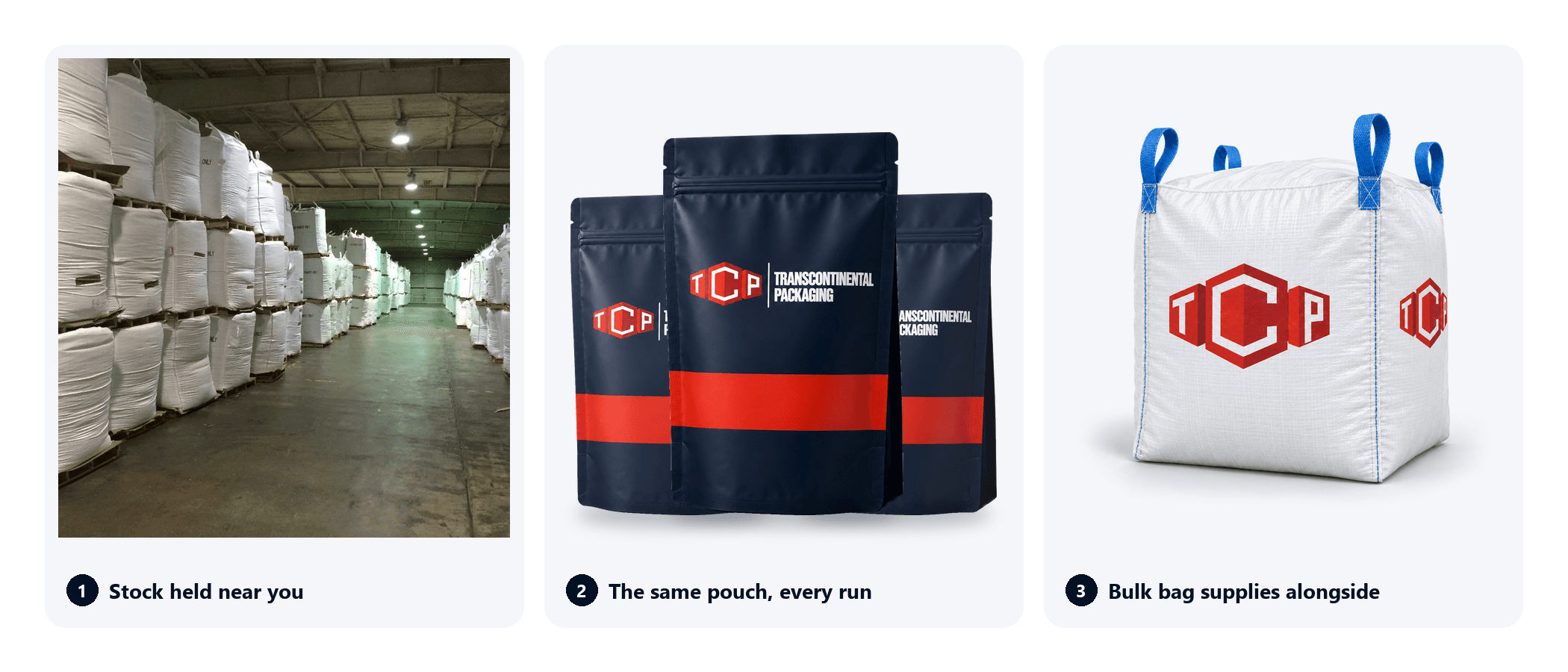
Our manufacturing partners can make more than 4.5 million woven sacks a month, and we hold stock in 23 warehouse locations across North America. That combination is what lets a mill draw down sacks from nearby stock while larger custom runs are made to order. If you buy woven polypropylene bags in bulk for several products, ask whether they can share one sack build with different print, which keeps reorders simple.
Bulk seed bags and bulk grain bags
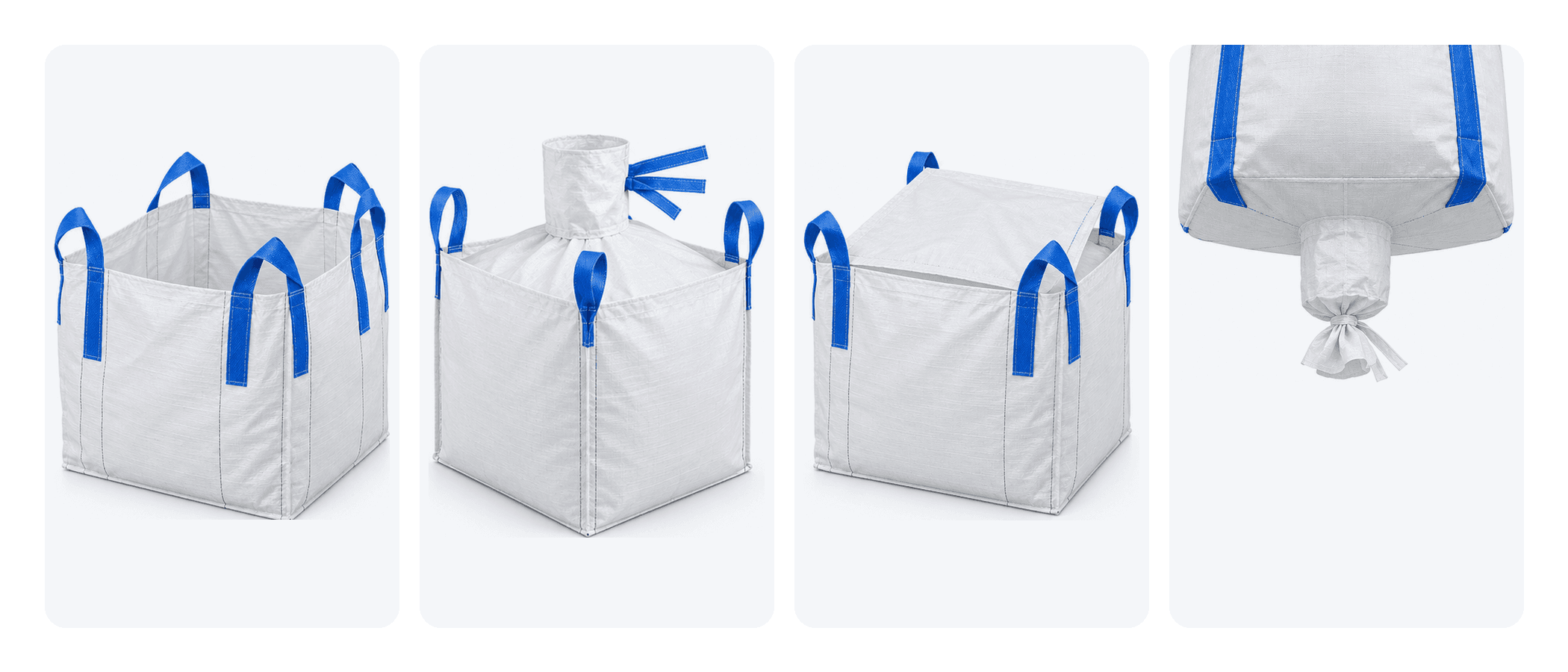
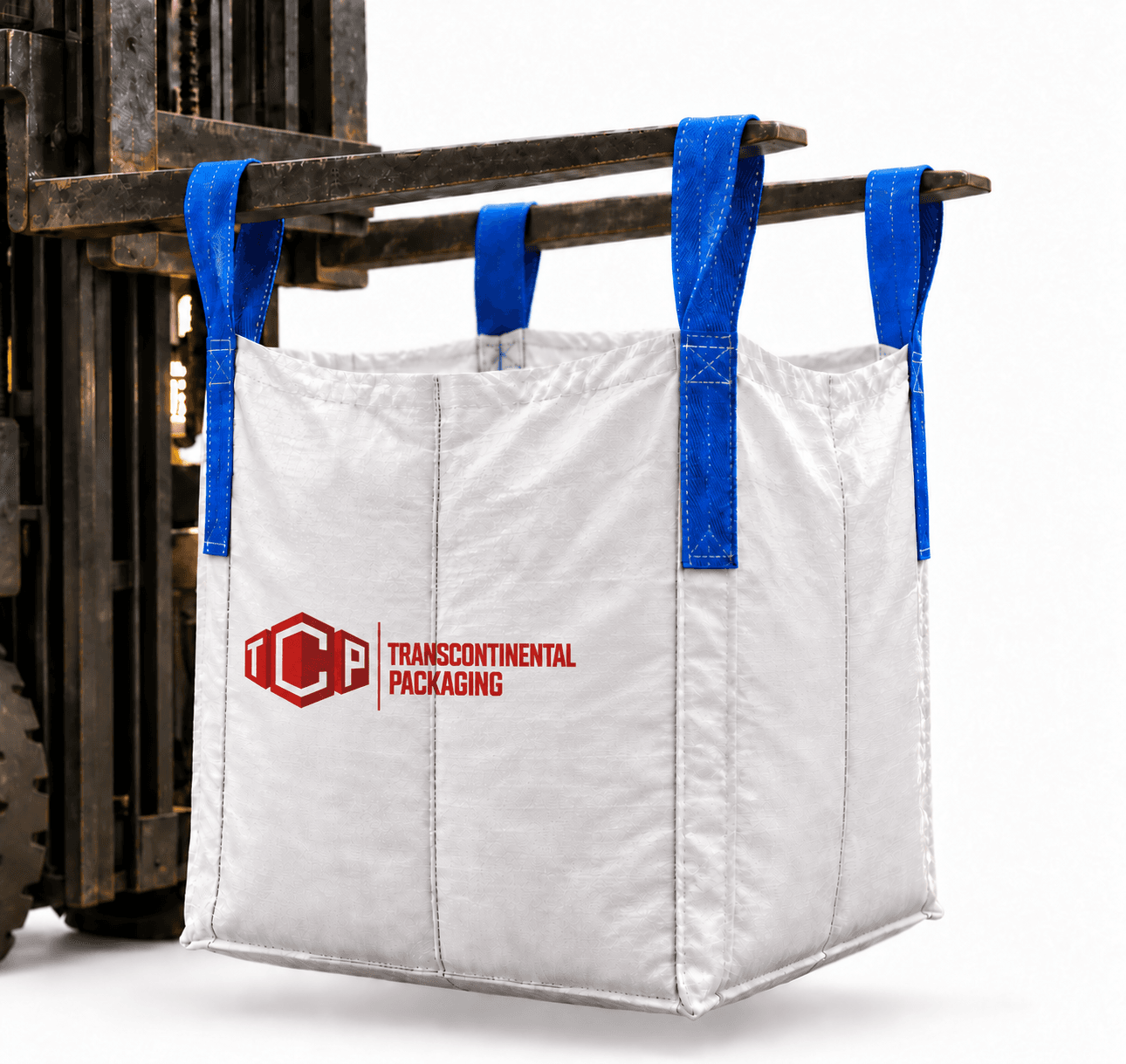
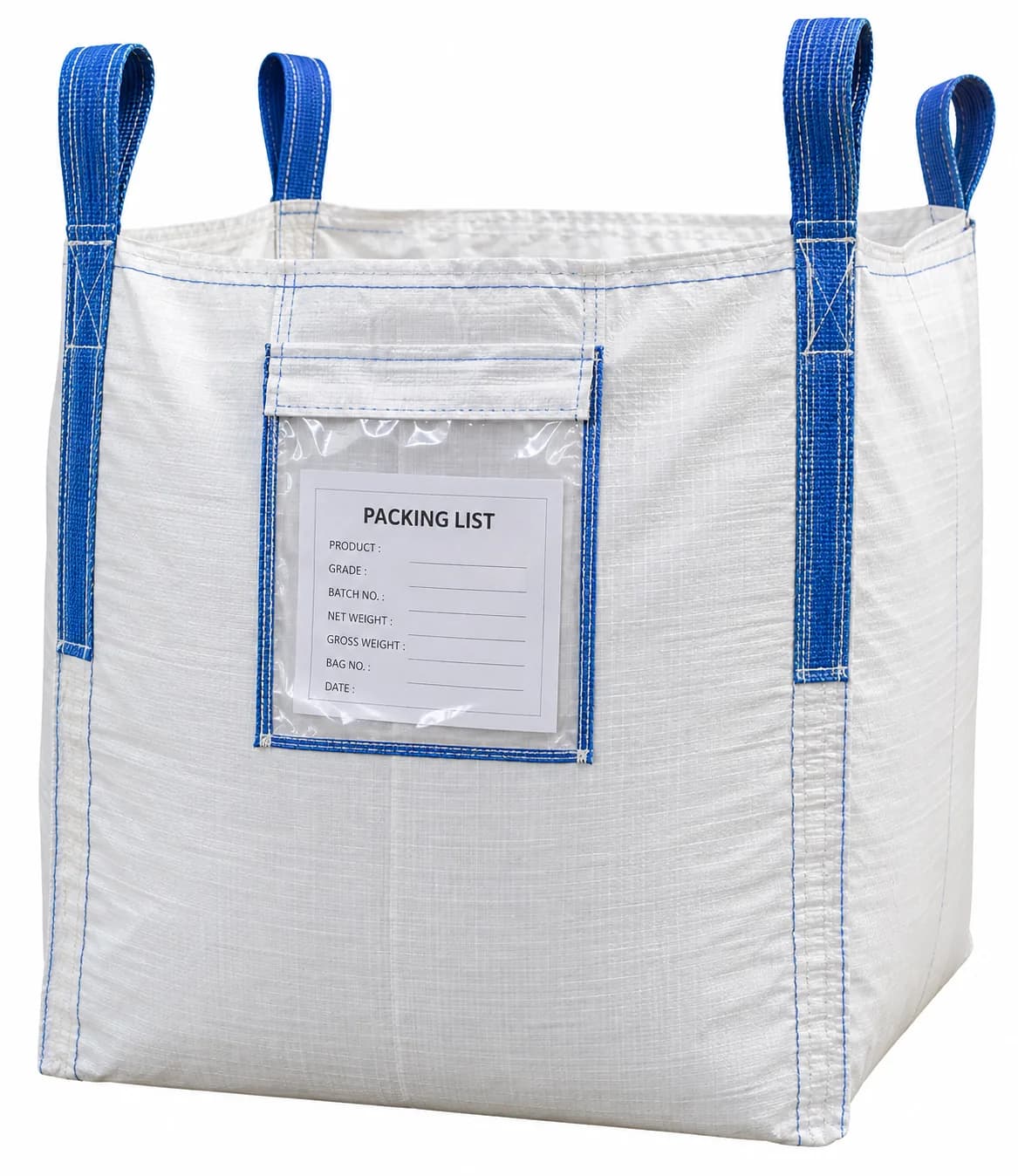
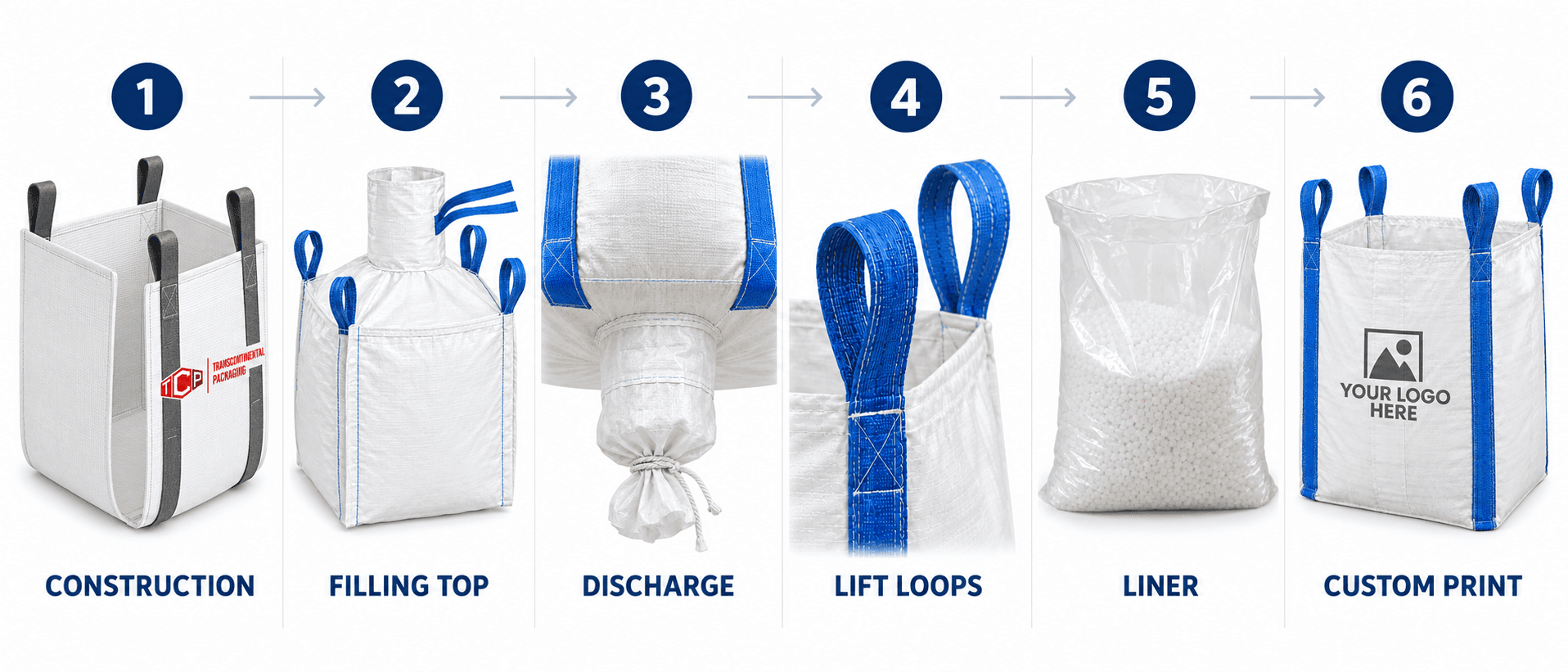
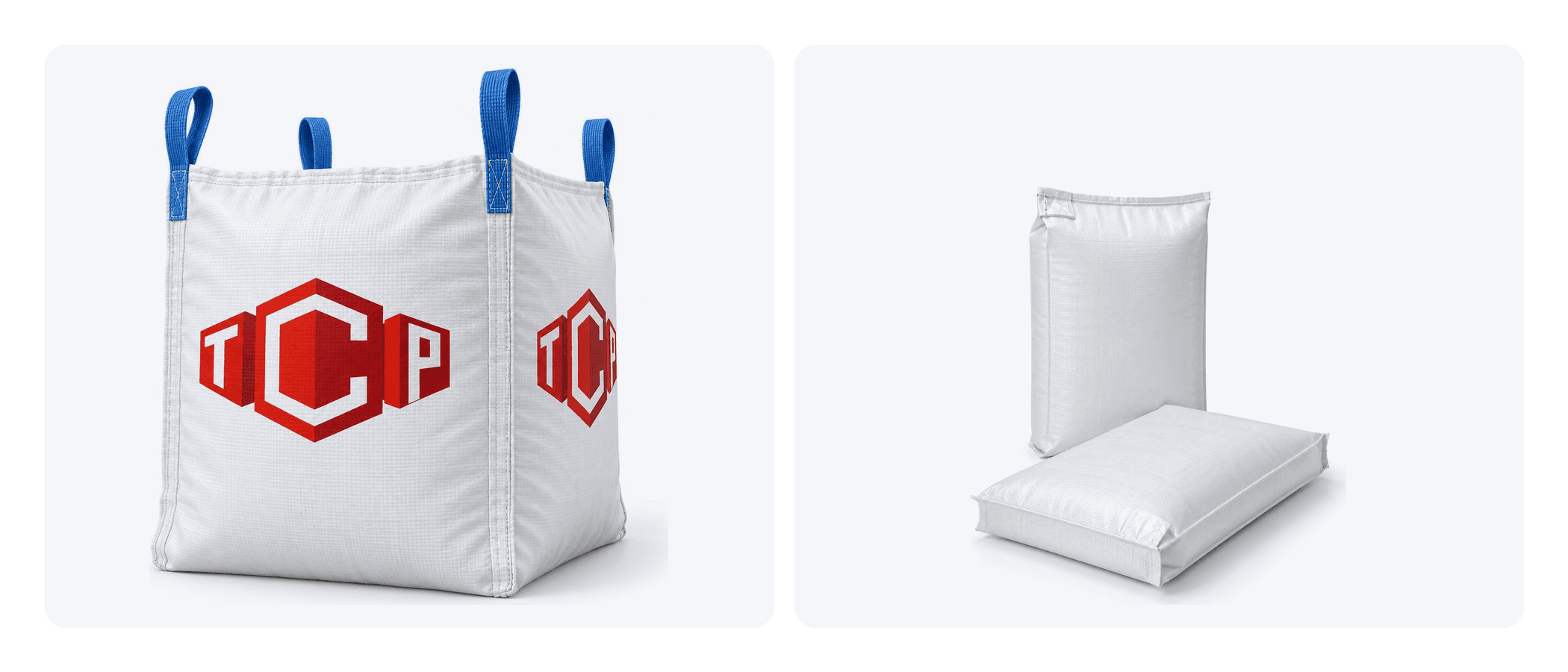
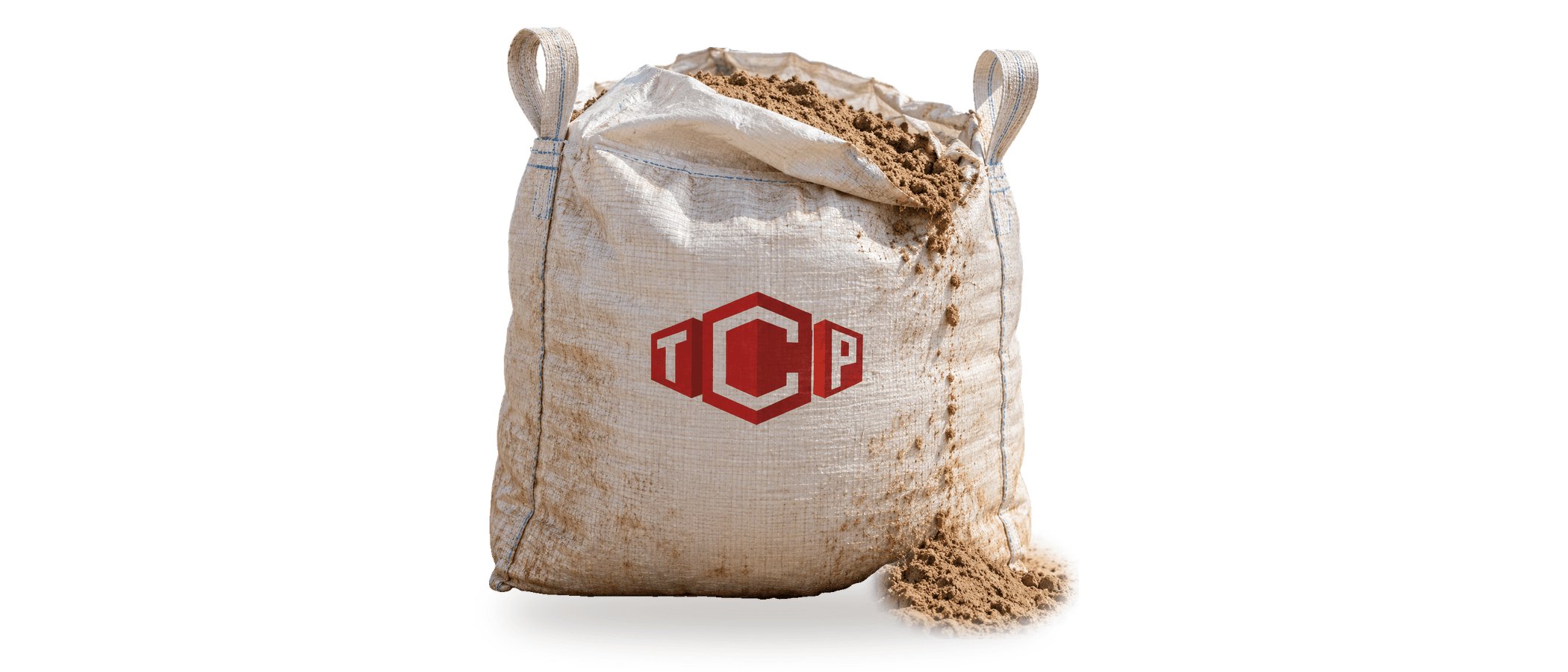
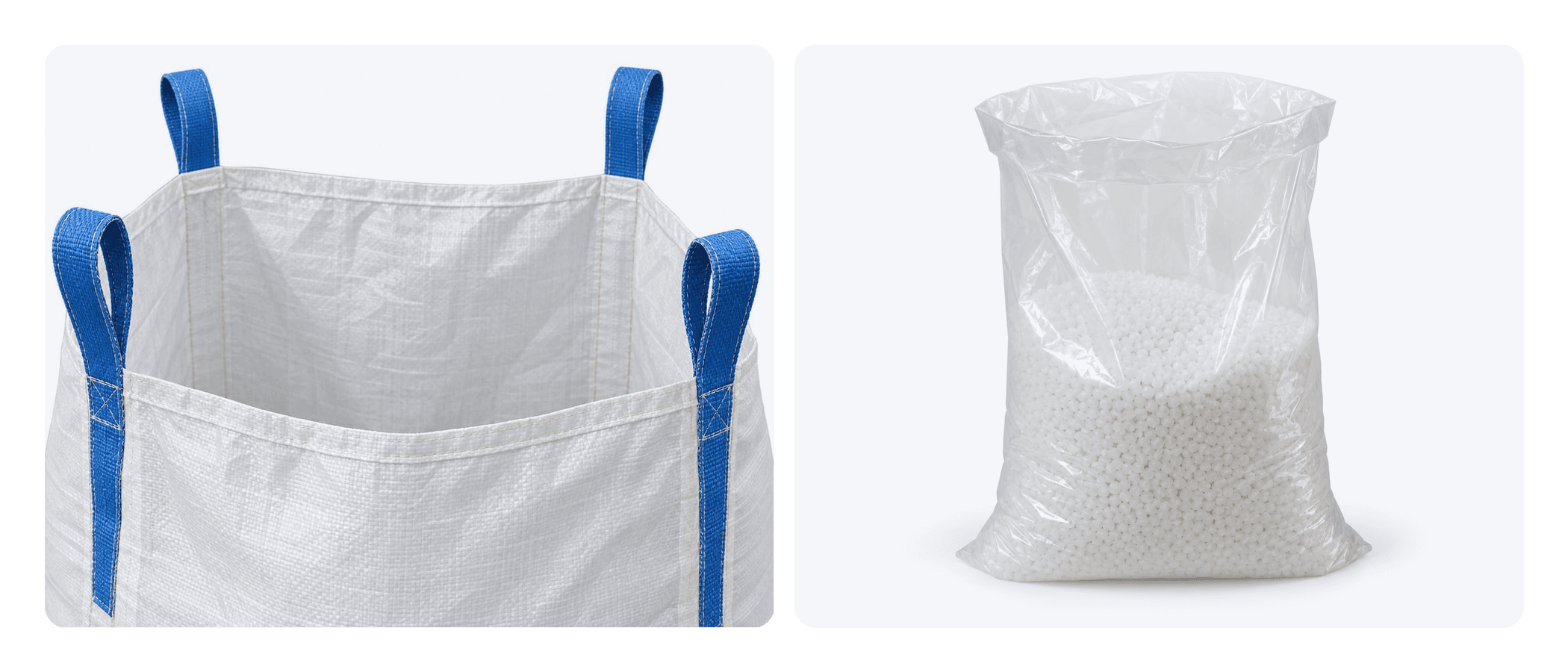
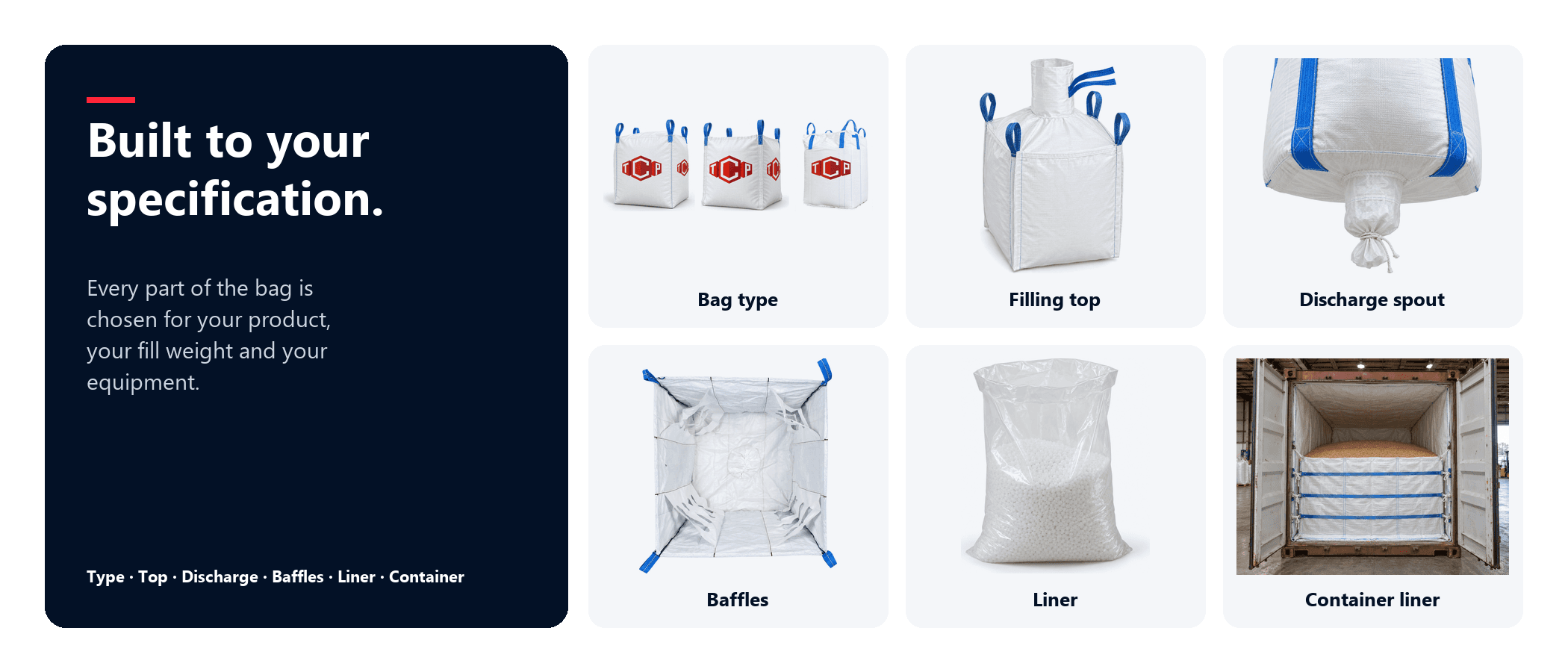
Seed is usually sold in smaller printed sacks, so bulk seed bags tend to be the same woven polypropylene format as feed, often in food grade fabric and printed with the variety and lot details. Grain is more often moved before it is portioned out, which is where bulk bags come in: one bag lifted by forklift can hold what would otherwise fill dozens of sacks.
| Product and stage | Usual bag | Why |
|---|---|---|
| Feed or seed sold to farms and stores | Woven polypropylene sack, about 25 kg | Easy to carry, stack and brand |
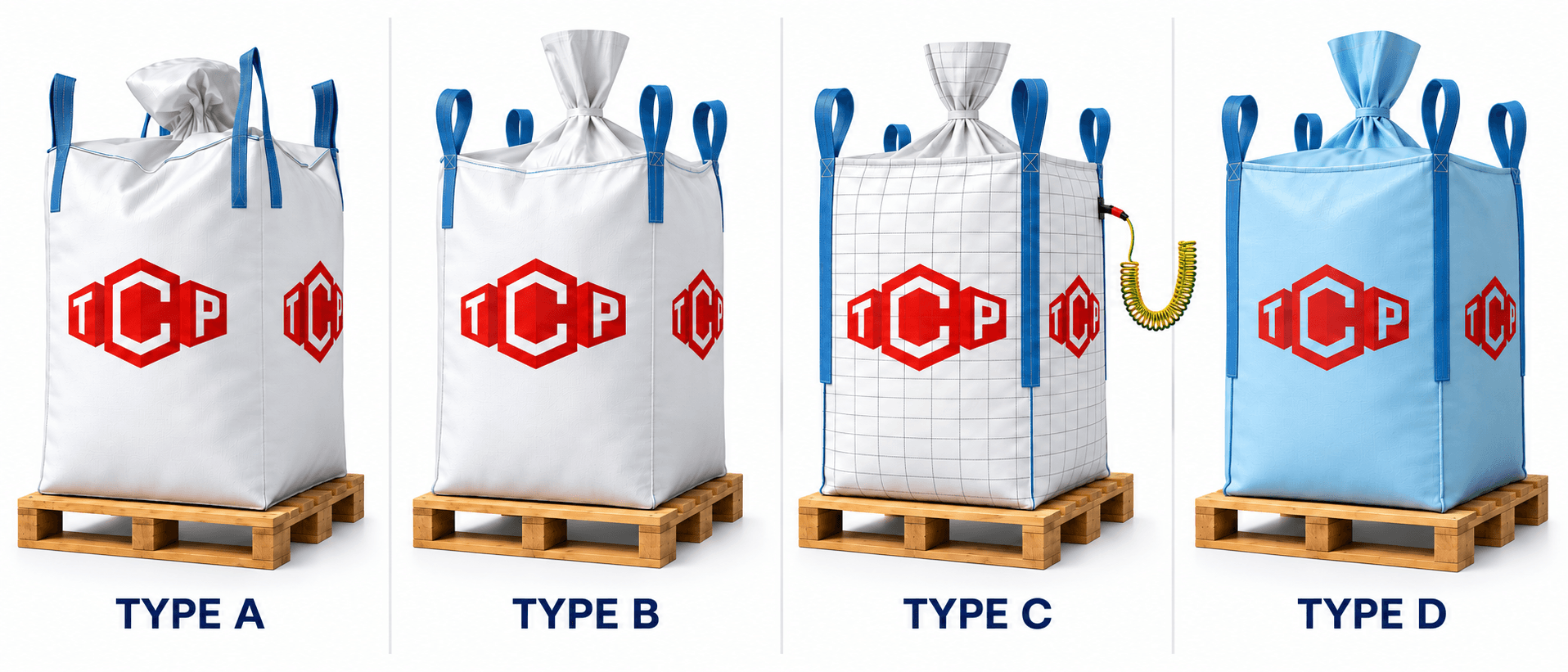
| Grain or feed moved in quantity | Bulk bag lifted by forklift | One bag replaces dozens of sacks |
| Fresh produce that needs to breathe | Ventilated bulk bag | Mesh panels let air through the load |
| Ingredients that touch food | Food grade sack or bulk bag | Made and handled for food contact |
Gusseted bags wholesale: when the shape matters
A gusset is extra fabric folded into the sides of the sack. When it fills, the sack squares off instead of rounding out, so pallets stand straighter and trucks carry more. If you ship feed or seed by the pallet, gusseted bags wholesale are often worth the small extra cost. Our post on what gusseted bags are explains the difference in more detail.
Coffee bags wholesale: from bulk to the shelf
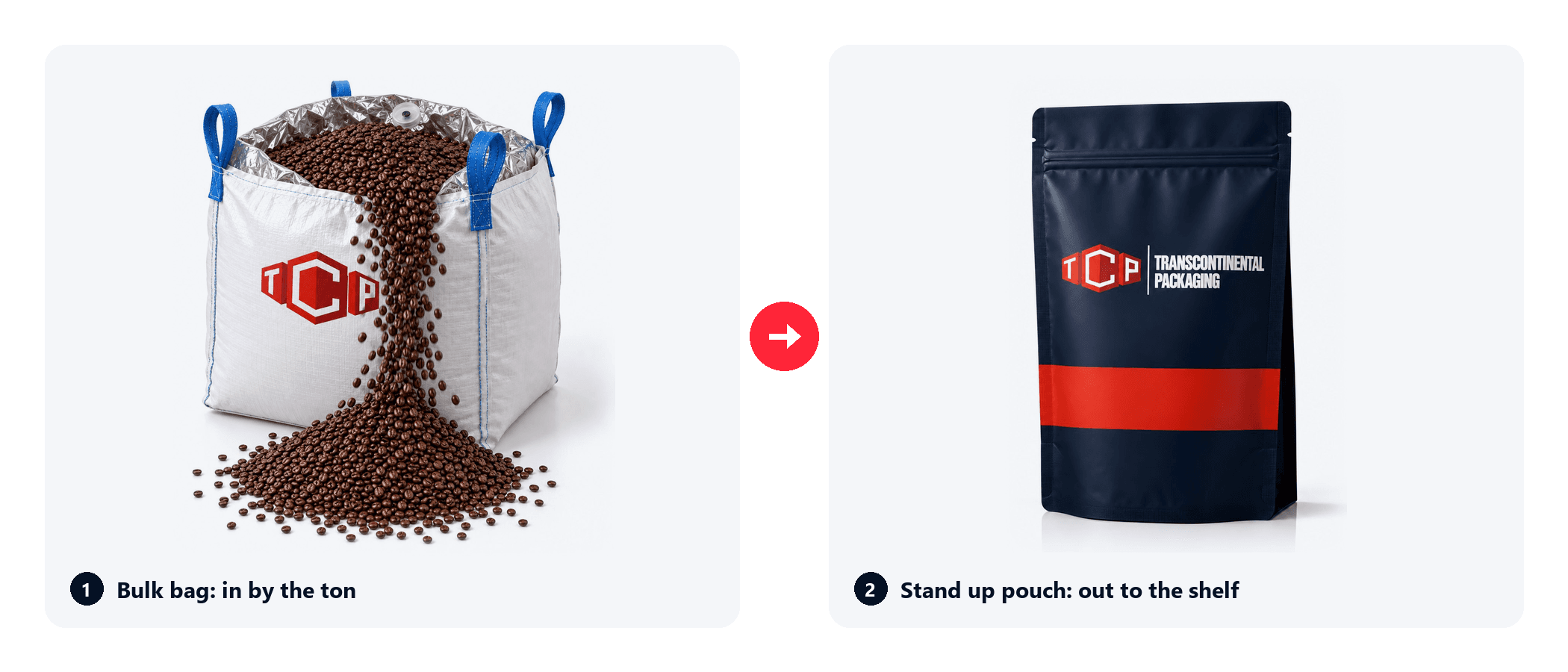
Coffee is a farm product too, and it often arrives at the roaster in bulk before it is roasted and packed for sale. That second package is where most roasters spend their time. Buying coffee bags wholesale usually means a pouch that can breathe out but not in: roasted beans keep releasing gas for days, so the bag carries a one-way valve and often a gusset for extra room.
Pick a resealable zipper if customers will open the bag more than once, a matt or soft-touch finish for a premium feel, and a tear notch so the first opening is clean.
Custom coffee bags wholesale: printing your brand
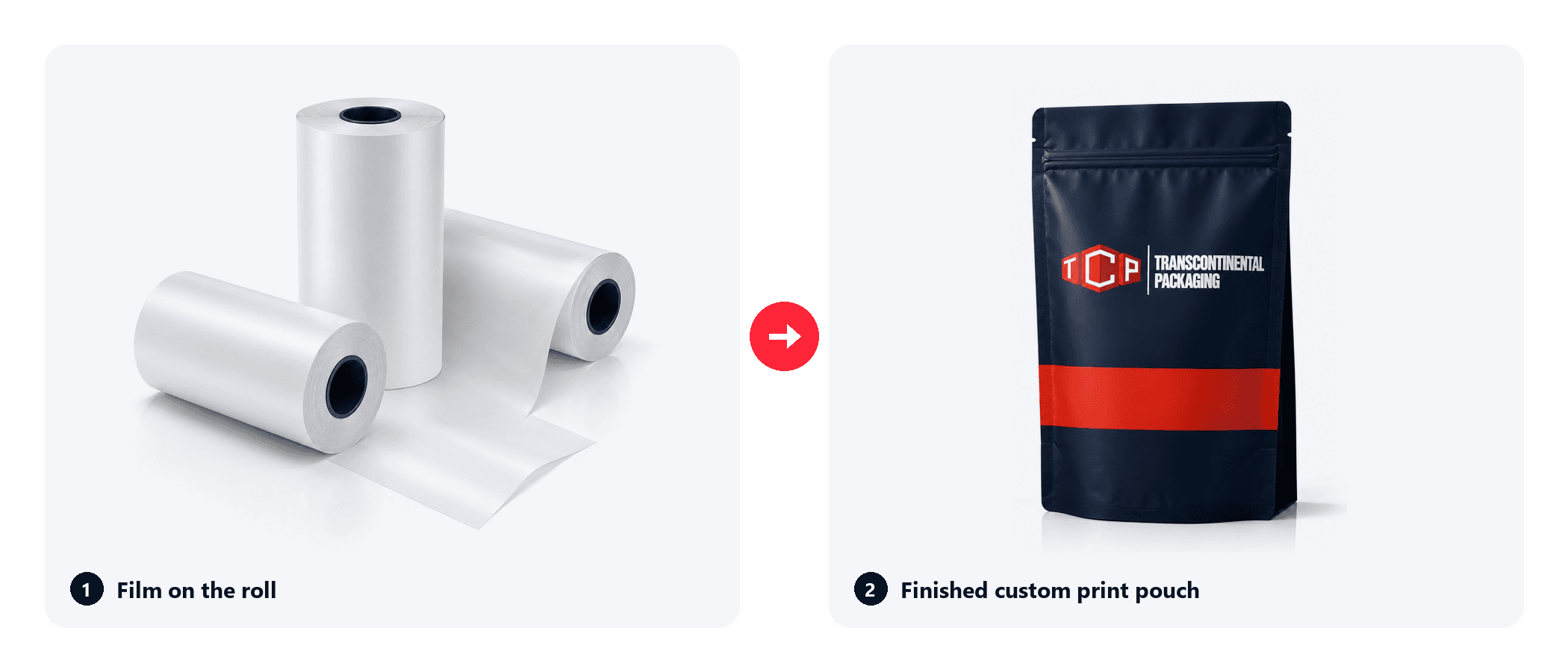
Custom coffee bags wholesale put your brand in front of the customer every time they reach for the bag. Print runs in several colours from the files you supply. Mark your exact brand colours on them, and file one signed-off bag so every later run can be checked against it. If you sell several blends, ask about one pouch build with different artwork for each. Our guide to gusseted and stand up pouches covers the pouch formats themselves.
What to send with your enquiry
- What goes in the bag, and how much each bag holds.
- How you fill it: valve, open-mouth, or a pouch line.
- Your monthly usage and your busy season.
- Your artwork, or one of the bags or sacks you buy today.
Request a quote with those details, or contact our team if you would like to talk it through first.
Related pages: valve and woven sacks, ventilated bulk bags, food grade bulk bags, flexible pouches, plus our animal nutrition and coffee and tea industry pages.
Explore our packaging product range or visit the Transcontinental Packaging homepage to learn about our company and the industries we serve.