
Published on
FIBC Bags Specification: A Checklist Before You Buy
Most FIBC bags for sale online are listed by size and price, and very little else. That is fine until the bag leaks fine powder on the warehouse floor, bulges in the truck, or will not sit under your filling head. Nearly every one of those problems traces back to a specification that left something out.
Here is what a complete FIBC bags specification covers, in the order we would work through it with a customer.
1. Start with the product and the weight
Write down what goes in the bag, how much each bag should hold, and how it behaves. A free-flowing granule, a fine powder and a damp aggregate need different bags even at the same weight. Give the fill weight with units, and say whether the product is food, hazardous or sensitive to moisture.
Then ask for the safe working load and the safety factor behind it. Our standard bags are built to a 5:1 safety factor, and UN bags for hazardous goods to 6:1.
2. Choose between the FIBC bags types
There are two separate choices hiding under "type", and a specification needs both.
| Choice | Options | What decides it |
|---|---|---|
| Construction | U-panel, four-panel or circular | Load, stacking and how fine the product is |
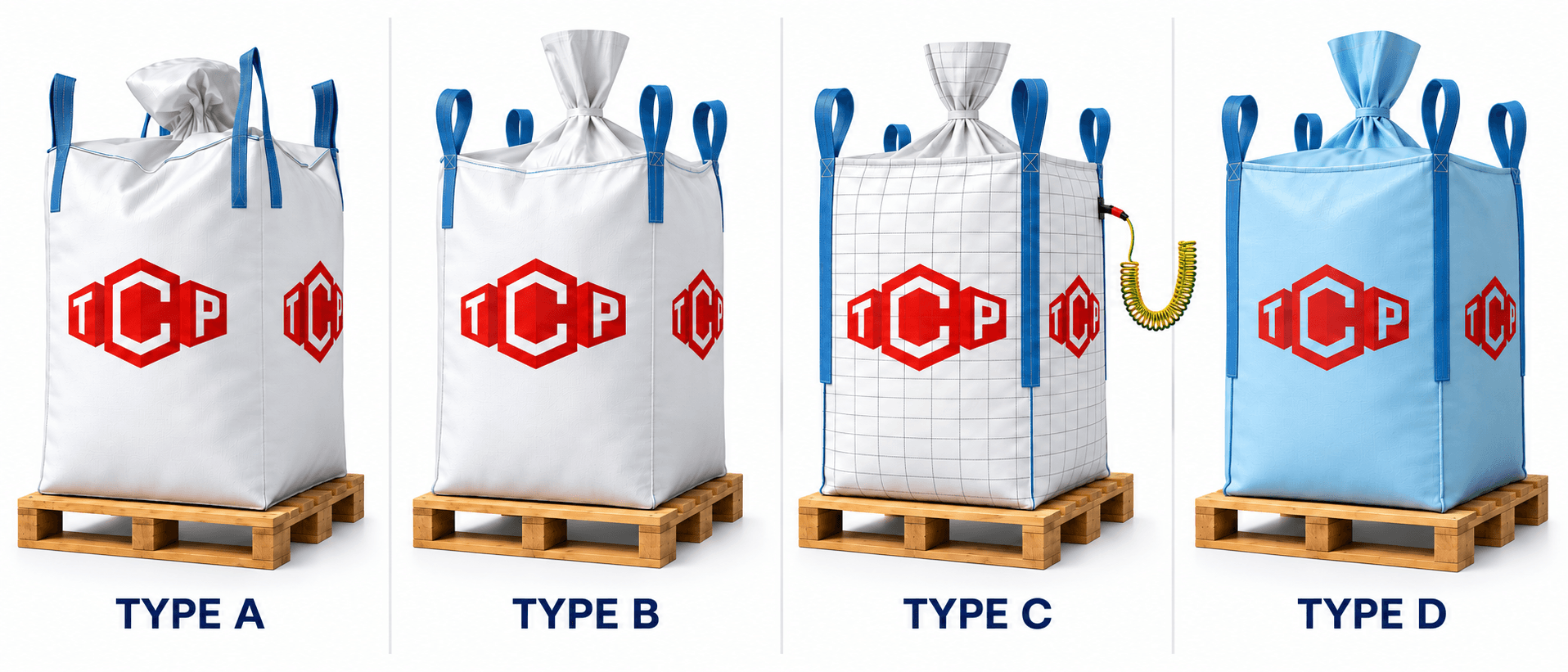
| Static protection | Type A, B, C or D | Whether the product or the area around it can ignite |
A circular bag has no vertical seams, so fine powders have no seam to work through, but it rounds out when filled and wastes more space on a truck. U-panel and four-panel bags hold a squarer shape. For static protection, our guide to Type A, B, C and D bags explains which one your product needs.
3. Decide if you need baffle bulk bags
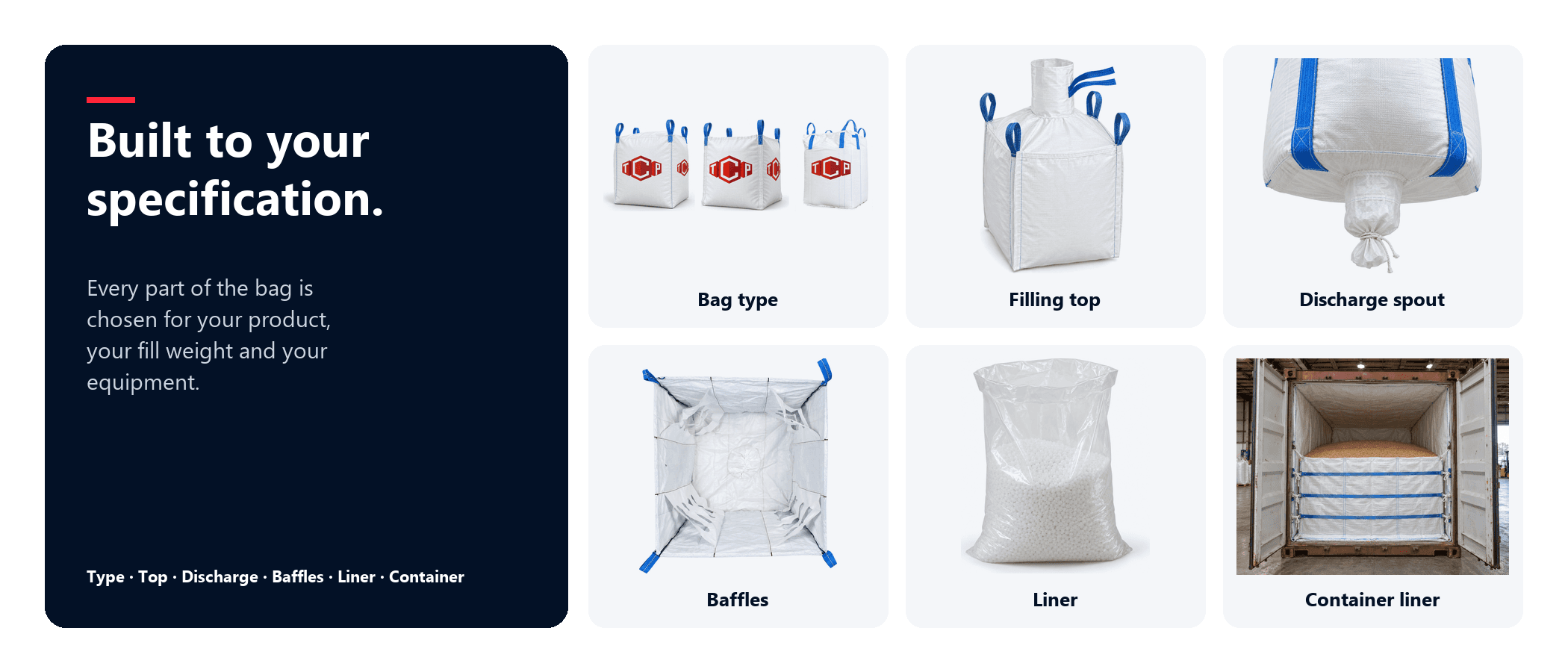
A baffle bag has fabric panels sewn inside across each corner. As the bag fills, the baffles hold the sides in, so it stays square instead of bulging into a round shape. That matters most when space is tight.
- More product fits in each truck or container, because square bags pack closer together.
- Filled bags stack more steadily in the warehouse.
- They take up less floor space than the same load in round, bulging bags.
Baffle bulk bags cost more to make than plain ones, so they earn their place when you ship or store at volume. For a handful of bags filled and emptied on site, a plain bag is usually enough.
4. Match the top and bottom to your equipment
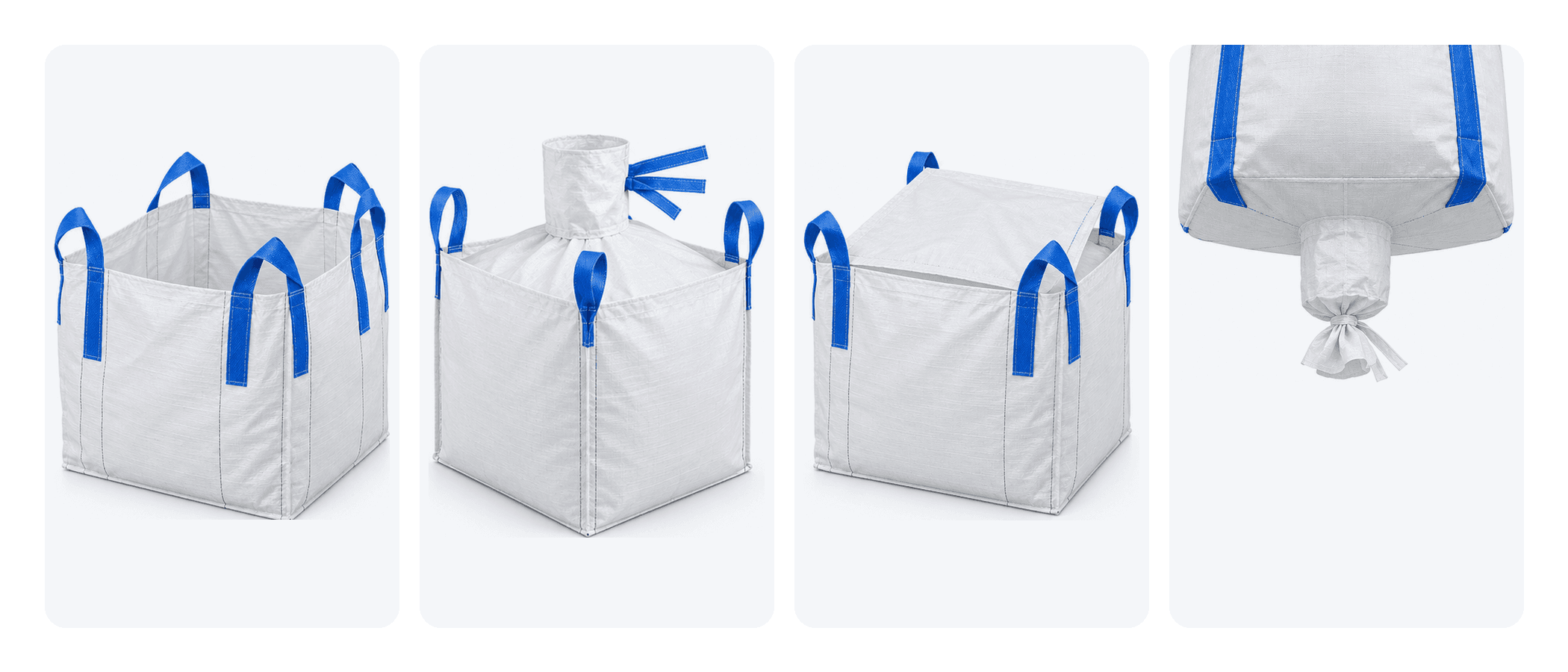
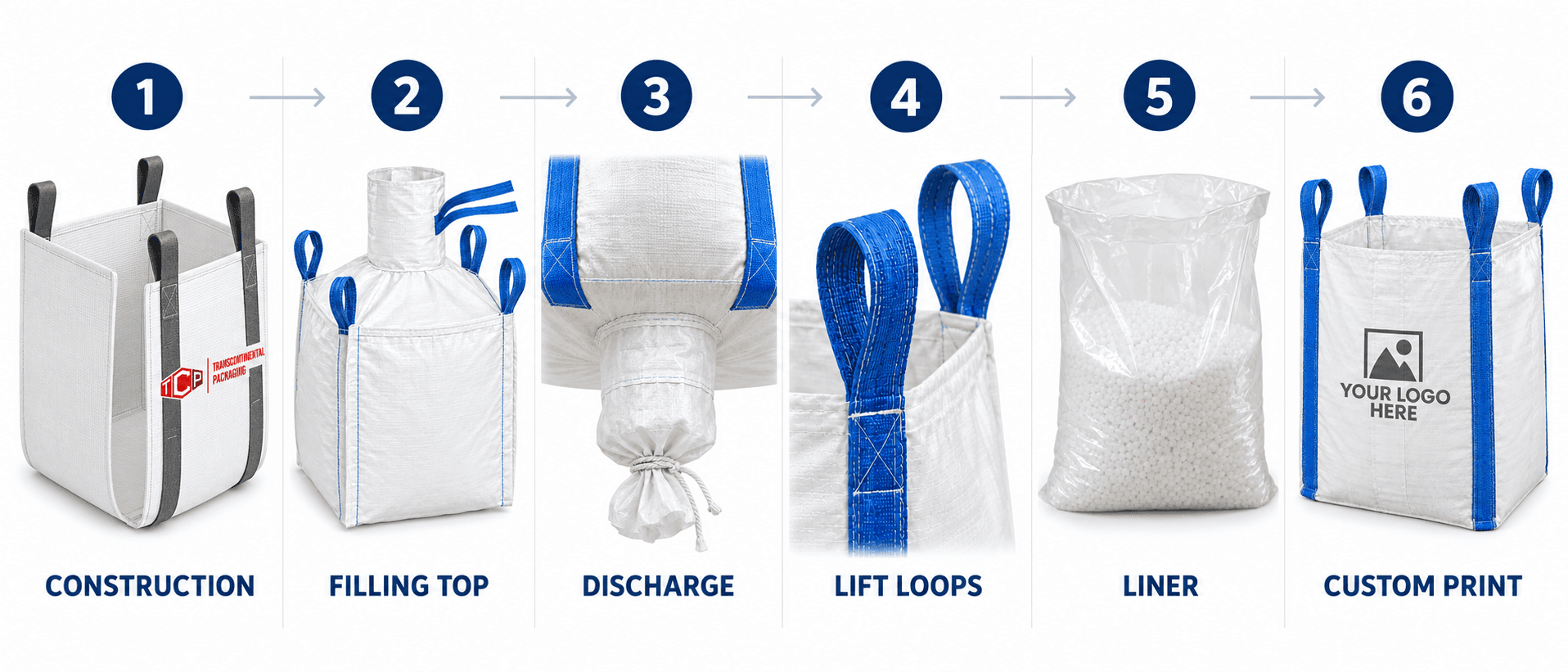
The filling top and the discharge bottom have to suit the equipment at each end. Tops come open, with a duffle, a spout, a flap or a conical spout. Bottoms come flat, with a discharge spout, or as a full discharge for products that bridge. Measure your filling head and discharge station before you choose a spout size, and put the measurement on the specification.
5. Pick the loops, liner and add-ons
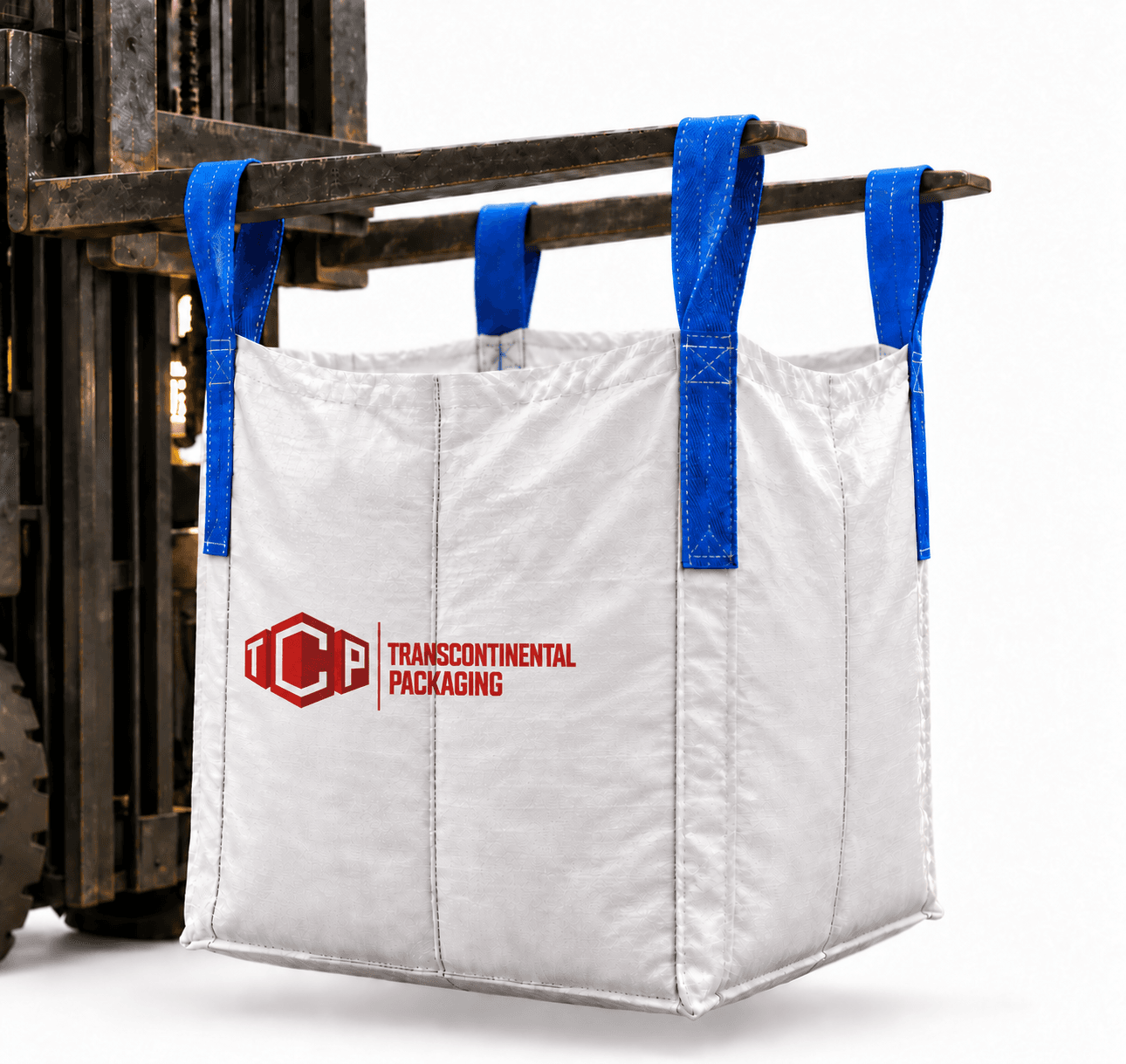
- Loops: corner, cross-corner, stevedore, tunnel or double, depending on how you lift.
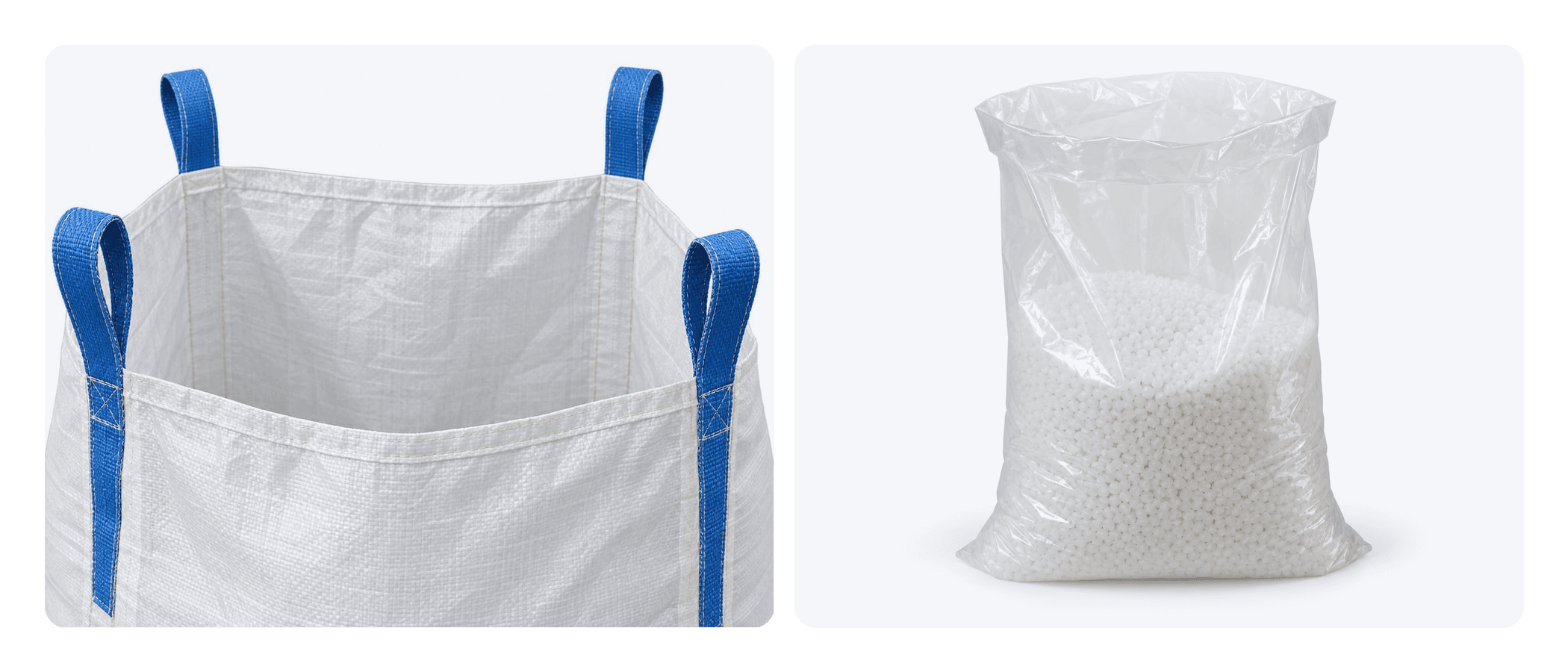
- Liner: loose, glued-in or tabbed, from 2.5 to 3 mil standard up to 9 mil, with antistatic and foil options. A liner has to be specified with the bag, because it can change the static type.
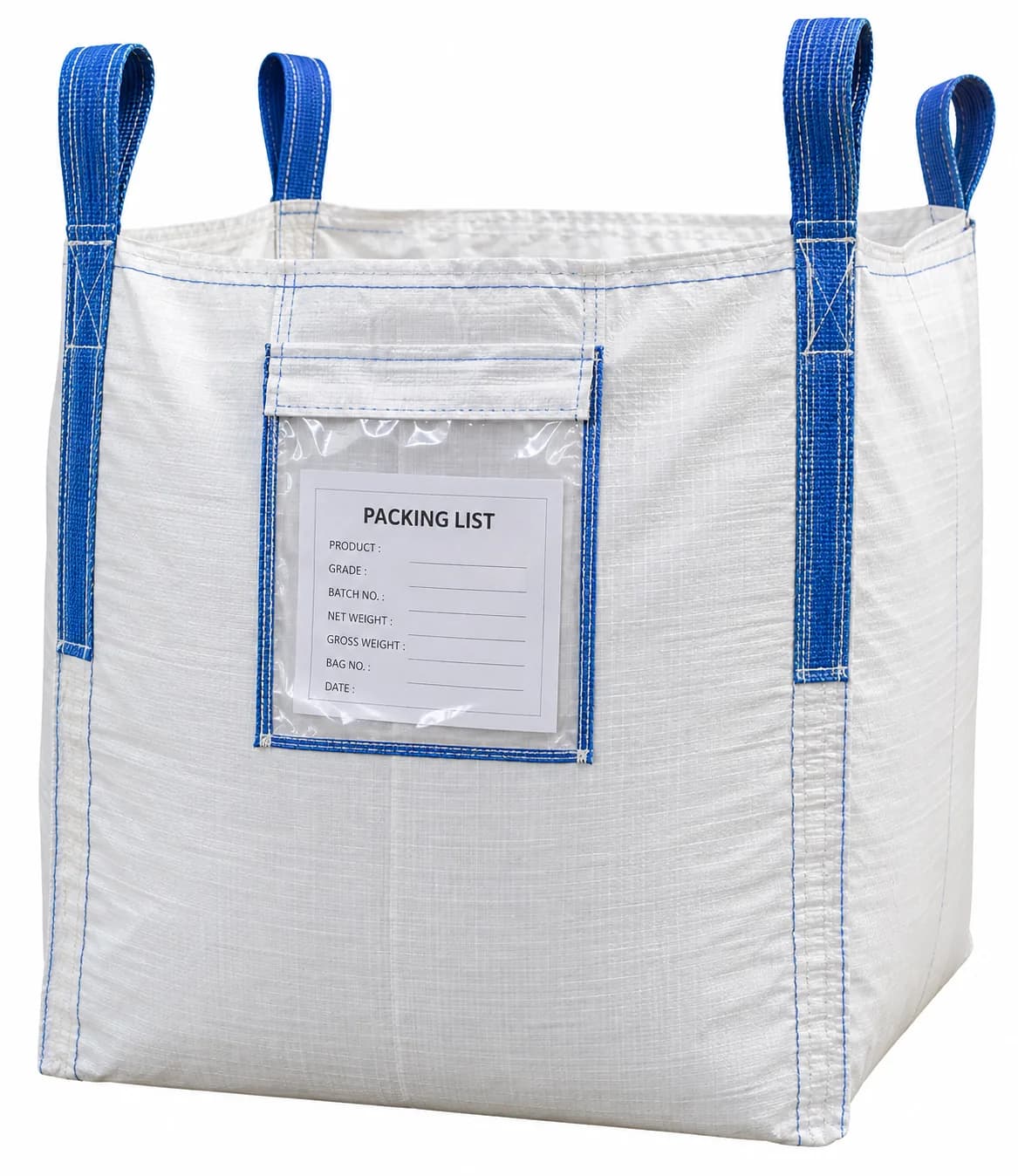
- Add-ons: baffles, sift-proof seams for fine powders, a document pouch, safety bands and custom print.
Our post on custom bulk bag options goes through each of these in more detail.
6. Check whether bags are the right answer at all
If you are shipping one dry, free-flowing product by the container load, bulk bags may not be the best choice. Shipping container liners fit inside a standard container so the whole box carries the product loose, without a single bag or pallet. You save on handling and packaging, but you need equipment to load and unload loose product at both ends.
Bulk bags make more sense when the product moves in smaller lots, gets stored before use, or goes to customers who handle it by forklift. See our container liners and bulk bags side by side if you are weighing the two.
A specification you can send today
You do not need every answer before you ask for a price. Send the product, fill weight, quantity and how you fill and empty the bags, plus a photo of the bag you use now. We will fill in the rest with you. Build a Bag walks through the same steps as this checklist, or send us the details directly.
Explore our packaging product range or visit the Transcontinental Packaging homepage to learn about our company and the industries we serve.